
Snake gourd
Research status: AI draft — awaiting expert review


Overview
Snake gourd (Trichosanthes cucumerina) is a tropical climbing vine grown for its long, slender fruits, often marked with pale stripes. Sold as a vegetable, the fruit is usually harvested young, before its seeds and rind become tough.
Origin & cultivation
Snake gourd is native to tropical Asia and has a long history of cultivation in South and Southeast Asia. Important growing regions include India, Sri Lanka, Bangladesh, and Southeast Asia; it is also grown in tropical Africa and home gardens elsewhere.
Season
Snake gourd thrives in warm weather and is generally a summer-to-early-autumn crop in seasonal climates. In tropical regions, successive plantings can provide harvests much of the year.
Texture & flavor
Young snake gourd has a mild, grassy flavor and firm, watery flesh that becomes tender when cooked. Older fruit can be fibrous, with tougher seeds; intense bitterness is not normal and is a reason to discard it.
Nutrition
Typical values estimated with AI, not yet checked against lab data. For guidance only.
| Energy | 18 kcal | raw, per 100 g edible portion | FoodPulse AI estimate |
| Protein | 0.6 g | raw, per 100 g edible portion | FoodPulse AI estimate |
| Total fat | 0.2 g | raw, per 100 g edible portion | FoodPulse AI estimate |
| Saturated fat | 0.04 g | raw, per 100 g edible portion | FoodPulse AI estimate |
| Carbohydrate | 3.7 g | raw, per 100 g edible portion | FoodPulse AI estimate |
| Dietary fiber | 1.2 g | raw, per 100 g edible portion | FoodPulse AI estimate |
| Total sugars | 1.8 g | raw, per 100 g edible portion | FoodPulse AI estimate |
| Water | 94.9 g | raw, per 100 g edible portion | FoodPulse AI estimate |
| Calcium | 26 mg | raw, per 100 g edible portion | FoodPulse AI estimate |
| Iron | 0.3 mg | raw, per 100 g edible portion | FoodPulse AI estimate |
| Magnesium | 11 mg | raw, per 100 g edible portion | FoodPulse AI estimate |
| Potassium | 150 mg | raw, per 100 g edible portion | FoodPulse AI estimate |
| Sodium | 3 mg | raw, per 100 g edible portion | FoodPulse AI estimate |
| Zinc | 0.2 mg | raw, per 100 g edible portion | FoodPulse AI estimate |
| Vitamin C | 7 mg | raw, per 100 g edible portion | FoodPulse AI estimate |
| Vitamin A (RAE) | 3 µg | raw, per 100 g edible portion | FoodPulse AI estimate |
| Folate | 6 µg | raw, per 100 g edible portion | FoodPulse AI estimate |
| Vitamin B12 | 0 µg | raw, per 100 g edible portion | FoodPulse AI estimate |
| Cholesterol | 0 mg | raw, per 100 g edible portion | FoodPulse AI estimate |
Glycemic index: Not established.
Snake gourd contributes water, some fiber, and micronutrients, but strong human evidence for specific disease-treatment benefits is lacking. Allergy is possible, particularly in people sensitive to other gourd-family foods; unusually bitter gourds may contain harmful cucurbitacins and should not be eaten. Educational, not medical advice.
Educational information, not medical advice.
Storage
- Room temperature, whole and uncut · About 60–75°F (16–24°C), away from sun · Preferably use the same day; up to 1–2 days in a cool room. Keep dry and ventilated; heat speeds deterioration. Discard fruit with mold, slime, leaking soft spots, or a rotten odor; refrigerate once cut. FoodPulse AI estimate
- Refrigerator · 32–40°F (0–4°C) · Whole: about 4–7 days; cut: 2–3 days; cooked: 3–4 days. Keep whole fruit dry in a loosely closed or perforated bag, and cut pieces in a covered container. Refrigerate cut or cooked gourd within 2 hours, or 1 hour above 90°F (32°C); cool cooked portions in shallow containers. Discard for mold, slime, or sour odor, and do not rely on smell to excuse excessive time unrefrigerated. FoodPulse AI estimate
- Freezer, cooked · 0°F (−18°C) or below · About 2–3 months for best quality. Freeze promptly cooled cooked gourd in airtight, meal-size portions; expect a softer texture after thawing. Continuously frozen food remains safe beyond this quality window. Thaw in the refrigerator and reheat leftovers to 165°F (74°C); discard if held above 40°F (4°C) for more than 2 hours. FoodPulse AI estimate
Preparation
Rinse under running water, rubbing the surface; do not use soap, and trim both ends. Leave tender skin on or lightly scrape tough skin, then split lengthwise, remove firm seeds and spongy mature pith, and slice into rings or half-moons. Keep the gourd and clean utensils separate from raw meat, poultry, seafood, and their juices, washing hands and equipment after handling those foods.
Cooking
Stir-fry thin slices for about 5–8 minutes, or steam or simmer small pieces for 8–15 minutes, until tender. Larger chunks in curries or soups may need 15–20 minutes; judge by tenderness rather than time alone. Its mild flesh pairs well with lentils, coconut, garlic, and warm spices.
Recipes
No verified recipes yet.
Waste less
Use tender skin, soft immature seeds, and tender inner flesh rather than removing them automatically. Refrigerate cooked leftovers promptly and use them in soups, curries, or egg dishes within 3–4 days. Compost ordinary trims where suitable, but discard intensely bitter fruit rather than trying to salvage it.
Food waste tips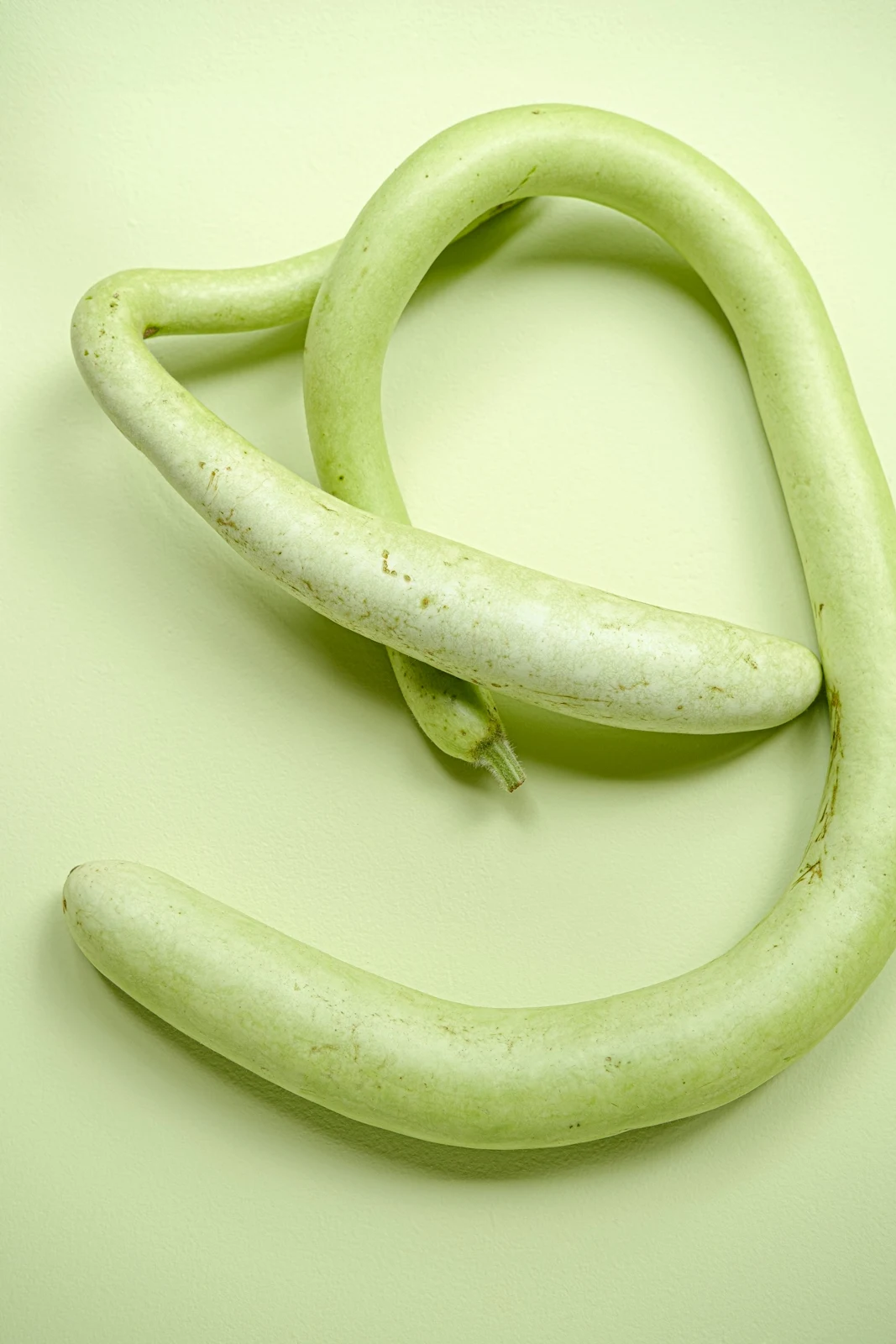 Snake Gourd