
Zucchini
Research status: AI draft — awaiting expert review


Overview
Zucchini is a tender summer squash harvested young, while its skin and seeds are still edible. Usually green but sometimes yellow, it comes in slender or round varieties and is also called courgette.
Origin & cultivation
Summer squash descends from squash domesticated in the Americas; modern zucchini varieties were developed in Italy. It is now widely grown in China, India, Mediterranean countries, Mexico, and the United States, although production statistics often group zucchini with other squashes.
Season
In temperate climates, zucchini is most abundant from late spring through early fall. Imports and greenhouse cultivation make it available year-round in many markets.
Texture & flavor
Young zucchini has thin skin, moist flesh, and a mild, slightly sweet flavor. Small to medium specimens are generally firmer and less seedy than oversized ones; prolonged cooking makes them soft and watery.
Nutrition
Typical values estimated with AI, not yet checked against lab data. For guidance only.
| Energy | 17 kcal | raw, per 100 g edible portion | FoodPulse AI estimate |
| Protein | 1.21 g | raw, per 100 g edible portion | FoodPulse AI estimate |
| Total fat | 0.32 g | raw, per 100 g edible portion | FoodPulse AI estimate |
| Saturated fat | 0.084 g | raw, per 100 g edible portion | FoodPulse AI estimate |
| Carbohydrate | 3.11 g | raw, per 100 g edible portion | FoodPulse AI estimate |
| Dietary fiber | 1 g | raw, per 100 g edible portion | FoodPulse AI estimate |
| Total sugars | 2.5 g | raw, per 100 g edible portion | FoodPulse AI estimate |
| Water | 94.79 g | raw, per 100 g edible portion | FoodPulse AI estimate |
| Calcium | 16 mg | raw, per 100 g edible portion | FoodPulse AI estimate |
| Iron | 0.37 mg | raw, per 100 g edible portion | FoodPulse AI estimate |
| Magnesium | 18 mg | raw, per 100 g edible portion | FoodPulse AI estimate |
| Potassium | 261 mg | raw, per 100 g edible portion | FoodPulse AI estimate |
| Sodium | 8 mg | raw, per 100 g edible portion | FoodPulse AI estimate |
| Zinc | 0.32 mg | raw, per 100 g edible portion | FoodPulse AI estimate |
| Vitamin C | 17.9 mg | raw, per 100 g edible portion | FoodPulse AI estimate |
| Vitamin A (RAE) | 10 µg | raw, per 100 g edible portion | FoodPulse AI estimate |
| Folate | 24 µg | raw, per 100 g edible portion | FoodPulse AI estimate |
| Vitamin B12 | 0 µg | raw, per 100 g edible portion | FoodPulse AI estimate |
| Cholesterol | 0 mg | raw, per 100 g edible portion | FoodPulse AI estimate |
Glycemic index: Not established.
Zucchini provides water, some fiber, vitamin C, and potassium, though amounts vary with serving size and preparation. Zucchini allergy is uncommon but possible, including pollen-related oral reactions; exceptionally bitter squash can contain toxic cucurbitacins and should not be eaten, even after cooking. Educational, not medical advice.
Educational information, not medical advice.
Storage
- Room temperature · About 60–75°F (16–24°C) · Preferably no more than 1 day for best quality. Keep whole, uncut zucchini dry and away from sunlight; refrigerate for longer storage. Discard if moldy, slimy, leaking, or extensively soft. Refrigerate cut zucchini within 2 hours, or within 1 hour above 90°F (32°C). FoodPulse AI estimate
- Refrigerator · 34–40°F (1–4°C) · Whole: about 4–7 days; cut: 3–4 days; cooked: 3–4 days. Store whole zucchini unwashed in a perforated bag in the crisper; keep cut or cooked zucchini in a covered container. Refrigerate cooked zucchini within 2 hours, or 1 hour above 90°F (32°C). Discard for mold, slime, sour odor, or extensive soft decay; discard cooked leftovers held too long even if they smell normal. FoodPulse AI estimate
- Freezer · 0°F (−18°C) or below · About 8–12 months for best quality. Following NCHFP guidance, cut into ½-inch slices, blanch in boiling water for 3 minutes, cool promptly in ice water, drain, and package airtight. Continuously frozen zucchini remains safe beyond its quality window, though it softens after thawing. Discard thawed zucchini held above 40°F (4°C) for more than 2 hours; freezer burn alone is a quality issue. FoodPulse AI estimate
Preparation
Rinse under running water, gently rubbing the skin; do not use soap or produce detergent. Trim both ends, leave tender skin intact, and slice, dice, shred, or cut lengthwise as needed; remove coarse seeds from oversized specimens. Keep zucchini and its utensils separate from raw meat, poultry, and seafood, and wash hands and food-contact surfaces after handling those foods.
Cooking
Sauté slices or small cubes for about 4–8 minutes, steam for 3–6 minutes, or roast at 425°F (220°C) for 15–25 minutes, depending on thickness and crowding. Grill lengthwise slices for roughly 3–5 minutes per side, stopping when tender with a little bite. Pat dry and avoid overcrowding for better browning; zucchini has no USDA minimum internal cooking temperature.
Recipes
No verified recipes yet.
Waste less
Use the edible skin and tender seeds, and shred large zucchini for soups, fritters, or baking. Refrigerate cooked leftovers promptly and use within 3–4 days, adding them to omelets, pasta, or soup. Compost sound trimmings where accepted; discard exceptionally bitter zucchini rather than trying to salvage it.
Food waste tips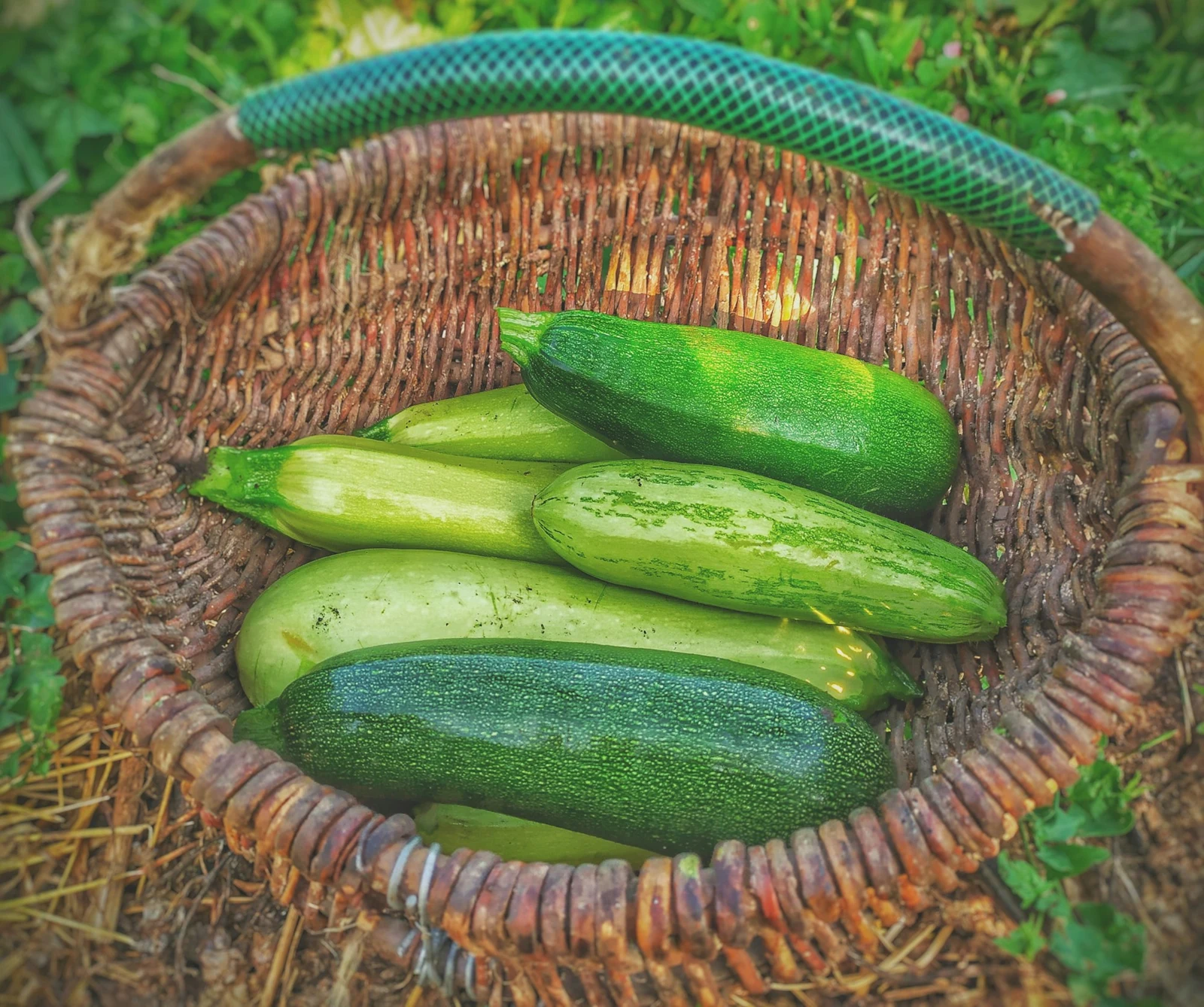 Zucchini - Squash