
Okra
Research status: AI draft — awaiting expert review


Overview
Okra is the tender, immature seed pod of a warm-season plant in the mallow family. Usually green but sometimes burgundy, its ridged pods contain edible seeds and are used as a vegetable.
Origin & cultivation
Okra has African origins, although its precise domestication history is debated. Today it is widely grown in tropical and subtropical regions, with India a leading producer and substantial production in West Africa and other parts of Asia.
Season
Okra peaks in summer through early autumn in temperate climates and can be grown much of the year in tropical regions. Choose firm, brightly colored, tender pods, usually 2–4 inches long; oversized pods may be woody, depending on variety.
Texture & flavor
Okra has a mild, grassy flavor, tender flesh, and small seeds with a slight pop. Cutting and moist cooking release mucilage, a natural thickener useful in gumbo and stews. Whole pods and quick, high-heat cooking generally produce a less slippery texture.
Nutrition
Typical values estimated with AI, not yet checked against lab data. For guidance only.
| Energy | 33 kcal | raw, per 100 g edible portion | FoodPulse AI estimate |
| Protein | 1.93 g | raw, per 100 g edible portion | FoodPulse AI estimate |
| Total fat | 0.19 g | raw, per 100 g edible portion | FoodPulse AI estimate |
| Saturated fat | 0.026 g | raw, per 100 g edible portion | FoodPulse AI estimate |
| Carbohydrate | 7.45 g | raw, per 100 g edible portion | FoodPulse AI estimate |
| Dietary fiber | 3.2 g | raw, per 100 g edible portion | FoodPulse AI estimate |
| Total sugars | 1.48 g | raw, per 100 g edible portion | FoodPulse AI estimate |
| Water | 89.58 g | raw, per 100 g edible portion | FoodPulse AI estimate |
| Calcium | 82 mg | raw, per 100 g edible portion | FoodPulse AI estimate |
| Iron | 0.62 mg | raw, per 100 g edible portion | FoodPulse AI estimate |
| Magnesium | 57 mg | raw, per 100 g edible portion | FoodPulse AI estimate |
| Potassium | 299 mg | raw, per 100 g edible portion | FoodPulse AI estimate |
| Sodium | 7 mg | raw, per 100 g edible portion | FoodPulse AI estimate |
| Zinc | 0.58 mg | raw, per 100 g edible portion | FoodPulse AI estimate |
| Vitamin C | 23 mg | raw, per 100 g edible portion | FoodPulse AI estimate |
| Vitamin A (RAE) | 36 µg | raw, per 100 g edible portion | FoodPulse AI estimate |
| Folate | 60 µg | raw, per 100 g edible portion | FoodPulse AI estimate |
| Vitamin B12 | 0 µg | raw, per 100 g edible portion | FoodPulse AI estimate |
| Cholesterol | 0 mg | raw, per 100 g edible portion | FoodPulse AI estimate |
Glycemic index: Not established.
Okra provides fiber, vitamin C, folate, and vitamin K as part of a varied diet. Research does not establish ordinary servings of okra as a treatment for diabetes or other diseases. Okra allergy is possible, though uncommon; people managing vitamin K intake while taking warfarin should keep intake consistent and consult their clinician. Educational, not medical advice.
Educational information, not medical advice.
Storage
- Room temperature · About 60–75°F (16–24°C) · Preferably only until use the same day. Keep whole, unwashed pods dry and out of direct sunlight; refrigerate promptly for better quality. Refrigerate cut or cooked okra within 2 hours, or 1 hour above 90°F (32°C). Discard pods with mold, decay, or an off odor. FoodPulse AI estimate
- Refrigerator · 32–40°F (0–4°C) · Fresh pods: about 2–3 days; cooked okra: 3–4 days. Store fresh pods unwashed and dry in a perforated bag in the crisper; prolonged cold storage can cause pitting or discoloration. Refrigerate cooked okra promptly in shallow, covered containers. Discard moldy, foul-smelling, or decaying pods; natural slipperiness inside cut okra is normal, unlike a slimy coating on deteriorating whole pods. FoodPulse AI estimate
- Freezer · 0°F (−18°C) or below · About 8–12 months for best quality. Following NCHFP guidance, wash and trim without exposing the seed cells, then blanch small pods in boiling water for 3 minutes and large pods for 4 minutes. Cool promptly in ice water, drain, leave whole or slice, and pack airtight. Continuously frozen okra remains safe beyond the quality window; freezer burn affects quality, but discard thawed okra held above 40°F (4°C) for more than 2 hours. FoodPulse AI estimate
Preparation
Rinse pods under running water just before use, without soap, and dry thoroughly. Trim the stem tips without opening the pods when cooking whole, or slice crosswise for stews; discard tough, fibrous pods. Keep okra separate from raw meat, poultry, fish, and seafood, and wash hands, knives, boards, and counters after handling those animal foods.
Cooking
Roast dry, lightly oiled pods at 425°F (220°C) for about 15–25 minutes, depending on thickness and whether they are whole or halved. Sauté sliced okra for roughly 8–12 minutes or grill whole pods for 8–15 minutes, turning until tender and browned. Simmer in soups or stews for about 10–20 minutes, with larger pods needing longer; cook until tender rather than relying on time alone.
Recipes
No verified recipes yet.
Waste less
Use the whole tender pod, including its seeds, trimming only the tough stem end. Add leftover cooked okra to soups, rice dishes, or curries within its refrigerated storage window. Freeze surplus tender pods before they deteriorate, and compost woody stems and spoiled pods where local composting rules allow.
Food waste tips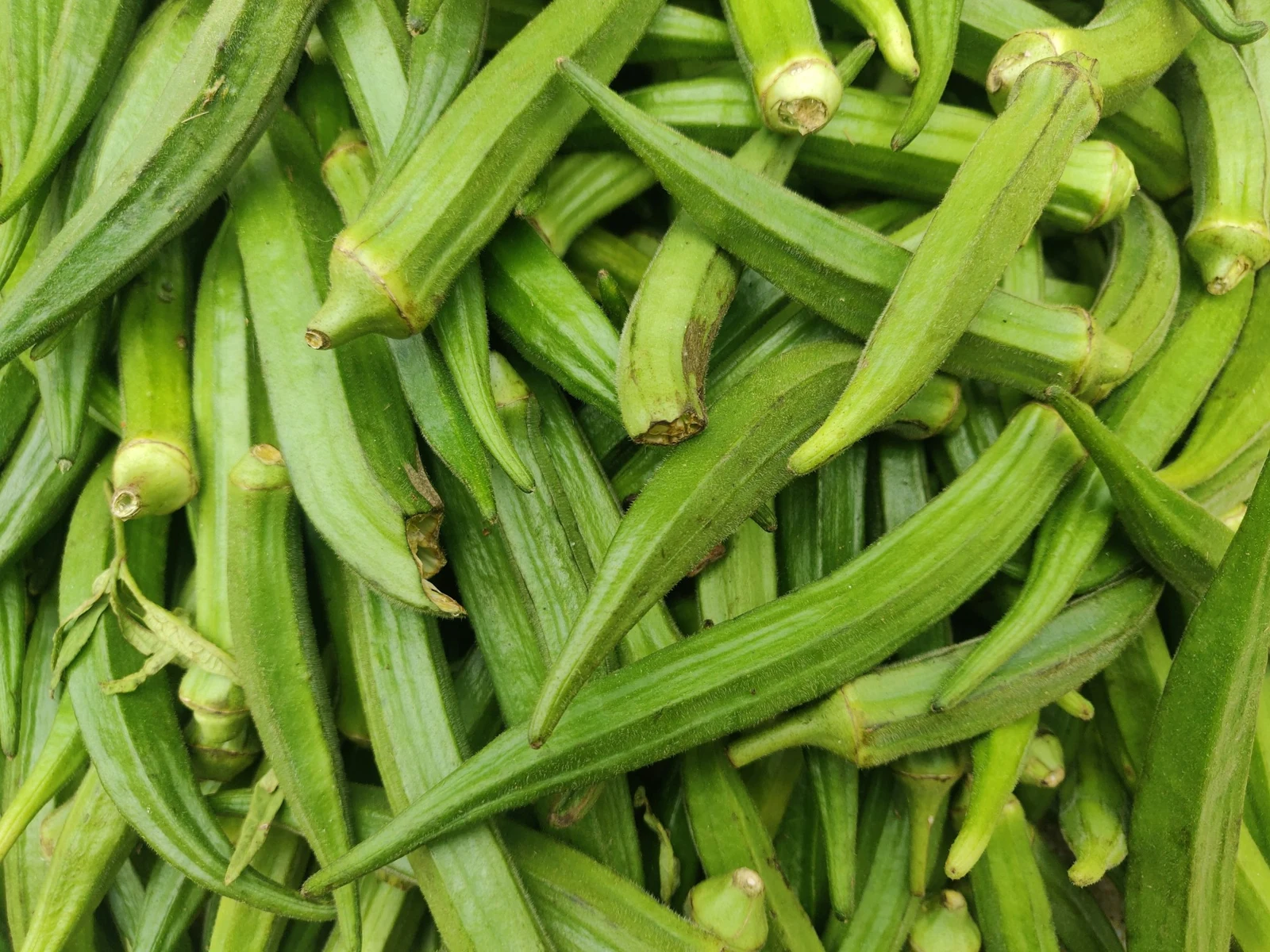 Okra - Ladies Finger (Bhindi)