
Pomegranate
Research status: AI draft — awaiting expert review


Overview
Pomegranate is a round fruit with a tough, leathery rind enclosing clusters of juicy, jewel-colored arils. Each aril surrounds an edible seed; the rind and pale internal membranes are generally not eaten.
Origin & cultivation
Pomegranate originated in the region stretching from Iran toward northern India and has been cultivated around the Mediterranean for millennia. Major producing regions include India, Iran, Turkey, China, and the Mediterranean, with commercial production also in California.
Season
In the Northern Hemisphere, fresh pomegranates are generally in season from September through January, depending on region and variety. Southern Hemisphere harvests, typically March through May, help extend availability.
Texture & flavor
Arils burst with sweet-tart juice and have a crunchy seed center, whose hardness varies by variety. The white membranes taste bitter, so remove them before serving.
Nutrition
Typical values estimated with AI, not yet checked against lab data. For guidance only.
| Energy | 83 kcal | raw, per 100 g edible portion | FoodPulse AI estimate |
| Protein | 1.67 g | raw, per 100 g edible portion | FoodPulse AI estimate |
| Total fat | 1.17 g | raw, per 100 g edible portion | FoodPulse AI estimate |
| Saturated fat | 0.12 g | raw, per 100 g edible portion | FoodPulse AI estimate |
| Carbohydrate | 18.7 g | raw, per 100 g edible portion | FoodPulse AI estimate |
| Dietary fiber | 4 g | raw, per 100 g edible portion | FoodPulse AI estimate |
| Total sugars | 13.67 g | raw, per 100 g edible portion | FoodPulse AI estimate |
| Water | 77.93 g | raw, per 100 g edible portion | FoodPulse AI estimate |
| Calcium | 10 mg | raw, per 100 g edible portion | FoodPulse AI estimate |
| Iron | 0.3 mg | raw, per 100 g edible portion | FoodPulse AI estimate |
| Magnesium | 12 mg | raw, per 100 g edible portion | FoodPulse AI estimate |
| Potassium | 236 mg | raw, per 100 g edible portion | FoodPulse AI estimate |
| Sodium | 3 mg | raw, per 100 g edible portion | FoodPulse AI estimate |
| Zinc | 0.35 mg | raw, per 100 g edible portion | FoodPulse AI estimate |
| Vitamin C | 10.2 mg | raw, per 100 g edible portion | FoodPulse AI estimate |
| Vitamin A (RAE) | 0 µg | raw, per 100 g edible portion | FoodPulse AI estimate |
| Folate | 38 µg | raw, per 100 g edible portion | FoodPulse AI estimate |
| Vitamin B12 | 0 µg | raw, per 100 g edible portion | FoodPulse AI estimate |
| Cholesterol | 0 mg | raw, per 100 g edible portion | FoodPulse AI estimate |
Glycemic index: Not established.
Whole arils provide fiber, while both arils and juice contain polyphenols; juice has little fiber compared with the whole fruit. Studies suggest possible modest effects on some cardiovascular markers, but evidence does not establish pomegranate as a treatment. Pomegranate allergy is uncommon but possible; anyone with a known allergy should avoid it. Educational, not medical advice.
Educational information, not medical advice.
Storage
- Room temperature, whole fruit · 60–70°F (16–21°C), ideally · About 1–2 weeks. Keep intact fruit in a cool, dry place away from sunlight. Discard fruit with mold, leaking splits, soft wet patches, or a fermented odor; mild surface drying alone is usually a quality issue. FoodPulse AI estimate
- Refrigerator · 32–40°F (0–4°C) · Whole fruit: about 1–2 months; removed arils: 3–5 days. Keep whole fruit dry and arils in a clean, covered container. Refrigerate cut fruit within 2 hours, or 1 hour above 90°F (32°C); discard arils with mold, slime, or an off odor, and do not rely on smell to judge fruit left out too long. FoodPulse AI estimate
- Freezer · 0°F (−18°C) or below · Arils: best quality within 8–12 months. Freeze drained arils on a tray, then transfer to airtight freezer containers. Continuously frozen fruit remains safe beyond the quality window; thaw in the refrigerator and use promptly. Discard if mold or spoilage develops after thawing; freezer burn alone is a quality issue. FoodPulse AI estimate
Preparation
Rinse the intact fruit under running water before cutting; do not use soap. Slice off the crown shallowly, score the rind along its ridges, and pull apart into sections, then loosen arils in a bowl of water so membranes float away. Use clean hands, knives, and boards, and keep the fruit separate from raw meat, poultry, seafood, and their juices.
Cooking
Use raw arils in salads, yogurt, grain dishes, or as a finishing garnish; prolonged heating reduces their fresh texture. For a sauce, gently simmer juice until slightly thickened, roughly 10–20 minutes for a small shallow-pan batch, or 30–60 minutes or longer for a larger batch or syrupy reduction. Stir frequently near the end because concentrated juice scorches easily.
Recipes
No verified recipes yet.
Waste less
Eat the arils with their seeds to retain fiber, and freeze extra arils in small portions for later use. Use leftover juice in dressings, sauces, or ice pops; promptly refrigerate or freeze it. Compost rind and membranes where accepted rather than trying to make these bitter parts into food.
Food waste tips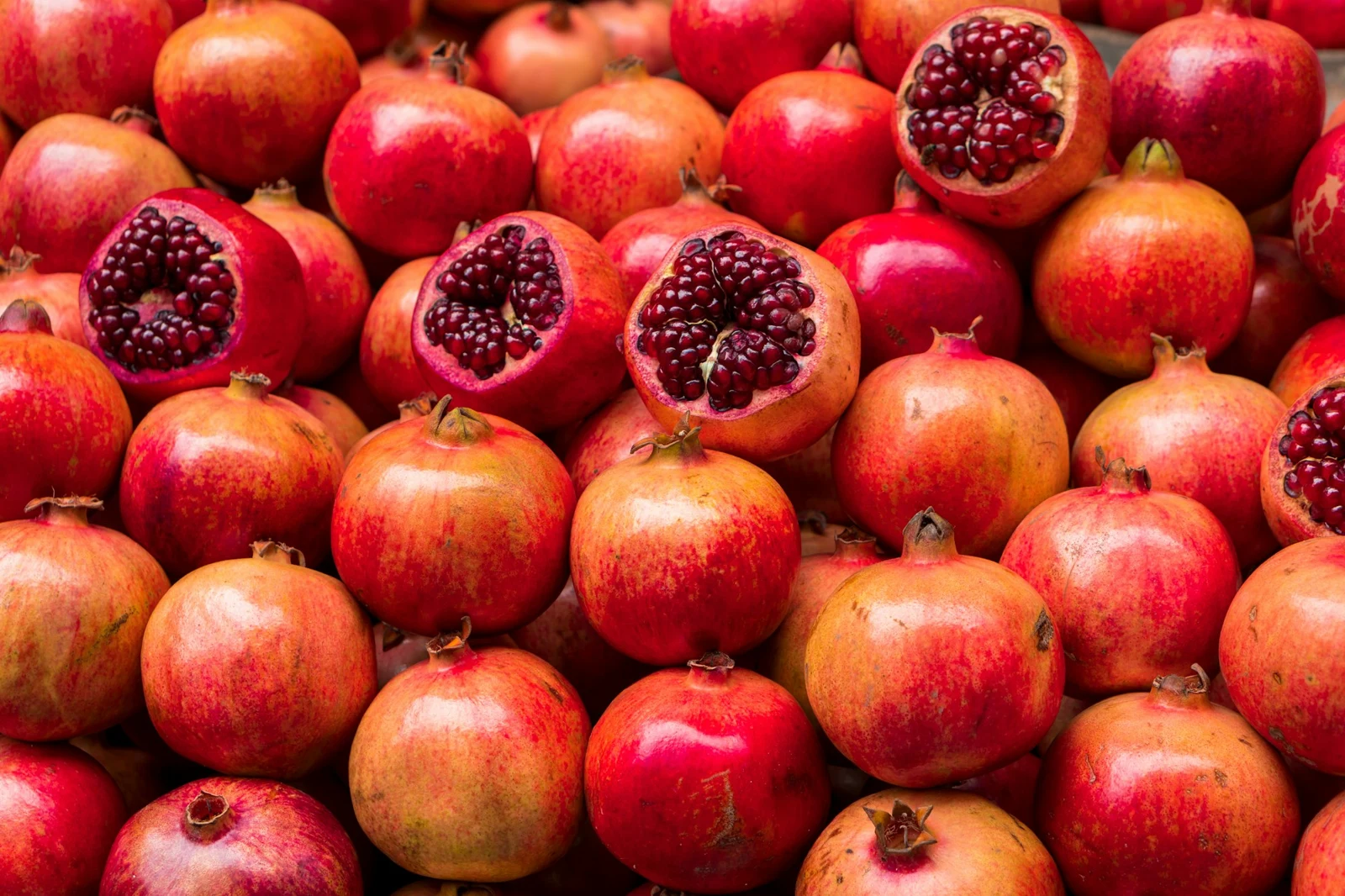 Pomegranate