
Plum
Research status: AI draft — awaiting expert review


Overview
Plums are thin-skinned stone fruits with a central hard pit, ranging from small and round to large and oval. Skin colors include yellow, red, purple, and nearly black; flesh may be yellow, red, or amber.
Origin & cultivation
European plums originated around western Asia and the Caucasus, while Japanese plums trace their ancestry to China. China is the largest producer; other major growing regions include southeastern Europe, Turkey, and the western United States, especially California.
Season
Fresh plums generally peak from late spring through early autumn, depending on variety and climate. In the United States, domestic fruit is most abundant from May through September, with imports extending availability.
Texture & flavor
Ripe plums have juicy, tender flesh with flavors ranging from honey-sweet to sharply tart, often with tangier skin. Choose fruit that yields slightly to gentle pressure for eating fresh; firmer fruit holds its shape better in cooking.
Nutrition
Typical values estimated with AI, not yet checked against lab data. For guidance only.
| Energy | 46 kcal | raw, per 100 g edible portion | FoodPulse AI estimate |
| Protein | 0.7 g | raw, per 100 g edible portion | FoodPulse AI estimate |
| Total fat | 0.28 g | raw, per 100 g edible portion | FoodPulse AI estimate |
| Saturated fat | 0.017 g | raw, per 100 g edible portion | FoodPulse AI estimate |
| Carbohydrate | 11.42 g | raw, per 100 g edible portion | FoodPulse AI estimate |
| Dietary fiber | 1.4 g | raw, per 100 g edible portion | FoodPulse AI estimate |
| Total sugars | 9.92 g | raw, per 100 g edible portion | FoodPulse AI estimate |
| Water | 87.23 g | raw, per 100 g edible portion | FoodPulse AI estimate |
| Calcium | 6 mg | raw, per 100 g edible portion | FoodPulse AI estimate |
| Iron | 0.17 mg | raw, per 100 g edible portion | FoodPulse AI estimate |
| Magnesium | 7 mg | raw, per 100 g edible portion | FoodPulse AI estimate |
| Potassium | 157 mg | raw, per 100 g edible portion | FoodPulse AI estimate |
| Sodium | 0 mg | raw, per 100 g edible portion | FoodPulse AI estimate |
| Zinc | 0.1 mg | raw, per 100 g edible portion | FoodPulse AI estimate |
| Vitamin C | 9.5 mg | raw, per 100 g edible portion | FoodPulse AI estimate |
| Vitamin A (RAE) | 17 µg | raw, per 100 g edible portion | FoodPulse AI estimate |
| Folate | 5 µg | raw, per 100 g edible portion | FoodPulse AI estimate |
| Vitamin B12 | 0 µg | raw, per 100 g edible portion | FoodPulse AI estimate |
| Cholesterol | 0 mg | raw, per 100 g edible portion | FoodPulse AI estimate |
Glycemic index: Not established.
Plums provide fiber, vitamin C, and plant polyphenols, although evidence does not support treating any disease with plums alone. Plum allergy can occur, including pollen-food allergy syndrome in people sensitive to birch pollen; their sorbitol may also cause digestive discomfort in sensitive people. Educational, not medical advice.
Educational information, not medical advice.
Storage
- Room temperature · About 60–75°F (16–24°C) · Usually 1–3 days to ripen. Keep whole, uncut plums out of direct sunlight and check daily; refrigerate once ripe. Discard fruit with mold, leaking decay, or fermented odors. FoodPulse AI estimate
- Refrigerator · 32–40°F (0–4°C) · Ripe whole plums: about 3–7 days; cut plums: 3–4 days. Store whole fruit unwashed and cut fruit in a covered container. Refrigerate cut fruit within 2 hours, or 1 hour above 90°F (32°C); discard if left out longer or if moldy, slimy, or off-smelling. FoodPulse AI estimate
- Freezer · 0°F (−18°C) or below · Best quality within 8–12 months. Wash, pit, and halve or slice; freeze in airtight freezer containers or bags. Continuously frozen fruit remains safe beyond this quality window, though it softens after thawing; thaw in the refrigerator and discard if moldy or showing spoilage. FoodPulse AI estimate
Preparation
Rinse under cool running water just before use, gently rub the skin, and dry; do not use soap or produce detergent. Cut around the pit, twist the halves apart if possible, and remove the pit, or slice flesh away from clingstone pits. Keep fruit and utensils separate from raw meat, poultry, seafood, and their juices, and wash hands and equipment before preparing ready-to-eat fruit.
Cooking
Roast pitted halves at 375–400°F (190–205°C) for about 15–25 minutes, depending on size and ripeness, until tender. Simmer slices or chunks into compote for roughly 10–20 minutes, or grill halves over medium heat for about 3–5 minutes per side. For shelf-stable preserves, use a tested USDA or NCHFP recipe and its specified processing method and altitude adjustments.
Recipes
No verified recipes yet.
Waste less
Leave edible skins on for extra texture and less waste, and use sound, overripe fruit in compote, baking, or smoothies. Refrigerate cooked leftovers promptly or freeze in small portions for later use. Compost pits and unusable trimmings where accepted, but do not crack or eat the kernels.
Food waste tips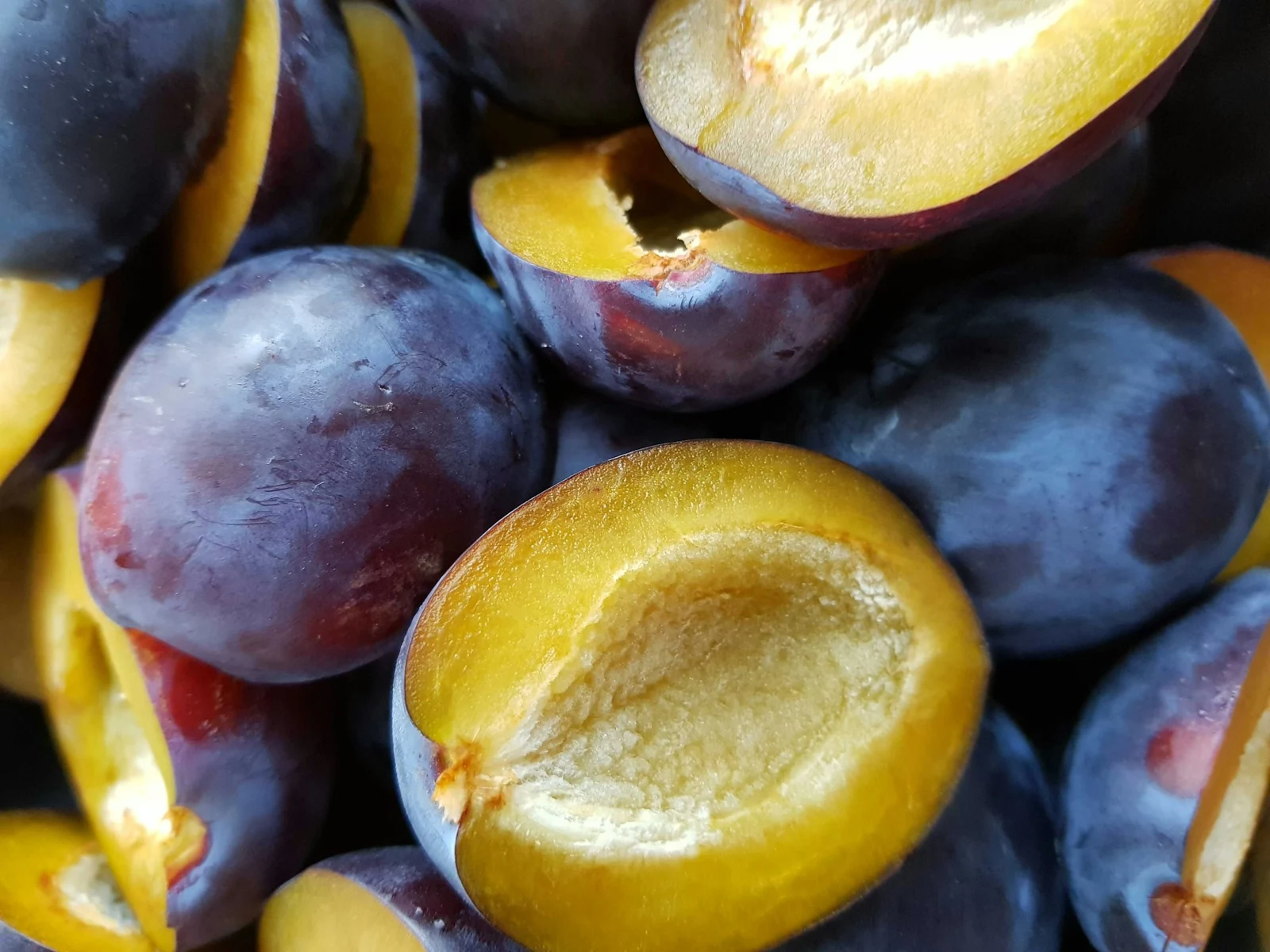 Plums (Prune)