
Strawberry
Research status: AI draft — awaiting expert review


Overview
Strawberries are soft red fruits with tiny seed-like structures on their surface and a leafy green cap. They are eaten fresh or used in desserts, salads, sauces, and preserves.
Origin & cultivation
The modern garden strawberry originated in Europe from crosses between North American and Chilean wild strawberries. Major producing regions include China, the United States—especially California and Florida—Mexico, Turkey, and Spain.
Season
Local strawberries generally peak from spring through early summer, with cooler regions harvesting later. Repeat-bearing varieties and imports extend availability; choose fragrant, fully red berries because they do not become sweeter after picking.
Texture & flavor
Ripe strawberries are juicy and tender, with a sweet-tart flavor and floral aroma. Underripe berries are firmer and more acidic, while freezing softens their texture after thawing.
Nutrition
Typical values estimated with AI, not yet checked against lab data. For guidance only.
| Energy | 32 kcal | raw, per 100 g edible portion | FoodPulse AI estimate |
| Protein | 0.67 g | raw, per 100 g edible portion | FoodPulse AI estimate |
| Total fat | 0.3 g | raw, per 100 g edible portion | FoodPulse AI estimate |
| Saturated fat | 0.015 g | raw, per 100 g edible portion | FoodPulse AI estimate |
| Carbohydrate | 7.68 g | raw, per 100 g edible portion | FoodPulse AI estimate |
| Dietary fiber | 2 g | raw, per 100 g edible portion | FoodPulse AI estimate |
| Total sugars | 4.89 g | raw, per 100 g edible portion | FoodPulse AI estimate |
| Water | 90.95 g | raw, per 100 g edible portion | FoodPulse AI estimate |
| Calcium | 16 mg | raw, per 100 g edible portion | FoodPulse AI estimate |
| Iron | 0.41 mg | raw, per 100 g edible portion | FoodPulse AI estimate |
| Magnesium | 13 mg | raw, per 100 g edible portion | FoodPulse AI estimate |
| Potassium | 153 mg | raw, per 100 g edible portion | FoodPulse AI estimate |
| Sodium | 1 mg | raw, per 100 g edible portion | FoodPulse AI estimate |
| Zinc | 0.14 mg | raw, per 100 g edible portion | FoodPulse AI estimate |
| Vitamin C | 58.8 mg | raw, per 100 g edible portion | FoodPulse AI estimate |
| Vitamin A (RAE) | 1 µg | raw, per 100 g edible portion | FoodPulse AI estimate |
| Folate | 24 µg | raw, per 100 g edible portion | FoodPulse AI estimate |
| Vitamin B12 | 0 µg | raw, per 100 g edible portion | FoodPulse AI estimate |
| Cholesterol | 0 mg | raw, per 100 g edible portion | FoodPulse AI estimate |
Glycemic index: Not established.
Strawberries provide vitamin C, fiber, and plant polyphenols, but eating them is not a treatment for disease. Strawberry allergy can occur, including pollen-related oral itching; anyone with a known allergy should avoid them. Educational, not medical advice.
Educational information, not medical advice.
Storage
- Room temperature · 60–75°F (16–24°C) · Whole berries: same day only for best quality; refrigerate promptly.. Keep out of sunlight and heat. Refrigerate cut berries within 2 hours, or 1 hour above 90°F (32°C). Discard berries with mold, slime, or fermented odors. FoodPulse AI estimate
- Refrigerator · 32–40°F (0–4°C) · Typically 3–7 days for fresh whole berries; 3–4 days once cut.. Store whole berries unwashed and dry in a loosely covered, ventilated container lined with paper towel; cover cut berries. Discard moldy berries and any directly touching them, and inspect the remainder carefully. Discard slimy berries or those with sour or fermented odors. FoodPulse AI estimate
- Freezer · 0°F (−18°C) or below · 8–12 months for best quality; continuously frozen berries remain safe longer.. Rinse, hull, dry, and tray-freeze sound berries before packing in airtight freezer containers. Thaw in the refrigerator or use frozen. Freezing does not sanitize fruit; discard berries showing mold, slime, or off odors after thawing. FoodPulse AI estimate
Preparation
Wash hands and rinse berries gently under cool running water just before use; do not use soap or bleach, and pat dry. Remove the leafy caps after rinsing, then leave whole, halve, or slice as needed. Keep berries and utensils separate from raw meat, poultry, seafood, and their juices, especially when serving the fruit uncooked.
Cooking
Serve raw, simmer into a sauce, or roast to concentrate flavor. Halved or quartered berries typically soften in 5–10 minutes at a gentle simmer or 15–25 minutes in a 375°F (190°C) oven; large whole berries may take longer. For shelf-stable jam, use a tested USDA or NCHFP recipe and its specified canning process and altitude adjustment.
Recipes
No verified recipes yet.
Waste less
Trim caps shallowly to save flesh, and use sound, overripe berries promptly in sauces, smoothies, or baking. Freeze surplus berries or leftover puree in small portions. Compost caps and spoiled berries where accepted; never salvage moldy strawberries by cutting off the mold.
Food waste tips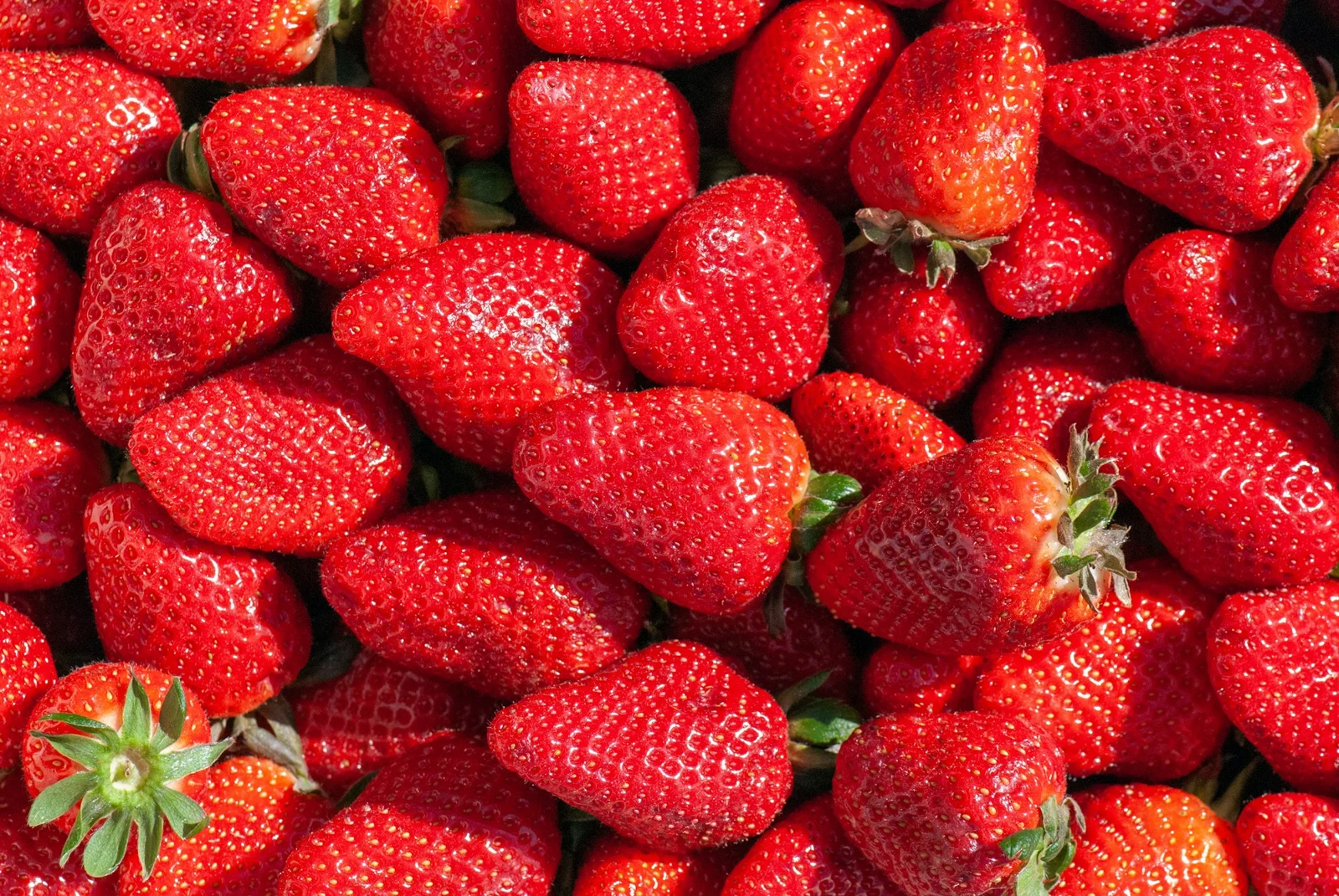 Strawberries