
Cherry
Research status: AI draft — awaiting expert review


Overview
Cherries are small stone fruits with smooth skins, juicy flesh, and a single hard pit. Sweet varieties are usually eaten fresh, while tart varieties are popular in pies, preserves, and sauces.
Origin & cultivation
Cherries originated across parts of Europe and western Asia, with different origins for sweet and tart types. Major producing regions include Turkey, the United States, Chile, and parts of Europe; Washington is known for sweet cherries and Michigan for tart cherries.
Season
Fresh local cherries have a short season, generally late spring through midsummer in the Northern Hemisphere, depending on variety and climate. Southern Hemisphere harvests supply winter imports, while frozen and dried cherries are available year-round.
Texture & flavor
Sweet cherries range from crisp and firm to tender, with juicy, honeyed flesh and mild acidity. Tart cherries are softer and noticeably sour, making them useful for balancing sweet desserts and rich savory dishes.
Nutrition
Typical values estimated with AI, not yet checked against lab data. For guidance only.
| Energy | 63 kcal | raw, per 100 g edible portion | FoodPulse AI estimate |
| Protein | 1.06 g | raw, per 100 g edible portion | FoodPulse AI estimate |
| Total fat | 0.2 g | raw, per 100 g edible portion | FoodPulse AI estimate |
| Saturated fat | 0.038 g | raw, per 100 g edible portion | FoodPulse AI estimate |
| Carbohydrate | 16.01 g | raw, per 100 g edible portion | FoodPulse AI estimate |
| Dietary fiber | 2.1 g | raw, per 100 g edible portion | FoodPulse AI estimate |
| Total sugars | 12.82 g | raw, per 100 g edible portion | FoodPulse AI estimate |
| Water | 82.25 g | raw, per 100 g edible portion | FoodPulse AI estimate |
| Calcium | 13 mg | raw, per 100 g edible portion | FoodPulse AI estimate |
| Iron | 0.36 mg | raw, per 100 g edible portion | FoodPulse AI estimate |
| Magnesium | 11 mg | raw, per 100 g edible portion | FoodPulse AI estimate |
| Potassium | 222 mg | raw, per 100 g edible portion | FoodPulse AI estimate |
| Sodium | 0 mg | raw, per 100 g edible portion | FoodPulse AI estimate |
| Zinc | 0.07 mg | raw, per 100 g edible portion | FoodPulse AI estimate |
| Vitamin C | 7 mg | raw, per 100 g edible portion | FoodPulse AI estimate |
| Vitamin A (RAE) | 3 µg | raw, per 100 g edible portion | FoodPulse AI estimate |
| Folate | 4 µg | raw, per 100 g edible portion | FoodPulse AI estimate |
| Vitamin B12 | 0 µg | raw, per 100 g edible portion | FoodPulse AI estimate |
| Cholesterol | 0 mg | raw, per 100 g edible portion | FoodPulse AI estimate |
Glycemic index: Not established.
Cherries provide fiber, vitamin C, and polyphenols, but evidence for specific benefits such as improved sleep or gout management is limited and does not establish a treatment. Cherry allergy can occur, including pollen-food allergy syndrome; large portions may also cause digestive discomfort in people sensitive to sorbitol. Educational, not medical advice.
Educational information, not medical advice.
Storage
- Room temperature · 60–75°F (16–24°C) · Best limited to the day of purchase. Whole cherries deteriorate quickly in warmth, so refrigerate promptly and keep out of direct sunlight. Refrigerate cut or pitted cherries within 2 hours, or 1 hour above 90°F (32°C). Discard fruit with mold, leaking decay, or a fermented odor. FoodPulse AI estimate
- Refrigerator · 32–40°F (0–4°C) · Whole: about 4–7 days; cut or pitted: 3–4 days. Store whole cherries unwashed and dry in a ventilated container; keep cut fruit covered. Remove damaged fruit and discard moldy, slimy, or fermented-smelling cherries. Keep away from raw animal-food drips. FoodPulse AI estimate
- Freezer · 0°F (−18°C) or below · 8–12 months for best quality. Wash, dry, stem, and preferably pit cherries; tray-freeze, then pack in airtight freezer containers. Continuously frozen fruit remains safe beyond this quality window, but freezing does not make spoiled fruit safe. Thaw in the refrigerator and discard if mold, slime, or an off odor develops; freezer burn alone is a quality issue. FoodPulse AI estimate
Preparation
Rinse cherries under cool running water just before use; do not use soap or bleach. Remove stems, then pit with a cherry pitter or carefully halve around the stone and remove it, checking for pit fragments. For young children, remove pits and cut into small pieces rather than serving whole; keep fruit and utensils separate from raw meat, poultry, and seafood.
Cooking
Simmer pitted cherries for sauces or compotes for about 5–15 minutes, depending on size and desired softness. Roast at 400°F (204°C) for roughly 15–25 minutes, or bake in pies for about 40–60 minutes, depending on pie size and recipe, until the filling bubbles in the center. Tart cherries usually need more sweetening than sweet varieties; follow a tested recipe for any preserved product.
Recipes
No verified recipes yet.
Waste less
Leave edible skins on and turn sound, softened cherries into compote, smoothies, or baked fillings before they spoil. Freeze surplus pitted fruit and use leftover compote on oatmeal, yogurt, or pancakes. Compost stems and pits where accepted, although pits break down slowly; do not crush or eat the pits or their kernels.
Food waste tips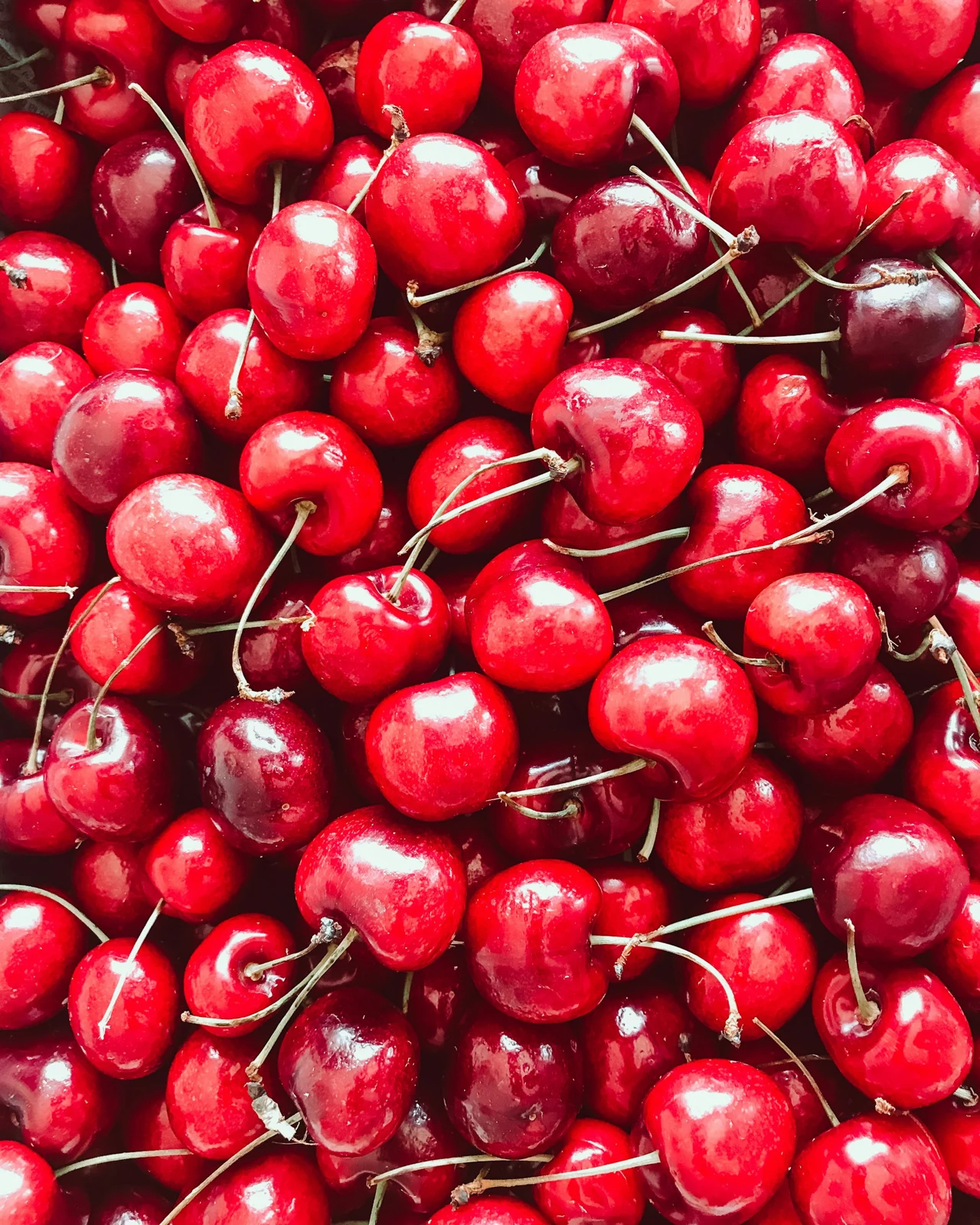 Cherries