
Papaya
Research status: AI draft — awaiting expert review


Overview
Papaya is a tropical fruit with orange to salmon-colored flesh, a central cavity of black seeds, and green skin that turns yellow as it ripens. Ripe papaya is eaten as fruit, while firm, unripe green papaya is used as a vegetable.
Origin & cultivation
Papaya originated in tropical America, probably southern Mexico and Central America. Major producing regions include India, Brazil, Indonesia, Mexico, and other tropical areas of Asia and the Americas.
Season
Papaya is available year-round through tropical production and imports, with local peaks depending on climate. For eating fresh, choose fruit with some yellow skin that yields slightly to gentle pressure; avoid mold, leaking spots, or a fermented smell.
Texture & flavor
Ripe papaya is soft, juicy, and buttery, with a mild sweetness and musky aroma. Green papaya is crisp and relatively bland, while the seeds have a sharp, peppery flavor.
Nutrition
Typical values estimated with AI, not yet checked against lab data. For guidance only.
| Energy | 43 kcal | raw, per 100 g edible portion | FoodPulse AI estimate |
| Protein | 0.47 g | raw, per 100 g edible portion | FoodPulse AI estimate |
| Total fat | 0.26 g | raw, per 100 g edible portion | FoodPulse AI estimate |
| Saturated fat | 0.081 g | raw, per 100 g edible portion | FoodPulse AI estimate |
| Carbohydrate | 10.82 g | raw, per 100 g edible portion | FoodPulse AI estimate |
| Dietary fiber | 1.7 g | raw, per 100 g edible portion | FoodPulse AI estimate |
| Total sugars | 7.82 g | raw, per 100 g edible portion | FoodPulse AI estimate |
| Water | 88.06 g | raw, per 100 g edible portion | FoodPulse AI estimate |
| Calcium | 20 mg | raw, per 100 g edible portion | FoodPulse AI estimate |
| Iron | 0.25 mg | raw, per 100 g edible portion | FoodPulse AI estimate |
| Magnesium | 21 mg | raw, per 100 g edible portion | FoodPulse AI estimate |
| Potassium | 182 mg | raw, per 100 g edible portion | FoodPulse AI estimate |
| Sodium | 8 mg | raw, per 100 g edible portion | FoodPulse AI estimate |
| Zinc | 0.08 mg | raw, per 100 g edible portion | FoodPulse AI estimate |
| Vitamin C | 60.9 mg | raw, per 100 g edible portion | FoodPulse AI estimate |
| Vitamin A (RAE) | 47 µg | raw, per 100 g edible portion | FoodPulse AI estimate |
| Folate | 37 µg | raw, per 100 g edible portion | FoodPulse AI estimate |
| Vitamin B12 | 0 µg | raw, per 100 g edible portion | FoodPulse AI estimate |
| Cholesterol | 0 mg | raw, per 100 g edible portion | FoodPulse AI estimate |
Glycemic index: Not established.
Papaya provides vitamin C, carotenoids, and fiber, but claims that eating it treats digestive disorders or other illnesses are not established. Papaya allergy can occur, including cross-reactions in people with latex allergy; unripe fruit contains more latex. Educational, not medical advice.
Educational information, not medical advice.
Storage
- Room temperature · 65–75°F (18–24°C) · Usually 2–5 days to ripen, depending on initial maturity. Keep whole, uncut fruit out of direct sunlight and check daily. Refrigerate once ripe; discard fruit with mold, leaking decay, or a sour or fermented odor. FoodPulse AI estimate
- Refrigerator · 32–40°F (0–4°C) · Whole ripe fruit: about 3–5 days; cut fruit: 3–4 days. Cover cut fruit and refrigerate within 2 hours of cutting, or within 1 hour above 90°F (32°C). Discard cut fruit left out longer, or fruit showing mold, slime, or an off odor; unsafe food may show no visible spoilage. FoodPulse AI estimate
- Freezer · 0°F (−18°C) or below · About 8–12 months for best quality. Freeze peeled, seeded pieces or purée promptly in airtight freezer containers; thaw in the refrigerator or use frozen. Continuously frozen fruit remains safe beyond this quality window, but becomes softer after thawing; discard thawed fruit with mold, slime, or a fermented odor. FoodPulse AI estimate
Preparation
Wash the whole fruit under running water before cutting, even though the peel will be removed; do not use soap. Halve lengthwise, scoop out the seeds, then peel and slice or cube, or scoop ripe flesh directly from the skin. Use clean utensils and a cutting board kept separate from raw meat, poultry, and seafood.
Cooking
Eat ripe papaya raw, blend into smoothies, or roast thick slices at 400°F (205°C) for about 10–20 minutes, depending on thickness and ripeness. Simmer green papaya cubes in soups or curries for roughly 15–30 minutes, until tender; thin shreds cook faster. Its papain enzyme can tenderize meat, but prolonged contact may make the surface mushy.
Recipes
No verified recipes yet.
Waste less
Blend very ripe, sound flesh into smoothies or purée and freeze it in small portions. A few washed seeds can be used as a peppery garnish if tolerated, though large quantities are not recommended. Compost the peel and unused seeds where accepted, and discard rather than salvage moldy or spoiled fruit.
Food waste tips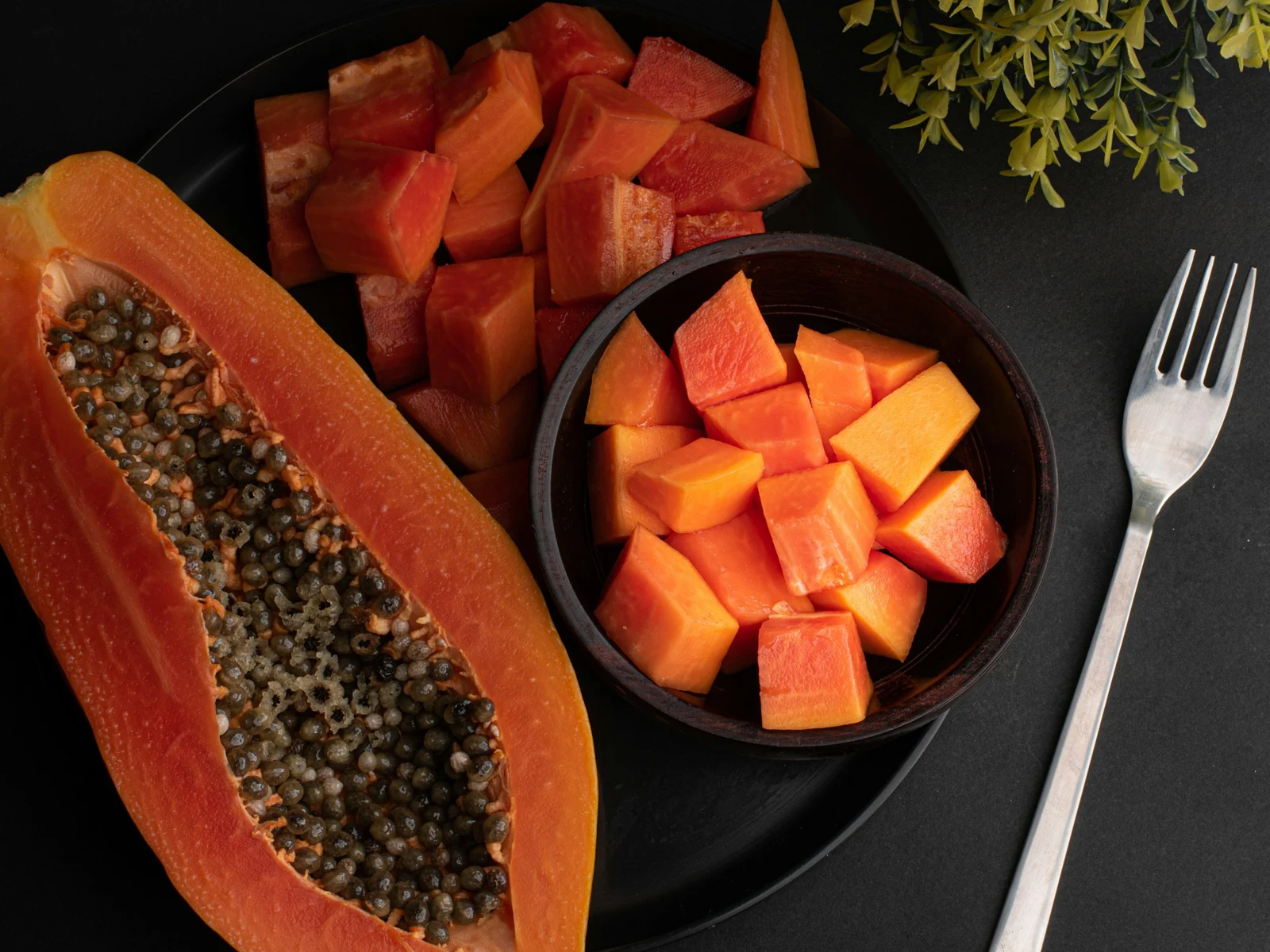 Papaya - Papaya Seeds