
Guava
Research status: AI draft — awaiting expert review


Overview
Guava is a tropical fruit with edible skin, fragrant flesh, and numerous small, hard seeds. Common guavas range from green to yellow outside, with white, pink, or red flesh; size and sweetness vary by cultivar.
Origin & cultivation
Guava originated in tropical America, probably from southern Mexico through Central America into northern South America. It is now grown throughout the tropics and subtropics, with major production in India, China, Brazil, Mexico, and other warm regions.
Season
Guava may be available year-round from tropical growers, though local harvests often come in distinct seasonal flushes. In subtropical regions, supplies commonly peak from summer into fall; exact timing depends on climate and cultivar.
Texture & flavor
Ripe guava is fragrant, sweet-tart, and often reminiscent of pear, strawberry, and tropical citrus. Its flesh ranges from crisp to soft and slightly grainy, with a seed-filled center; underripe fruit is firmer and more astringent.
Nutrition
Typical values estimated with AI, not yet checked against lab data. For guidance only.
| Energy | 68 kcal | raw, per 100 g edible portion | FoodPulse AI estimate |
| Protein | 2.55 g | raw, per 100 g edible portion | FoodPulse AI estimate |
| Total fat | 0.95 g | raw, per 100 g edible portion | FoodPulse AI estimate |
| Saturated fat | 0.272 g | raw, per 100 g edible portion | FoodPulse AI estimate |
| Carbohydrate | 14.32 g | raw, per 100 g edible portion | FoodPulse AI estimate |
| Dietary fiber | 5.4 g | raw, per 100 g edible portion | FoodPulse AI estimate |
| Total sugars | 8.92 g | raw, per 100 g edible portion | FoodPulse AI estimate |
| Water | 80.8 g | raw, per 100 g edible portion | FoodPulse AI estimate |
| Calcium | 18 mg | raw, per 100 g edible portion | FoodPulse AI estimate |
| Iron | 0.26 mg | raw, per 100 g edible portion | FoodPulse AI estimate |
| Magnesium | 22 mg | raw, per 100 g edible portion | FoodPulse AI estimate |
| Potassium | 417 mg | raw, per 100 g edible portion | FoodPulse AI estimate |
| Sodium | 2 mg | raw, per 100 g edible portion | FoodPulse AI estimate |
| Zinc | 0.23 mg | raw, per 100 g edible portion | FoodPulse AI estimate |
| Vitamin C | 228.3 mg | raw, per 100 g edible portion | FoodPulse AI estimate |
| Vitamin A (RAE) | 31 µg | raw, per 100 g edible portion | FoodPulse AI estimate |
| Folate | 49 µg | raw, per 100 g edible portion | FoodPulse AI estimate |
| Vitamin B12 | 0 µg | raw, per 100 g edible portion | FoodPulse AI estimate |
| Cholesterol | 0 mg | raw, per 100 g edible portion | FoodPulse AI estimate |
Glycemic index: Not established.
Guava provides vitamin C and dietary fiber, although amounts vary by cultivar and serving size. Guava allergy is possible; anyone with a known allergy should avoid it, and large portions may cause digestive discomfort in sensitive people. Educational, not medical advice.
Educational information, not medical advice.
Storage
- Room temperature · About 65–75°F (18–24°C) · Usually 1–3 days to ripen; check daily. Keep whole, uncut fruit out of direct sunlight and refrigerate once fragrant and slightly yielding. Discard fruit with mold, leaking decay, or a fermented odor; normal softening alone is not spoilage. FoodPulse AI estimate
- Refrigerator · 32–40°F (0–4°C) · Ripe whole fruit: about 2–4 days; cut fruit: 3–4 days. Store cut fruit in a covered container and refrigerate within 2 hours, or within 1 hour above 90°F (32°C). Discard if moldy, slimy, or sour-smelling, or if cut fruit exceeded those room-temperature limits. FoodPulse AI estimate
- Freezer · 0°F (-18°C) or below · About 8–12 months for best quality. Wash, trim, and freeze slices or purée in freezer-safe containers, leaving headspace for expansion. Continuously frozen fruit remains safe beyond this quality window, though texture softens; thaw in the refrigerator and discard thawed fruit showing mold, slime, or fermented odors. FoodPulse AI estimate
Preparation
Rinse whole guavas under running water before cutting, rubbing the skin gently; do not use soap or produce detergent. Trim the stem and blossom ends, then slice, wedge, or halve; the skin is edible, and hard seeds can be scooped out or strained from purée. Use clean hands, knives, and boards, keeping fruit separate from raw meat, poultry, seafood, and their juices.
Cooking
Eat ripe guava raw, blend it into drinks, or simmer it for sauces and compotes. Simmer 1–2-inch pieces with a little water for about 10–20 minutes, or roast halves at 375°F (190°C) for about 20–35 minutes, until tender; larger or firmer fruit takes longer. For shelf-stable preserves, use a tested guava recipe from NCHFP or a cooperative extension source and follow its processing instructions exactly.
Recipes
No verified recipes yet.
Waste less
Use sound edible skins and flesh together in smoothies or cooked purées, straining afterward if you dislike the seeds. Freeze extra ripe fruit or refrigerate leftover compote promptly for later use in yogurt, oatmeal, or desserts. Compost stems, unwanted seeds, and spoiled fruit where locally appropriate rather than using moldy fruit in cooking.
Food waste tips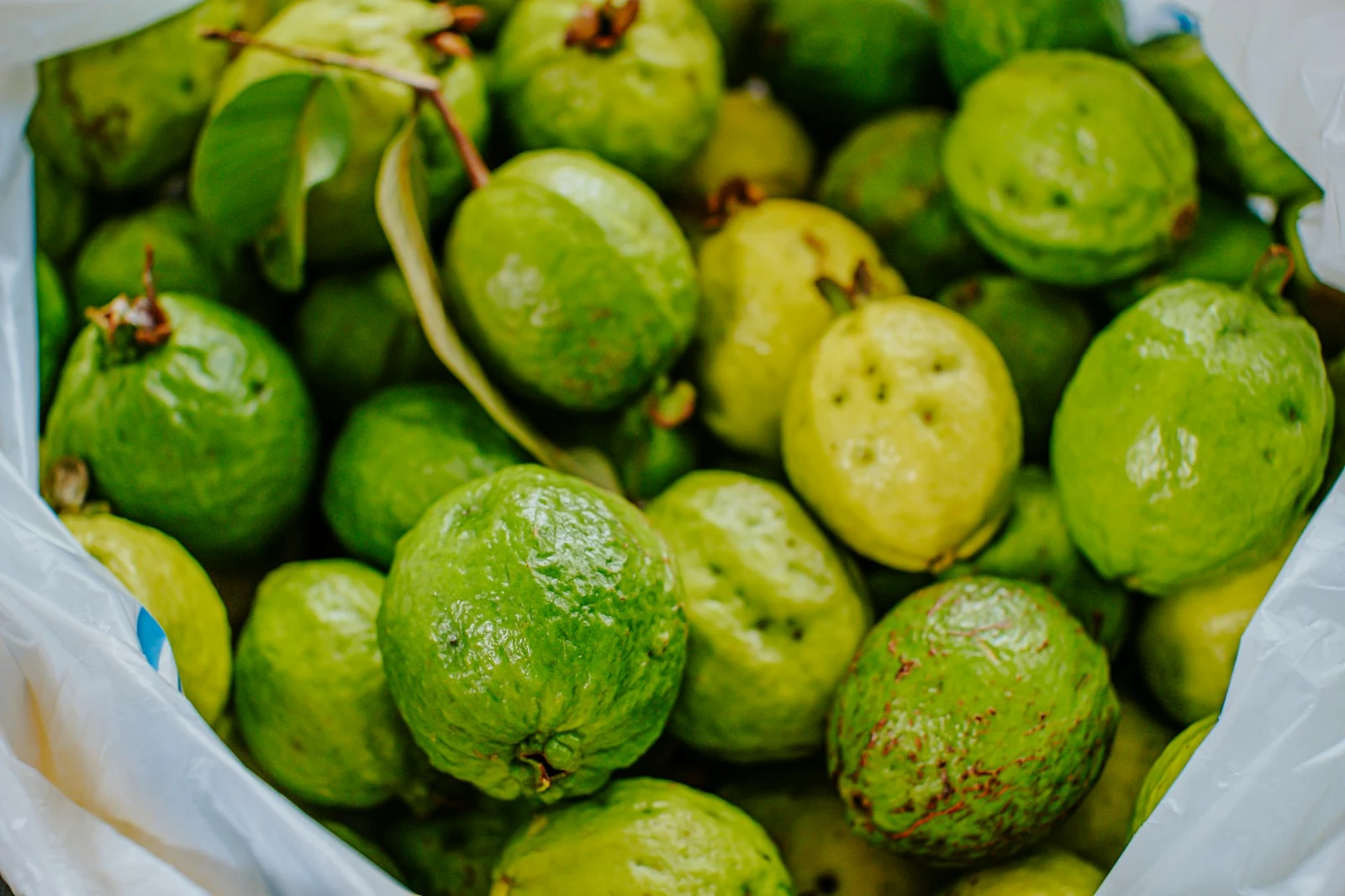 Guavas