
Jackfruit
Research status: AI draft — awaiting expert review


Overview
Jackfruit is a very large tropical tree fruit with a knobbly green-to-yellow rind, edible flesh, and large seeds. Ripe flesh is eaten as fruit; immature jackfruit is used as a savory vegetable, often shredded.
Origin & cultivation
Jackfruit is native to South Asia, likely southwestern India. Major growing regions include India, Bangladesh, and tropical Southeast Asia, with additional production in Brazil and other tropical areas.
Season
Fresh jackfruit is often most available from spring through summer, though harvest seasons vary by region and some tropical areas produce it nearly year-round. Canned, frozen, and dried jackfruit are available throughout the year.
Texture & flavor
Ripe jackfruit has a strong, sweet tropical aroma and chewy-to-soft yellow bulbs, with flavors reminiscent of banana, pineapple, and mango. Young green jackfruit is mild and fibrous, absorbing sauces readily; cooked seeds are firm and starchy.
Nutrition
Typical values estimated with AI, not yet checked against lab data. For guidance only.
| Energy | 95 kcal | raw, per 100 g edible portion | FoodPulse AI estimate |
| Protein | 1.72 g | raw, per 100 g edible portion | FoodPulse AI estimate |
| Total fat | 0.64 g | raw, per 100 g edible portion | FoodPulse AI estimate |
| Saturated fat | 0.195 g | raw, per 100 g edible portion | FoodPulse AI estimate |
| Carbohydrate | 23.25 g | raw, per 100 g edible portion | FoodPulse AI estimate |
| Dietary fiber | 1.5 g | raw, per 100 g edible portion | FoodPulse AI estimate |
| Total sugars | 19.08 g | raw, per 100 g edible portion | FoodPulse AI estimate |
| Water | 73.46 g | raw, per 100 g edible portion | FoodPulse AI estimate |
| Calcium | 24 mg | raw, per 100 g edible portion | FoodPulse AI estimate |
| Iron | 0.23 mg | raw, per 100 g edible portion | FoodPulse AI estimate |
| Magnesium | 29 mg | raw, per 100 g edible portion | FoodPulse AI estimate |
| Potassium | 448 mg | raw, per 100 g edible portion | FoodPulse AI estimate |
| Sodium | 2 mg | raw, per 100 g edible portion | FoodPulse AI estimate |
| Zinc | 0.13 mg | raw, per 100 g edible portion | FoodPulse AI estimate |
| Vitamin C | 13.7 mg | raw, per 100 g edible portion | FoodPulse AI estimate |
| Vitamin A (RAE) | 5 µg | raw, per 100 g edible portion | FoodPulse AI estimate |
| Folate | 24 µg | raw, per 100 g edible portion | FoodPulse AI estimate |
| Vitamin B12 | 0 µg | raw, per 100 g edible portion | FoodPulse AI estimate |
| Cholesterol | 0 mg | raw, per 100 g edible portion | FoodPulse AI estimate |
Glycemic index: Not established.
Jackfruit provides carbohydrate, fiber, potassium, and some vitamin C, but young jackfruit is not a protein-equivalent replacement for meat. Allergy is possible, with cross-reactions reported in some people with latex or birch-pollen allergy; canned products may also contain substantial sodium or added sugar. Educational, not medical advice.
Educational information, not medical advice.
Storage
- Room temperature · About 68–77°F (20–25°C) · Whole, uncut fruit: usually 2–5 days to ripen, depending on initial maturity. Keep out of direct sunlight and check daily; cut and refrigerate once ripe. Discard fruit with mold, leaking decay, or a sour or fermented odor rather than its normal sweet aroma. FoodPulse AI estimate
- Refrigerator · 32–40°F (0–4°C) · Cut ripe bulbs, opened canned jackfruit, or cooked jackfruit: 3–4 days. Store covered in clean containers. Refrigerate cut or cooked fruit within 2 hours, or within 1 hour above 90°F (32°C); discard if left out longer, or if moldy, slimy, or sour-smelling. FoodPulse AI estimate
- Freezer · 0°F (−18°C) or below · About 6–12 months for best quality. Remove rind and seeds from ripe bulbs and pack in airtight freezer containers; cool cooked jackfruit promptly before freezing. Thaw in the refrigerator; continuous freezing keeps food safe longer than this quality window, but freezing does not make spoiled fruit safe. FoodPulse AI estimate
Preparation
Scrub the rind under running water before cutting; do not use soap. On a stable board, quarter the fruit, remove the tough core, and separate the edible bulbs from the rind and fibrous material, removing seeds for separate cooking. Sticky latex can be managed with a lightly oiled knife and food-safe gloves; wash hands and tools afterward, and keep the fruit separate from raw animal foods and their utensils.
Cooking
Eat ripe bulbs raw or add them near the end of cooking to preserve their texture. Simmer fresh peeled young jackfruit pieces for about 30–60 minutes, depending on size and maturity, until tender; drained canned young jackfruit usually needs only 10–20 minutes in sauce. Boil seeds for roughly 20–30 minutes, or longer for large seeds, until tender, then peel off the tough outer skin before eating.
Recipes
No verified recipes yet.
Waste less
Cook the seeds rather than discarding them, and use ripe bulbs in smoothies, baking, or compote. Add leftover cooked young jackfruit to soups, tacos, or grain bowls, keeping it refrigerated and using it within 3–4 days. Compost the rind, core, and unusable fibers where local composting rules allow.
Food waste tips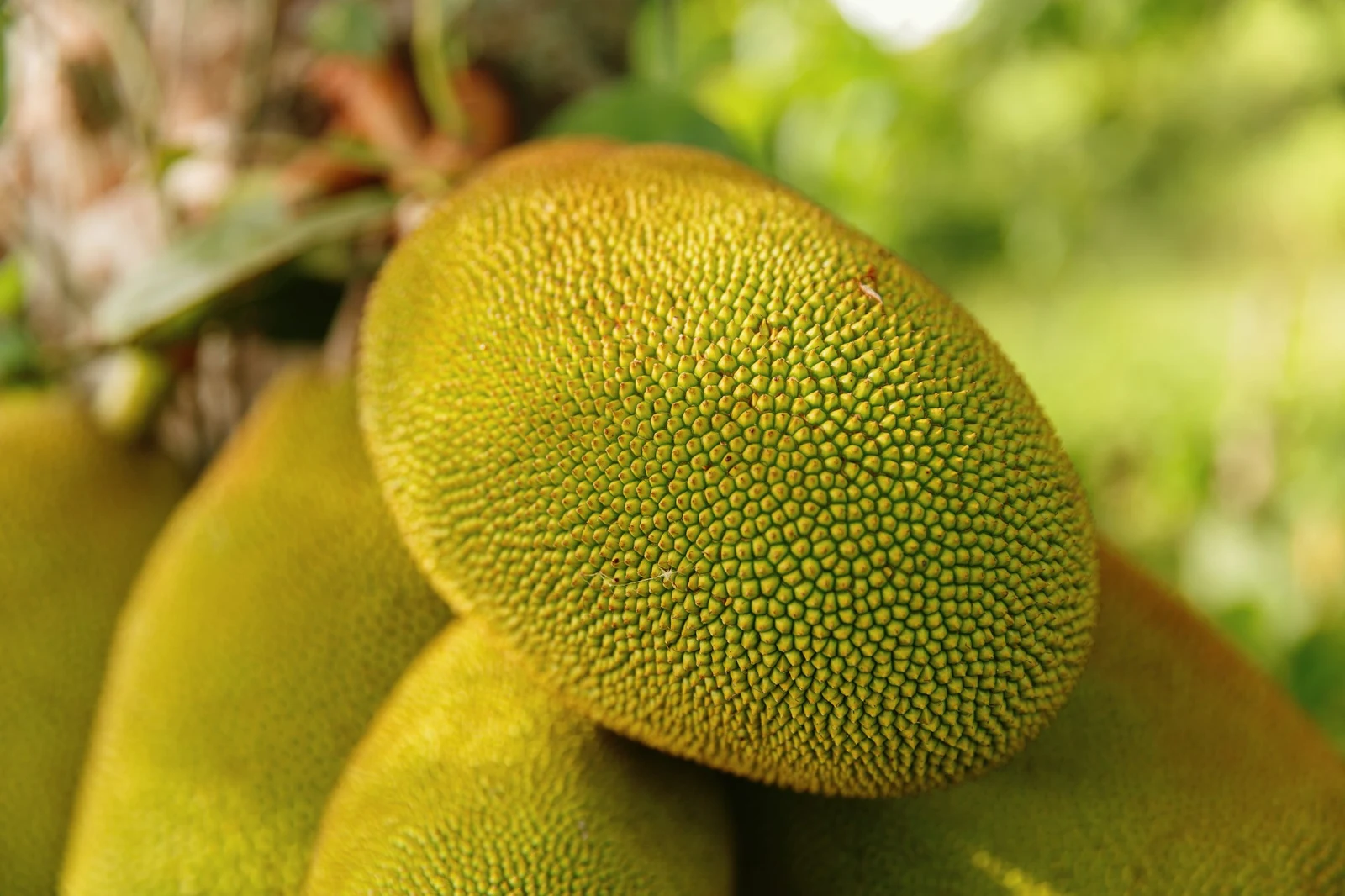 Jackfruit