
Mango
Research status: AI draft — awaiting expert review


Overview
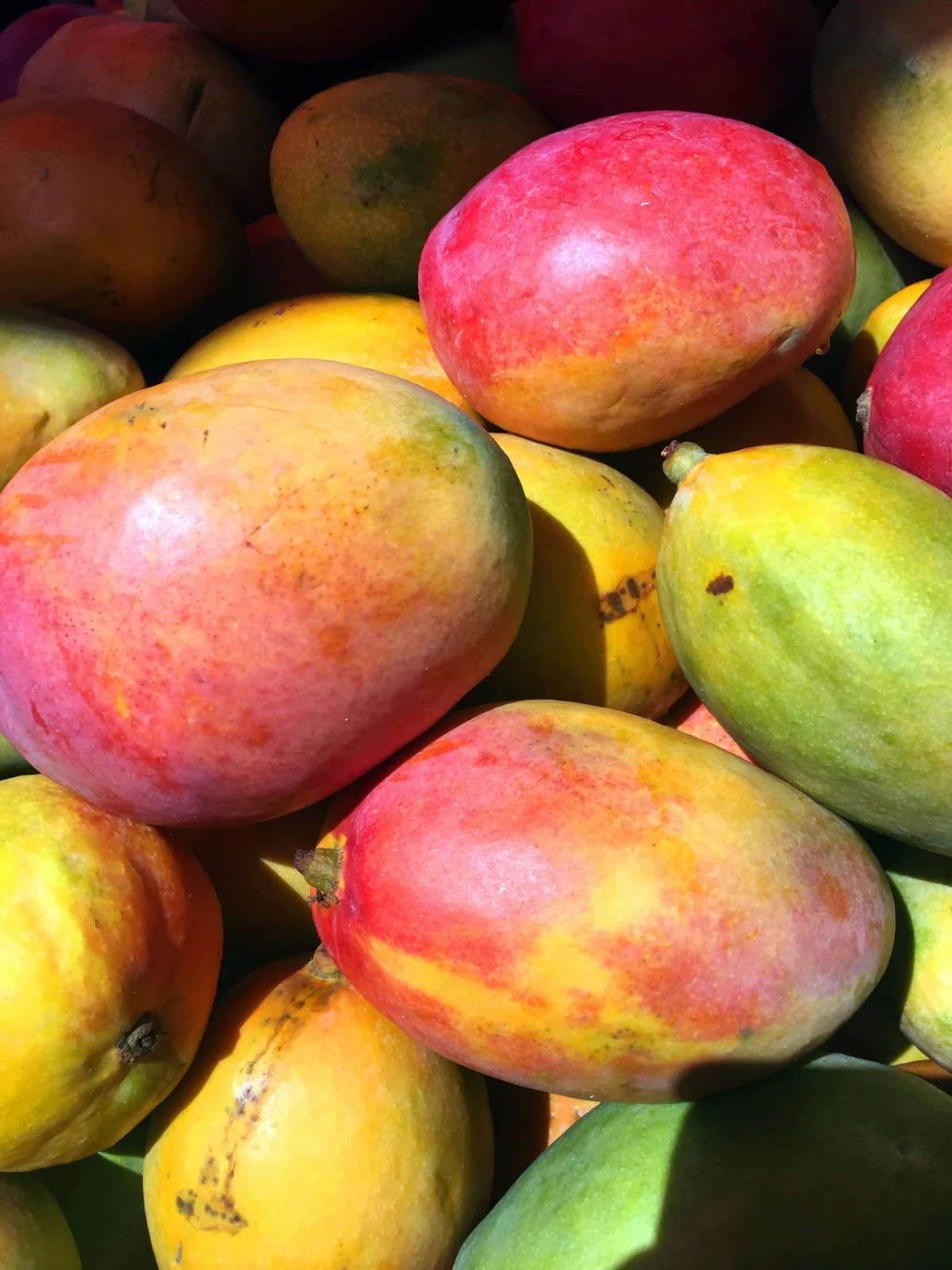
Mango is a tropical stone fruit with a large, flat pit and skin that may be green, yellow, orange, or red. Judge ripeness by a slight give under gentle pressure and a fruity aroma near the stem, not skin color alone.
Origin & cultivation
Mango originated in South Asia, particularly around northeastern India and neighboring regions. Major producers include India, China, Indonesia, Pakistan, and Mexico; it also grows widely in other tropical and subtropical regions.
Season
In the United States, imported mangoes are available year-round, with many varieties most abundant from spring through summer. Local harvest seasons vary by region and cultivar.
Texture & flavor
Ripe mango flesh is juicy and sweet, with floral, citrus, or peach-like notes; its texture ranges from buttery to noticeably fibrous. Unripe mango is firm and tart, useful in slaws, pickles, and chutneys.
Nutrition
Typical values estimated with AI, not yet checked against lab data. For guidance only.
| Energy | 60 kcal | raw, per 100 g edible portion | FoodPulse AI estimate |
| Protein | 0.82 g | raw, per 100 g edible portion | FoodPulse AI estimate |
| Total fat | 0.38 g | raw, per 100 g edible portion | FoodPulse AI estimate |
| Saturated fat | 0.092 g | raw, per 100 g edible portion | FoodPulse AI estimate |
| Carbohydrate | 14.98 g | raw, per 100 g edible portion | FoodPulse AI estimate |
| Dietary fiber | 1.6 g | raw, per 100 g edible portion | FoodPulse AI estimate |
| Total sugars | 13.66 g | raw, per 100 g edible portion | FoodPulse AI estimate |
| Water | 83.46 g | raw, per 100 g edible portion | FoodPulse AI estimate |
| Calcium | 11 mg | raw, per 100 g edible portion | FoodPulse AI estimate |
| Iron | 0.16 mg | raw, per 100 g edible portion | FoodPulse AI estimate |
| Magnesium | 10 mg | raw, per 100 g edible portion | FoodPulse AI estimate |
| Potassium | 168 mg | raw, per 100 g edible portion | FoodPulse AI estimate |
| Sodium | 1 mg | raw, per 100 g edible portion | FoodPulse AI estimate |
| Zinc | 0.09 mg | raw, per 100 g edible portion | FoodPulse AI estimate |
| Vitamin C | 36.4 mg | raw, per 100 g edible portion | FoodPulse AI estimate |
| Vitamin A (RAE) | 54 µg | raw, per 100 g edible portion | FoodPulse AI estimate |
| Folate | 43 µg | raw, per 100 g edible portion | FoodPulse AI estimate |
| Vitamin B12 | 0 µg | raw, per 100 g edible portion | FoodPulse AI estimate |
| Cholesterol | 0 mg | raw, per 100 g edible portion | FoodPulse AI estimate |
Glycemic index: Not established.
Mango supplies vitamin C, carotenoids, and some fiber; whole fruit generally provides more fiber than strained juice. Mango allergy is possible, and its peel or sap can cause contact dermatitis, particularly in people sensitive to poison ivy or poison oak. Educational, not medical advice.
Educational information, not medical advice.
Storage
- Room temperature · Approximately 68–77°F (20–25°C) · Usually 2–5 days to ripen, depending on initial maturity. Keep whole, uncut mangoes out of direct sunlight and check daily; refrigerate once ripe. Discard fruit with mold, leaking decay, or a fermented odor. FoodPulse AI estimate
- Refrigerator · 32–40°F (0–4°C) · Whole ripe mango: about 3–5 days; cut mango: 3–4 days. Keep cut mango in a clean, covered container and refrigerate within 2 hours, or within 1 hour above 90°F (32°C). Discard cut fruit left out longer, or fruit showing mold, slime, or sour odors; unsafe food may have no obvious spoilage signs. FoodPulse AI estimate
- Freezer · 0°F (-18°C) or below · About 8–12 months for best quality. Freeze peeled pieces or purée in airtight freezer containers; tray-freeze pieces first to keep them separate. Continuously frozen fruit remains safe beyond this quality window, though texture softens after thawing. Thaw in the refrigerator and discard thawed fruit with mold, slime, or fermented odors. FoodPulse AI estimate
Preparation
Wash the whole mango under running water before cutting, even if discarding the peel; do not use soap. Cut the two cheeks away from the flat pit, then scoop out the flesh or score it without cutting through the skin, and trim remaining flesh from the pit. Use clean utensils and a separate cutting board from raw meat, poultry, or seafood.
Cooking
Eat ripe mango fresh or blend it into smoothies, sauces, and frozen desserts. Grill thick slices over medium-high heat for about 2–4 minutes per side, or roast 1-inch chunks at 400°F for roughly 12–20 minutes, depending on ripeness and size. Simmer diced mango in sauces or chutneys for about 10–25 minutes, until the desired softness is reached.
Recipes
Kerala-Inspired Mango, Coconut and Ginger Fish Curry · 35 min · serves 4
An original home-style curry pairing firm mango with coconut milk, curry leaves and ginger. Use a slightly underripe mango for a gently tart sauce.
Ingredients
- 600 g boneless cod or other firm white fish, cut into 4 cm pieces
- 1 large firm mango, peeled and pitted, yielding about 250 g flesh, cut into wedges
- 1 tablespoon coconut oil
- 1 teaspoon black mustard seeds
- 12 fresh curry leaves
- 1 medium onion, thinly sliced
- 20 g fresh ginger, peeled and cut into fine matchsticks
- 3 garlic cloves, minced
- 1 green chile, slit lengthwise
- 1/2 teaspoon ground turmeric
- 1 teaspoon ground coriander
- 400 ml canned coconut milk
- 100 ml water
- 3/4 teaspoon fine salt
- 1 tablespoon lime juice
- 600 g hot cooked basmati rice, for serving
Steps
- Pat the fish dry with paper towels. Prepare the mango and aromatics on a separate clean cutting board.
- Heat the coconut oil in a wide saucepan over medium heat. Add the mustard seeds and, once they begin to pop, carefully add the curry leaves; they may splutter.
- Add the onion and cook for 6 minutes until softened. Stir in the ginger, garlic and green chile and cook for 1 minute.
- Stir in the turmeric and coriander, then add the coconut milk, water and salt. Bring to a gentle simmer.
- Add the mango wedges and simmer uncovered for 5 minutes, keeping the heat low enough that the coconut milk does not boil vigorously.
- Nestle the fish into the sauce. Cover and gently simmer for 6–10 minutes, depending on thickness, until the thickest pieces reach 63°C/145°F.
- Remove from the heat, stir in the lime juice and serve with the hot rice.
Safety: Contains fish; check coconut milk labels for additional allergens. Cook fish to 63°C/145°F at its thickest point. Refrigerate curry and rice in separate shallow containers within 2 hours, or 1 hour above 32°C/90°F, at 4°C/40°F or below. Eat within 3–4 days and reheat leftovers to 74°C/165°F.
Recipe written with AI by FoodPulse — check it before cooking.
Waste less
Trim usable flesh close to the pit and freeze surplus ripe mango for smoothies or purées. Add leftover cut mango to salsa, yogurt, or cooked sauces while it is still fresh. Compost the peel and pit where accepted; the hard pit breaks down slowly.
Food waste tips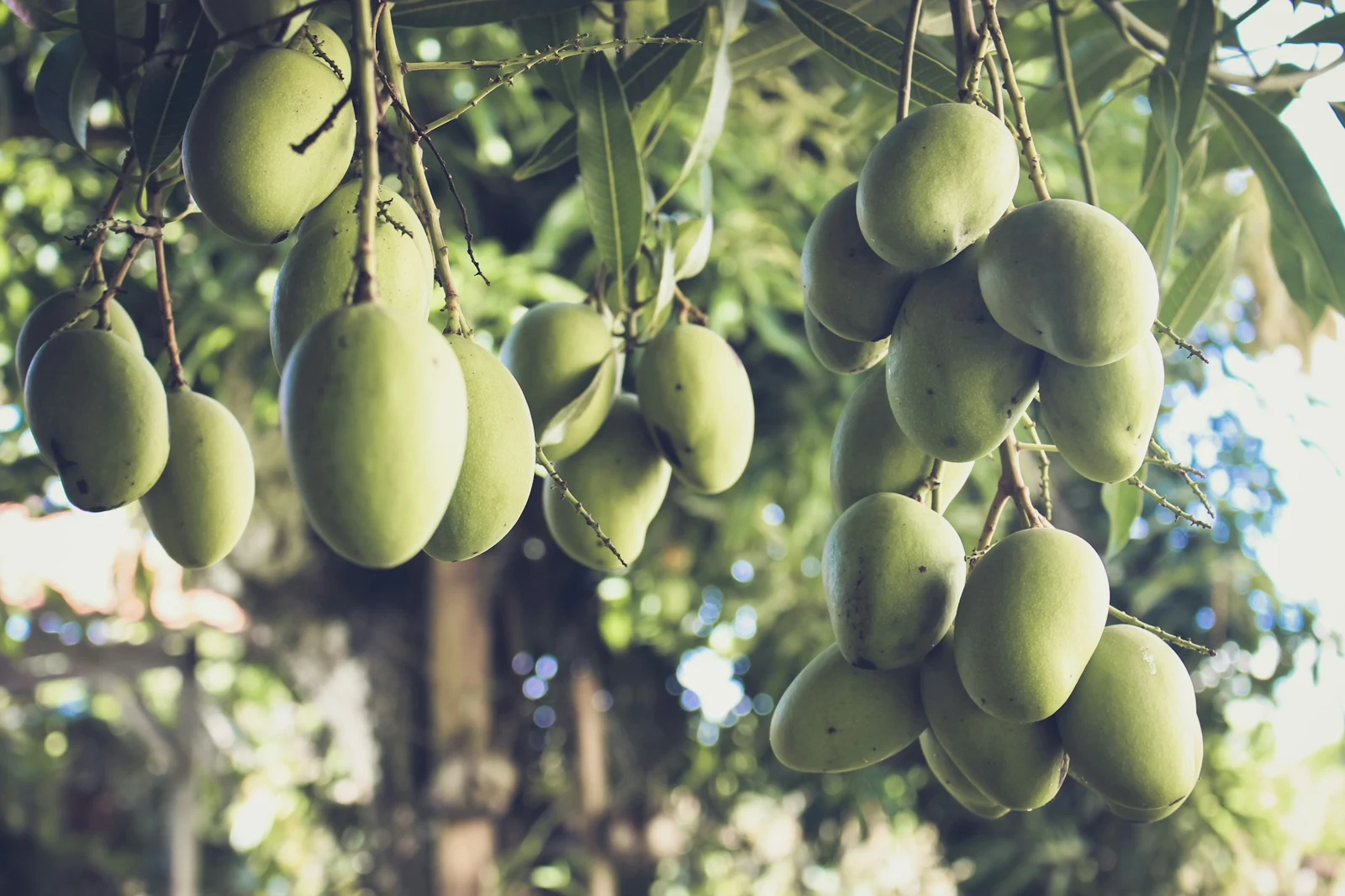 Green Mangoes
 Mangoes - Retail Strategy to reduce Waste