
Fig
Research status: AI draft — awaiting expert review


Overview
Figs are delicate fruits with edible skin, soft flesh, and many tiny seeds. Common varieties include dark-purple Black Mission, green Kadota, and striped or pale-green types; dried figs are a concentrated, chewy alternative.
Origin & cultivation
Figs originated in western Asia and the eastern Mediterranean and have been cultivated for thousands of years. Major producing regions include Turkey, Egypt, North Africa, and the Middle East; California supplies much of the U.S. crop.
Season
In the Northern Hemisphere, fresh figs are generally available from summer into early fall, with timing varying by variety and region. Some trees produce a small early-summer crop followed by a larger late-summer crop; dried figs are available year-round.
Texture & flavor
Ripe figs have tender skin, jammy flesh, and a gentle crunch from their seeds. Their flavor is honeyed and sometimes berry-like; underripe figs are firmer and less sweet, while dried figs are chewy and intensely sweet.
Nutrition
Typical values estimated with AI, not yet checked against lab data. For guidance only.
| Energy | 74 kcal | raw, per 100 g edible portion | FoodPulse AI estimate |
| Protein | 0.75 g | raw, per 100 g edible portion | FoodPulse AI estimate |
| Total fat | 0.3 g | raw, per 100 g edible portion | FoodPulse AI estimate |
| Saturated fat | 0.06 g | raw, per 100 g edible portion | FoodPulse AI estimate |
| Carbohydrate | 19.18 g | raw, per 100 g edible portion | FoodPulse AI estimate |
| Dietary fiber | 2.9 g | raw, per 100 g edible portion | FoodPulse AI estimate |
| Total sugars | 16.26 g | raw, per 100 g edible portion | FoodPulse AI estimate |
| Water | 79.11 g | raw, per 100 g edible portion | FoodPulse AI estimate |
| Calcium | 35 mg | raw, per 100 g edible portion | FoodPulse AI estimate |
| Iron | 0.37 mg | raw, per 100 g edible portion | FoodPulse AI estimate |
| Magnesium | 17 mg | raw, per 100 g edible portion | FoodPulse AI estimate |
| Potassium | 232 mg | raw, per 100 g edible portion | FoodPulse AI estimate |
| Sodium | 1 mg | raw, per 100 g edible portion | FoodPulse AI estimate |
| Zinc | 0.15 mg | raw, per 100 g edible portion | FoodPulse AI estimate |
| Vitamin C | 2 mg | raw, per 100 g edible portion | FoodPulse AI estimate |
| Vitamin A (RAE) | 7 µg | raw, per 100 g edible portion | FoodPulse AI estimate |
| Folate | 6 µg | raw, per 100 g edible portion | FoodPulse AI estimate |
| Vitamin B12 | 0 µg | raw, per 100 g edible portion | FoodPulse AI estimate |
| Cholesterol | 0 mg | raw, per 100 g edible portion | FoodPulse AI estimate |
Glycemic index: Not established.
Figs provide fiber and modest amounts of potassium and other minerals; dried figs concentrate sugars and calories, so portions matter. Fig allergy is possible, including in some people allergic to latex or certain pollens, and sap from stems or unripe fruit can irritate skin. Educational, not medical advice.
Educational information, not medical advice.
Storage
- Room temperature · 60–75°F (16–24°C) · Preferably use the same day; no more than about 1 day for sound, whole figs.. Keep out of direct sunlight and avoid stacking or bruising. Figs do not meaningfully sweeten after picking; refrigerate ripe fruit promptly. Discard figs with mold, slime, or sour or fermented odors. FoodPulse AI estimate
- Refrigerator · 32–40°F (0–4°C) · Fresh whole figs: about 2–3 days; cut figs: preferably within 1–2 days.. Store unwashed whole figs in a shallow, paper-towel-lined container; cover cut figs. Refrigerate cut fruit within 2 hours, or 1 hour above 90°F (32°C). Discard moldy, slimy, or fermented-smelling fruit. FoodPulse AI estimate
- Freezer · 0°F (−18°C) or below · About 8–12 months for best quality; continuously frozen fruit remains safe longer.. Wash, remove stems, and freeze sound figs whole or halved in freezer-safe packaging. Thaw in the refrigerator; expect softer flesh suitable for cooking. Freezer burn affects quality, but mold or fermented odors after thawing warrant disposal. FoodPulse AI estimate
- Pantry: commercially dried figs · 50–70°F (10–21°C), cool and dry · Typically 4–12 months, depending on packaging; follow the label.. Keep tightly sealed and refrigerate in warm, humid conditions. Dry white sugar crystals may be harmless, but discard figs with fuzzy growth, damp spoilage, insects, or off odors. FoodPulse AI estimate
Preparation
Rinse gently under cool running water just before use, then pat dry; do not use soap or soak. Trim the tough stem and serve whole, halved, or quartered; peeling is optional. Keep figs and their utensils separate from raw meat, poultry, seafood, and their juices, especially when serving the fruit uncooked.
Cooking
Roast halved figs at 375–400°F (190–205°C) for about 10–20 minutes, depending on size and ripeness, until soft and lightly caramelized. Grill halves over medium heat for roughly 2–4 minutes per side, or simmer chopped figs into a compote for 10–20 minutes. Very ripe or small figs cook faster and can collapse, so check early.
Recipes
No verified recipes yet.
Waste less
Eat the skin and seeds, discarding only tough stems and spoiled fruit. Use soft but sound figs promptly in oatmeal, compote, baking, or smoothies, and freeze surplus before it deteriorates. Compost stems and spoiled figs where local composting rules allow; discard an entire moldy fig rather than trimming it.
Food waste tips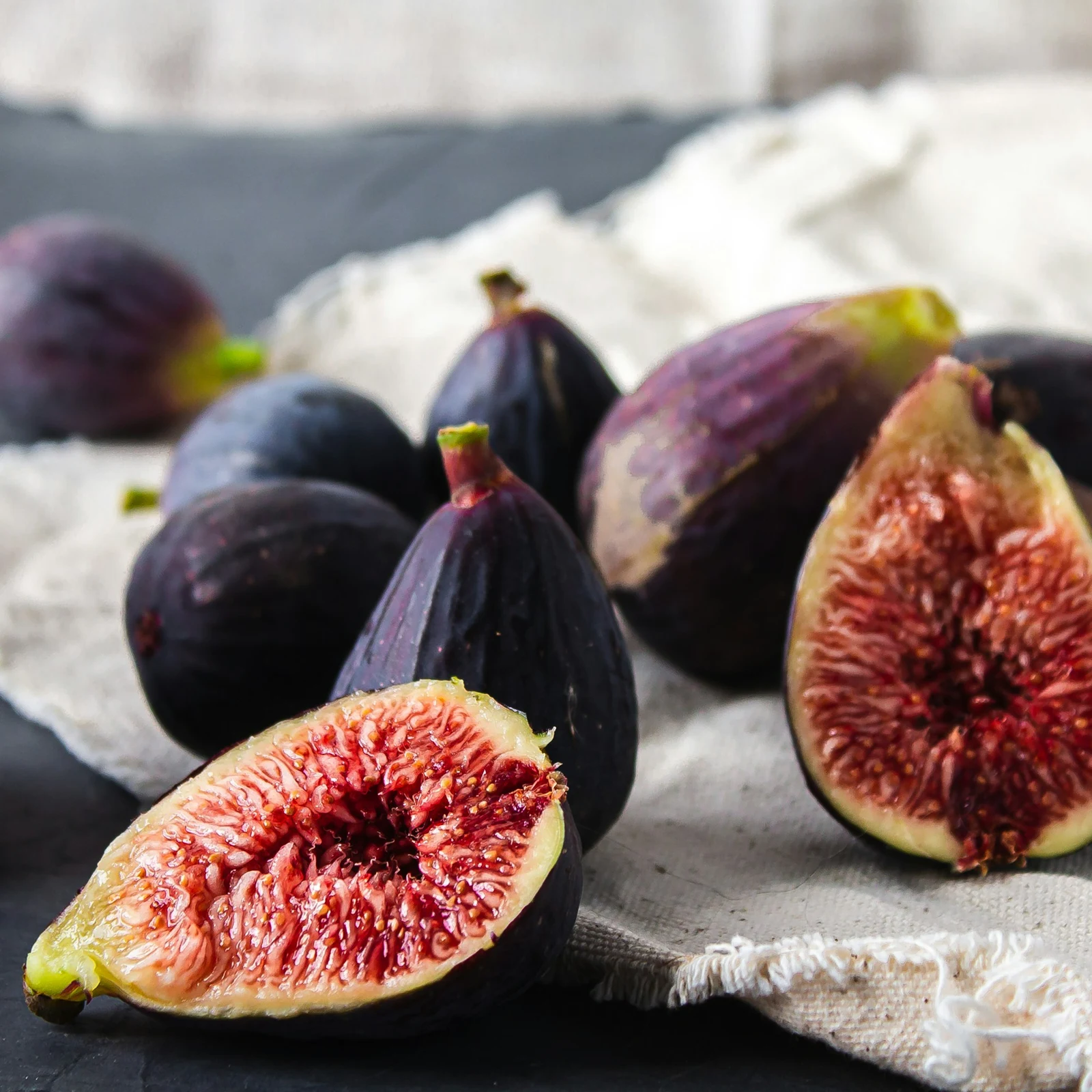 Figs