
Bottle gourd
Research status: AI draft — awaiting expert review


Overview
Bottle gourd (Lagenaria siceraria), also called lauki, dudhi, or calabash, is a pale-green squash eaten while young and tender. It can be long, round, or bottle-shaped; mature fruits develop hard shells and are generally unsuitable for cooking.
Origin & cultivation
Bottle gourd is generally considered African in origin and has been cultivated across tropical and subtropical regions for thousands of years. Major growing regions include South Asia, especially India, as well as China, Southeast Asia, and parts of Africa.
Season
Bottle gourd is a warm-season vegetable, usually harvested from summer into early autumn in temperate climates. Tropical production and imports can make it available year-round; choose firm, relatively heavy gourds without soft spots or damaged skin.
Texture & flavor
Young bottle gourd has moist, pale flesh with a mild flavor that readily absorbs seasonings. Cooking makes it soft and succulent, while older specimens can become fibrous and seedy. Strong bitterness is abnormal and signals potentially toxic cucurbitacins: discard the entire gourd rather than trying to remove the bitterness.
Nutrition
Typical values estimated with AI, not yet checked against lab data. For guidance only.
| Energy | 14 kcal | raw, per 100 g edible portion | FoodPulse AI estimate |
| Protein | 0.62 g | raw, per 100 g edible portion | FoodPulse AI estimate |
| Total fat | 0.02 g | raw, per 100 g edible portion | FoodPulse AI estimate |
| Saturated fat | 0.005 g | raw, per 100 g edible portion | FoodPulse AI estimate |
| Carbohydrate | 3.39 g | raw, per 100 g edible portion | FoodPulse AI estimate |
| Dietary fiber | 0.5 g | raw, per 100 g edible portion | FoodPulse AI estimate |
| Total sugars | 1.7 g | raw, per 100 g edible portion | FoodPulse AI estimate |
| Water | 95.54 g | raw, per 100 g edible portion | FoodPulse AI estimate |
| Calcium | 26 mg | raw, per 100 g edible portion | FoodPulse AI estimate |
| Iron | 0.2 mg | raw, per 100 g edible portion | FoodPulse AI estimate |
| Magnesium | 11 mg | raw, per 100 g edible portion | FoodPulse AI estimate |
| Potassium | 150 mg | raw, per 100 g edible portion | FoodPulse AI estimate |
| Sodium | 2 mg | raw, per 100 g edible portion | FoodPulse AI estimate |
| Zinc | 0.7 mg | raw, per 100 g edible portion | FoodPulse AI estimate |
| Vitamin C | 10.1 mg | raw, per 100 g edible portion | FoodPulse AI estimate |
| Vitamin A (RAE) | 0 µg | raw, per 100 g edible portion | FoodPulse AI estimate |
| Folate | 6 µg | raw, per 100 g edible portion | FoodPulse AI estimate |
| Vitamin B12 | 0 µg | raw, per 100 g edible portion | FoodPulse AI estimate |
| Cholesterol | 0 mg | raw, per 100 g edible portion | FoodPulse AI estimate |
Glycemic index: Not established.
Bottle gourd provides water, modest amounts of fiber, and small amounts of vitamins and minerals, but evidence does not support claims that it cures disease or detoxifies the body. Bitter bottle gourd, including its juice, can cause serious poisoning, and cooking does not reliably destroy the toxins; avoid raw juice and discard bitter fruit. Allergy is possible, though not commonly reported; seek urgent medical help for severe vomiting, abdominal pain, or diarrhea after eating it. Educational, not medical advice.
Educational information, not medical advice.
Storage
- Room temperature, whole and uncut · 18–24°C / 64–75°F · About 1–2 days. Keep dry, shaded, and away from heat; refrigerate for longer storage. Discard if moldy, leaking, slimy, or developing soft, sunken areas; bitterness requires discarding even if appearance is normal. FoodPulse AI estimate
- Refrigerator · 1–4°C / 34–40°F · Whole: about 5–7 days; cut: 3–4 days; cooked: 3–4 days. Keep whole gourds dry in a perforated bag and cut pieces in a covered container. Refrigerate cut or cooked gourd within 2 hours, or 1 hour above 32°C/90°F; cool cooked portions in shallow containers. Discard for mold, slime, sour odor, or unsafe time outside refrigeration. FoodPulse AI estimate
- Freezer · −18°C / 0°F or below · About 8–12 months for best quality. For young, tender gourd, use the NCHFP summer-squash approach: cut into approximately 1 cm/½-inch slices, water-blanch for 3 minutes, cool promptly in ice water, drain, and package airtight. Texture will soften, making it best for soups and stews; thaw in the refrigerator or cook from frozen. Continuously frozen food remains safe beyond the quality window, but discard thawed portions held above 4°C/40°F for more than 2 hours. FoodPulse AI estimate
Preparation
Wash under running water before cutting, scrub away soil, and trim both ends; peel tough skin and remove firm seeds or spongy centers. Cut tender flesh into evenly sized cubes, slices, or shreds. If checking for bitterness, taste only a tiny piece and spit it out; discard the whole gourd if bitter. Keep knives, boards, and work surfaces separate from raw meat, poultry, and seafood, or wash them thoroughly before preparing the gourd.
Cooking
Simmer 1–2 cm cubes in soups or curries for about 10–20 minutes, or steam for 8–15 minutes, until tender. Stir-fry thin slices for roughly 5–10 minutes, or roast larger chunks at 200°C/400°F for about 25–40 minutes. Timing varies with maturity and piece size; avoid overcooking if you want the pieces to hold their shape.
Recipes
No verified recipes yet.
Waste less
Thin, tender skin and soft immature seeds can be cooked with the flesh, reducing trimming waste. Add cooked leftovers to soups, lentils, or curries within their refrigerated storage window. Compost ordinary peelings, tough seeds, and spoiled portions where appropriate; never reuse or feed bitter gourds to animals.
Food waste tips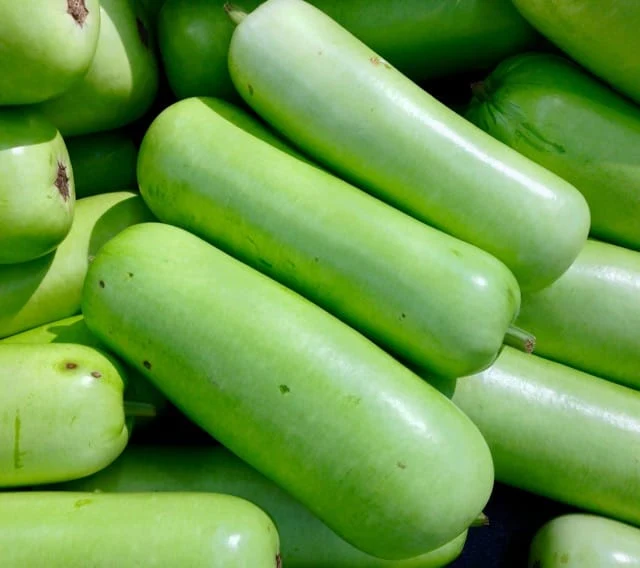 Oppo Squash - Bottle Gourd