
Orange
Research status: AI draft — awaiting expert review


Overview
Orange is a citrus fruit with a fragrant rind, white pith, and juicy segments. Sweet oranges include easy-to-eat navels, juice-rich Valencias, and red-fleshed blood oranges; bitter oranges are mainly used in marmalade and cooking.
Origin & cultivation
Sweet oranges originated in Asia, likely around southern China and neighboring regions, and spread through trade and cultivation. Major producing regions include Brazil, China, India, the Mediterranean, and the United States, particularly Florida and California.
Season
Oranges are available year-round through different varieties and growing regions. In the United States, navels are generally best from winter into spring, Valencias from spring through summer, and blood oranges from winter into early spring.
Texture & flavor
The flesh is juicy and tender, with thin membranes separating the segments. Flavor ranges from sweet to brightly acidic, while the colored zest is aromatic and the white pith can be bitter.
Nutrition
Typical values estimated with AI, not yet checked against lab data. For guidance only.
| Energy | 47 kcal | raw, per 100 g edible portion | FoodPulse AI estimate |
| Protein | 0.94 g | raw, per 100 g edible portion | FoodPulse AI estimate |
| Total fat | 0.12 g | raw, per 100 g edible portion | FoodPulse AI estimate |
| Saturated fat | 0.015 g | raw, per 100 g edible portion | FoodPulse AI estimate |
| Carbohydrate | 11.75 g | raw, per 100 g edible portion | FoodPulse AI estimate |
| Dietary fiber | 2.4 g | raw, per 100 g edible portion | FoodPulse AI estimate |
| Total sugars | 9.35 g | raw, per 100 g edible portion | FoodPulse AI estimate |
| Water | 86.75 g | raw, per 100 g edible portion | FoodPulse AI estimate |
| Calcium | 40 mg | raw, per 100 g edible portion | FoodPulse AI estimate |
| Iron | 0.1 mg | raw, per 100 g edible portion | FoodPulse AI estimate |
| Magnesium | 10 mg | raw, per 100 g edible portion | FoodPulse AI estimate |
| Potassium | 181 mg | raw, per 100 g edible portion | FoodPulse AI estimate |
| Sodium | 0 mg | raw, per 100 g edible portion | FoodPulse AI estimate |
| Zinc | 0.07 mg | raw, per 100 g edible portion | FoodPulse AI estimate |
| Vitamin C | 53.2 mg | raw, per 100 g edible portion | FoodPulse AI estimate |
| Vitamin A (RAE) | 11 µg | raw, per 100 g edible portion | FoodPulse AI estimate |
| Folate | 30 µg | raw, per 100 g edible portion | FoodPulse AI estimate |
| Vitamin B12 | 0 µg | raw, per 100 g edible portion | FoodPulse AI estimate |
| Cholesterol | 0 mg | raw, per 100 g edible portion | FoodPulse AI estimate |
Glycemic index: Not established.
Oranges provide vitamin C, and whole fruit supplies more fiber than strained juice. Citrus allergy is possible, and acidic fruit may aggravate reflux in some people; bitter orange products can interact with certain medicines. Educational, not medical advice.
Educational information, not medical advice.
Storage
- Room temperature, whole · About 60–75°F (16–24°C) · About 1 week. Keep dry, ventilated, and out of direct sunlight; warmer conditions shorten storage life. Discard oranges with mold, leaking flesh, extensive soft decay, or fermented odors. FoodPulse AI estimate
- Refrigerator, whole · 34–40°F (1–4°C) · About 3–4 weeks. Store dry in the crisper or a ventilated bag, and inspect periodically. Discard moldy, slimy, leaking, or rotten-smelling fruit. FoodPulse AI estimate
- Refrigerator, peeled or cut · 40°F (4°C) or below · 3–4 days. Cover in a clean container and refrigerate within 2 hours of preparation, or within 1 hour above 90°F (32°C). Discard if left out longer, or if mold, slime, or off odors develop. FoodPulse AI estimate
- Freezer, segments, juice, or zest · 0°F (-18°C) or below · About 4–6 months for best quality. Use freezer-safe containers, leaving expansion space for juice; segments soften after thawing. Continuously frozen food remains safe beyond this quality window, but freezing does not make spoiled fruit safe; thaw in the refrigerator. FoodPulse AI estimate
Preparation
Wash hands and rinse the whole orange under running water, rubbing the rind before peeling, cutting, or zesting; do not use soap or bleach. Remove damaged areas, peel and separate into segments, or trim the ends and slice on a stable cutting board. Keep fruit and clean utensils separate from raw meat, poultry, seafood, and their juices.
Cooking
Eat fresh, add segments near the end of cooking, or simmer juice for about 5–15 minutes to make a sauce, depending on volume and desired thickness. Roast slices or wedges at 400°F (204°C) for roughly 10–25 minutes, depending on thickness, checking often because exposed sugars can scorch. For marmalade intended for shelf storage, follow a tested USDA or NCHFP recipe and its boiling-water processing instructions, including altitude adjustments.
Recipes
No verified recipes yet.
Waste less
Zest washed oranges before juicing or peeling, then freeze the zest in small portions for baking and sauces. Use leftover segments in salads and juice in dressings; washed peel can be candied or used in a tested marmalade recipe. Compost seeds, pith, and unusable peel where accepted, but discard moldy fruit rather than salvaging its zest or juice.
Food waste tips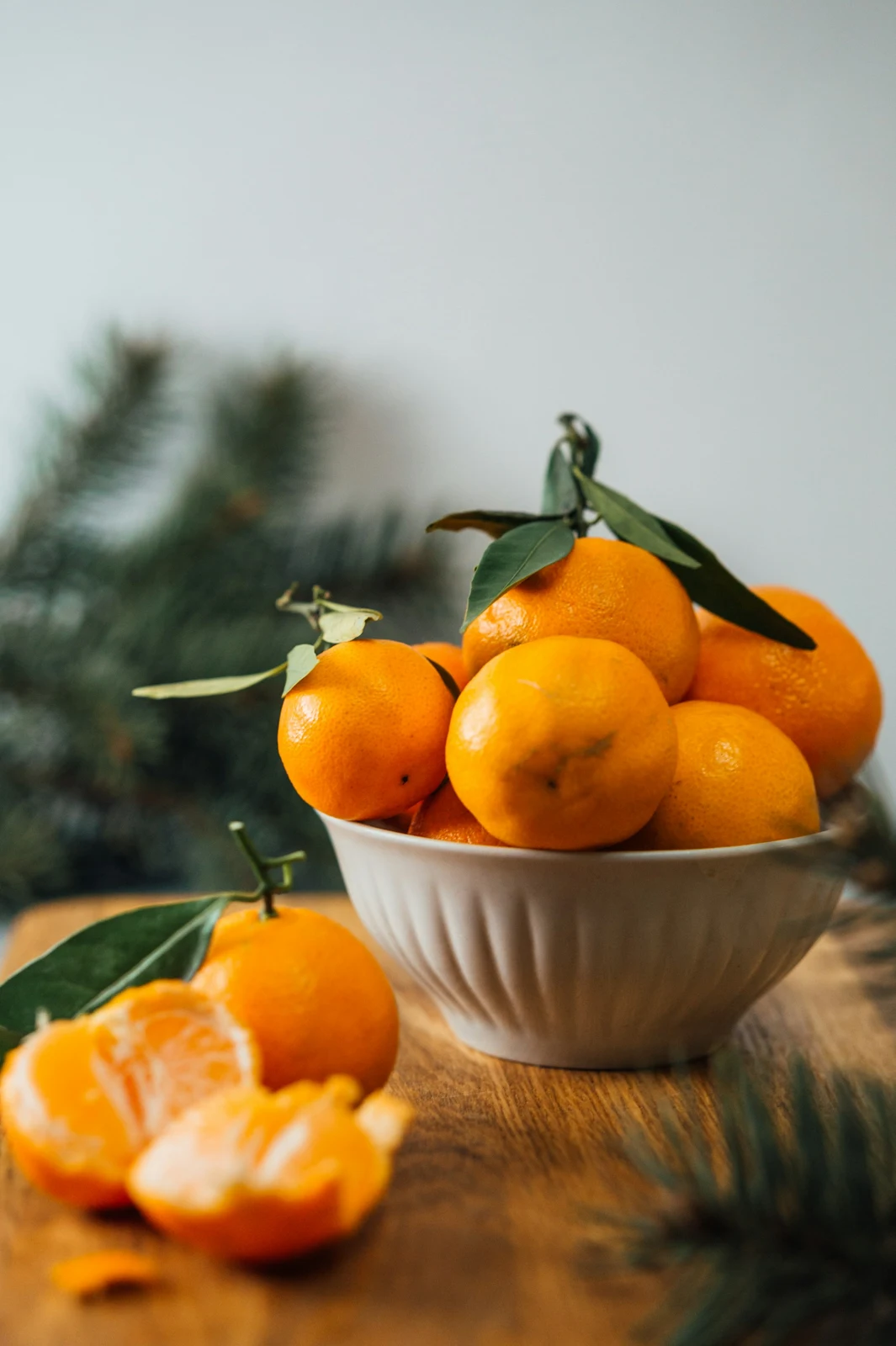 Oranges - Citrus