
Grapefruit
Research status: AI draft — awaiting expert review


Overview
Grapefruit is a large citrus fruit with a thick yellow or pink-blushed rind and pale yellow, pink, or red flesh. Choose fruit that feels heavy for its size, with firm skin and no soft, wet spots.
Origin & cultivation
Grapefruit arose in the Caribbean, likely Barbados, as a natural hybrid of sweet orange and pomelo. Major producing regions include China, Turkey, South Africa, Mexico, and the United States, especially Florida, Texas, and California.
Season
Grapefruit is available year-round through overlapping growing regions and imports. In the United States, peak quality generally runs from winter into spring, with timing varying by region and variety.
Texture & flavor
The flesh is juicy and tender, with sweet-tart juice and a distinctive bitter edge. White varieties are often sharper, while pink and red varieties tend to taste sweeter; the membranes and white pith are especially bitter.
Nutrition
Typical values estimated with AI, not yet checked against lab data. For guidance only.
| Energy | 42 kcal | raw, per 100 g edible portion | FoodPulse AI estimate |
| Protein | 0.77 g | raw, per 100 g edible portion | FoodPulse AI estimate |
| Total fat | 0.14 g | raw, per 100 g edible portion | FoodPulse AI estimate |
| Saturated fat | 0.021 g | raw, per 100 g edible portion | FoodPulse AI estimate |
| Carbohydrate | 10.66 g | raw, per 100 g edible portion | FoodPulse AI estimate |
| Dietary fiber | 1.6 g | raw, per 100 g edible portion | FoodPulse AI estimate |
| Total sugars | 6.89 g | raw, per 100 g edible portion | FoodPulse AI estimate |
| Water | 88.06 g | raw, per 100 g edible portion | FoodPulse AI estimate |
| Calcium | 22 mg | raw, per 100 g edible portion | FoodPulse AI estimate |
| Iron | 0.08 mg | raw, per 100 g edible portion | FoodPulse AI estimate |
| Magnesium | 9 mg | raw, per 100 g edible portion | FoodPulse AI estimate |
| Potassium | 135 mg | raw, per 100 g edible portion | FoodPulse AI estimate |
| Sodium | 0 mg | raw, per 100 g edible portion | FoodPulse AI estimate |
| Zinc | 0.07 mg | raw, per 100 g edible portion | FoodPulse AI estimate |
| Vitamin C | 31.2 mg | raw, per 100 g edible portion | FoodPulse AI estimate |
| Vitamin A (RAE) | 58 µg | raw, per 100 g edible portion | FoodPulse AI estimate |
| Folate | 13 µg | raw, per 100 g edible portion | FoodPulse AI estimate |
| Vitamin B12 | 0 µg | raw, per 100 g edible portion | FoodPulse AI estimate |
| Cholesterol | 0 mg | raw, per 100 g edible portion | FoodPulse AI estimate |
Glycemic index: Not established.
Grapefruit supplies vitamin C, and whole segments provide more fiber than strained juice. Grapefruit and its juice can alter levels of certain medicines, including some statins; check with a pharmacist because separating consumption from a dose may not prevent an interaction. Citrus allergy is possible, and its acidity may aggravate reflux in some people. Educational, not medical advice.
Educational information, not medical advice.
Storage
- Room temperature, whole · 60–75°F (16–24°C) · About 5–7 days. Keep in a dry, ventilated spot away from sunlight and heat. Discard fruit with mold, leaking areas, extensive soft decay, or a fermented smell. FoodPulse AI estimate
- Refrigerator, whole · 32–40°F (0–4°C) · About 2–3 weeks. Store dry in the crisper, loosely bagged or in a perforated bag. Discard moldy fruit or fruit with wet, mushy decay or an off odor. FoodPulse AI estimate
- Refrigerator, cut or peeled · 32–40°F (0–4°C) · 3–4 days. Cover and refrigerate within 2 hours of cutting, or within 1 hour when temperatures exceed 90°F (32°C). Discard if left out longer, or if mold, slime, or a fermented odor develops. FoodPulse AI estimate
- Freezer · 0°F (−18°C) or colder · 8–12 months for best quality. Freeze peeled, membrane-free sections in juice or syrup, or freeze juice separately, using freezer-safe containers with expansion space. Continuously frozen fruit remains safe beyond this quality window; thaw in the refrigerator and discard if mold or an off odor develops after thawing. FoodPulse AI estimate
Preparation
Wash the whole fruit under running water and scrub with a clean produce brush before cutting, even if discarding the peel; do not use soap. Halve across the middle and loosen segments with a knife, or trim both ends, remove the peel and pith, and cut between membranes. Use clean utensils and a board separate from raw meat, poultry, fish, or seafood, and wash hands and surfaces after handling those foods.
Cooking
Broil grapefruit halves cut-side up for about 3–8 minutes, depending on size and distance from the heat, until lightly browned; watch closely if adding sugar. Grill thick slices for roughly 2–4 minutes per side, adjusting for thickness, until marked and warmed through. Add segments near the end of warm dishes to preserve their shape, or simmer juice for 5–15 minutes for a sauce, tasting as concentration can intensify bitterness.
Recipes
No verified recipes yet.
Waste less
Zest washed fruit before peeling, and freeze extra zest or juice in small portions for dressings and sauces. Use leftover segments in salads or salsa, and squeeze the remaining membranes for juice. Washed peel can be candied; compost unwanted peel, seeds, and membranes where accepted.
Food waste tips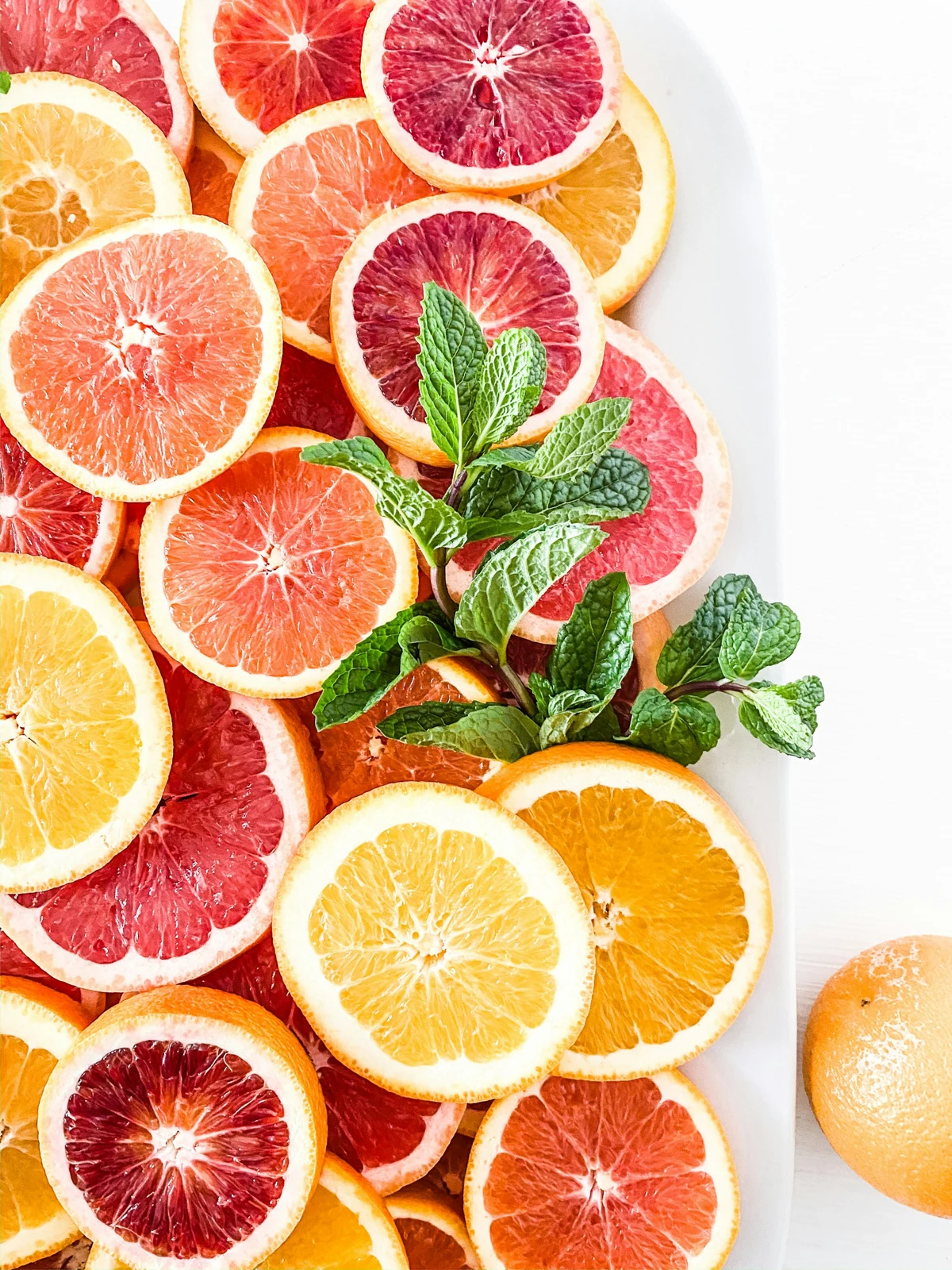 Grapefruit - Citrus