
Curry leaves
Research status: AI draft — awaiting expert review


Overview
Curry leaves are the glossy, aromatic leaves of the curry tree (Bergera koenigii, also called Murraya koenigii). Common in South Asian cooking, they are distinct from curry powder and the unrelated ornamental curry plant.
Origin & cultivation
The curry tree is native to the Indian subcontinent and nearby parts of South Asia. India is the principal producing and consuming country; it is also grown in Sri Lanka and tropical regions of Southeast Asia.
Season
Fresh leaves grow year-round in warm tropical climates, with growth slowing during cool or dry periods. Imported fresh leaves may be available year-round in South Asian grocery stores; frozen and dried leaves offer alternatives.
Texture & flavor
Fresh leaves have a citrusy, resinous aroma with savory, lightly bitter notes. They are somewhat leathery raw but become crisp when briefly fried; dried leaves are less aromatic.
Nutrition
Typical values estimated with AI, not yet checked against lab data. For guidance only.
| Energy | 108 kcal | raw, per 100 g edible portion | FoodPulse AI estimate |
| Protein | 6.1 g | raw, per 100 g edible portion | FoodPulse AI estimate |
| Total fat | 1 g | raw, per 100 g edible portion | FoodPulse AI estimate |
| Saturated fat | 0.2 g | raw, per 100 g edible portion | FoodPulse AI estimate |
| Carbohydrate | 18.7 g | raw, per 100 g edible portion | FoodPulse AI estimate |
| Dietary fiber | 6.4 g | raw, per 100 g edible portion | FoodPulse AI estimate |
| Total sugars | 1.5 g | raw, per 100 g edible portion | FoodPulse AI estimate |
| Water | 63.8 g | raw, per 100 g edible portion | FoodPulse AI estimate |
| Calcium | 830 mg | raw, per 100 g edible portion | FoodPulse AI estimate |
| Iron | 0.93 mg | raw, per 100 g edible portion | FoodPulse AI estimate |
| Magnesium | 44 mg | raw, per 100 g edible portion | FoodPulse AI estimate |
| Potassium | 584 mg | raw, per 100 g edible portion | FoodPulse AI estimate |
| Sodium | 4 mg | raw, per 100 g edible portion | FoodPulse AI estimate |
| Zinc | 1.1 mg | raw, per 100 g edible portion | FoodPulse AI estimate |
| Vitamin C | 4 mg | raw, per 100 g edible portion | FoodPulse AI estimate |
| Vitamin A (RAE) | 630 µg | raw, per 100 g edible portion | FoodPulse AI estimate |
| Folate | 154 µg | raw, per 100 g edible portion | FoodPulse AI estimate |
| Vitamin B12 | 0 µg | raw, per 100 g edible portion | FoodPulse AI estimate |
| Cholesterol | 0 mg | raw, per 100 g edible portion | FoodPulse AI estimate |
Glycemic index: Not established.
The small amounts used in cooking contribute little nutrition, and laboratory findings on their compounds do not establish health benefits in people. Allergic reactions are possible; anyone with a known sensitivity should avoid them, and packaged products should be checked for allergen cross-contact warnings. Educational, not medical advice.
Educational information, not medical advice.
Storage
- Room temperature · Approximately 60–75°F (16–24°C) · Same day; preferably only a few hours for best quality. Keep out of direct sun and away from raw animal foods; refrigerate promptly for longer storage. Discard leaves with mold, slime, or an unpleasant odor. FoodPulse AI estimate
- Refrigerator · 32–40°F (0–4°C) · About 1–2 weeks, depending on initial freshness. Store dry leaves loosely wrapped in a paper towel inside a bag or covered container; wash just before use. If washed beforehand, dry thoroughly, and discard moldy, slimy, or foul-smelling leaves. FoodPulse AI estimate
- Freezer · 0°F (-18°C) or below · Best quality within 3–6 months; continuously frozen food remains safe longer. Wash, dry thoroughly, and freeze in an airtight bag with excess air removed. Add directly to simmering dishes; ice crystals can cause dangerous splattering in hot oil. Discard if mold or spoilage was present before freezing. FoodPulse AI estimate
- Dried, airtight storage · Cool cupboard, ideally 50–70°F (10–21°C) · About 6–12 months for best quality. Dry leaves until crisp and crumbly before sealing, and protect from heat, moisture, and light. Discard if damp, moldy, or musty; fading aroma alone indicates quality loss. Do not store fresh curry leaves submerged in oil at room temperature. FoodPulse AI estimate
Preparation
Strip leaves from tough stems, rinse under cool running water without soap, and pat thoroughly dry, especially before frying. Leave whole or finely slice for easier eating. Keep leaves and utensils separate from raw meat, poultry, fish, and seafood, and wash hands and equipment after handling those foods.
Cooking
For tempering, add thoroughly dry leaves carefully to hot oil over medium heat and fry about 10–30 seconds, until fragrant and crisp but not browned; larger leaves or crowded batches may take slightly longer. Alternatively, simmer whole leaves in dals, soups, or curries for 5–15 minutes, adjusting for leaf size and desired intensity. Whole leaves are edible, but remove any that remain tough.
Recipes
Kerala-Style Curry Leaf Chicken with Coconut and Lime · 35 min · serves 4
An original home-style chicken dish with curry leaves bloomed in coconut oil, black pepper, and a gently tangy coconut sauce.
Ingredients
- 600 g boneless, skinless chicken thighs, cut into 3 cm pieces
- 25 fresh curry leaves, washed and thoroughly dried
- 2 tablespoons coconut oil
- 1 teaspoon black mustard seeds
- 1 medium onion, thinly sliced
- 3 garlic cloves, minced
- 1 tablespoon grated fresh ginger
- 1 green chili, slit lengthwise
- 1 teaspoon ground coriander
- 1/2 teaspoon ground turmeric
- 1/2 teaspoon freshly ground black pepper
- 1 teaspoon fine salt
- 250 ml unsweetened coconut milk
- 100 ml water
- 1 tablespoon fresh lime juice
Steps
- Toss the chicken with the coriander, turmeric, black pepper, and salt in a bowl.
- Heat the coconut oil in a wide, deep skillet over medium heat. Add the mustard seeds and, when they begin popping, carefully add the dry curry leaves. Stir for 20 seconds, using a splatter screen if needed.
- Add the onion and cook for 7–8 minutes until softened and lightly golden. Stir in the garlic, ginger, and chili and cook for 1 minute.
- Add the chicken and cook for 4 minutes, turning the pieces to coat them in the aromatics.
- Pour in the coconut milk and water. Bring to a gentle simmer, partially cover, and cook for 12–15 minutes, stirring occasionally, until the chicken reaches 74°C/165°F in its thickest pieces.
- Uncover and simmer for another 2–3 minutes if you prefer a thicker sauce. Remove from the heat and stir in the lime juice before serving.
Safety: Cook chicken to an internal temperature of 74°C/165°F; do not rinse raw chicken, and wash utensils and surfaces after raw-poultry contact. Contains mustard and coconut, which can cause allergic reactions. Refrigerate leftovers in shallow containers within 2 hours, keep at 4°C/40°F or below, and use within 3–4 days. Reheat to 74°C/165°F.
Recipe written with AI by FoodPulse — check it before cooking.
Waste less
Use tender leaves whole, or chop them into chutneys and savory batters; reserve tough stems for flavoring a simmered dish, then remove them. Freeze surplus leaves in small portions before they deteriorate. Refrigerate cooked leftovers within 2 hours, or 1 hour above 90°F (32°C), use within 3–4 days, and compost stems and spoiled leaves where accepted.
Food waste tips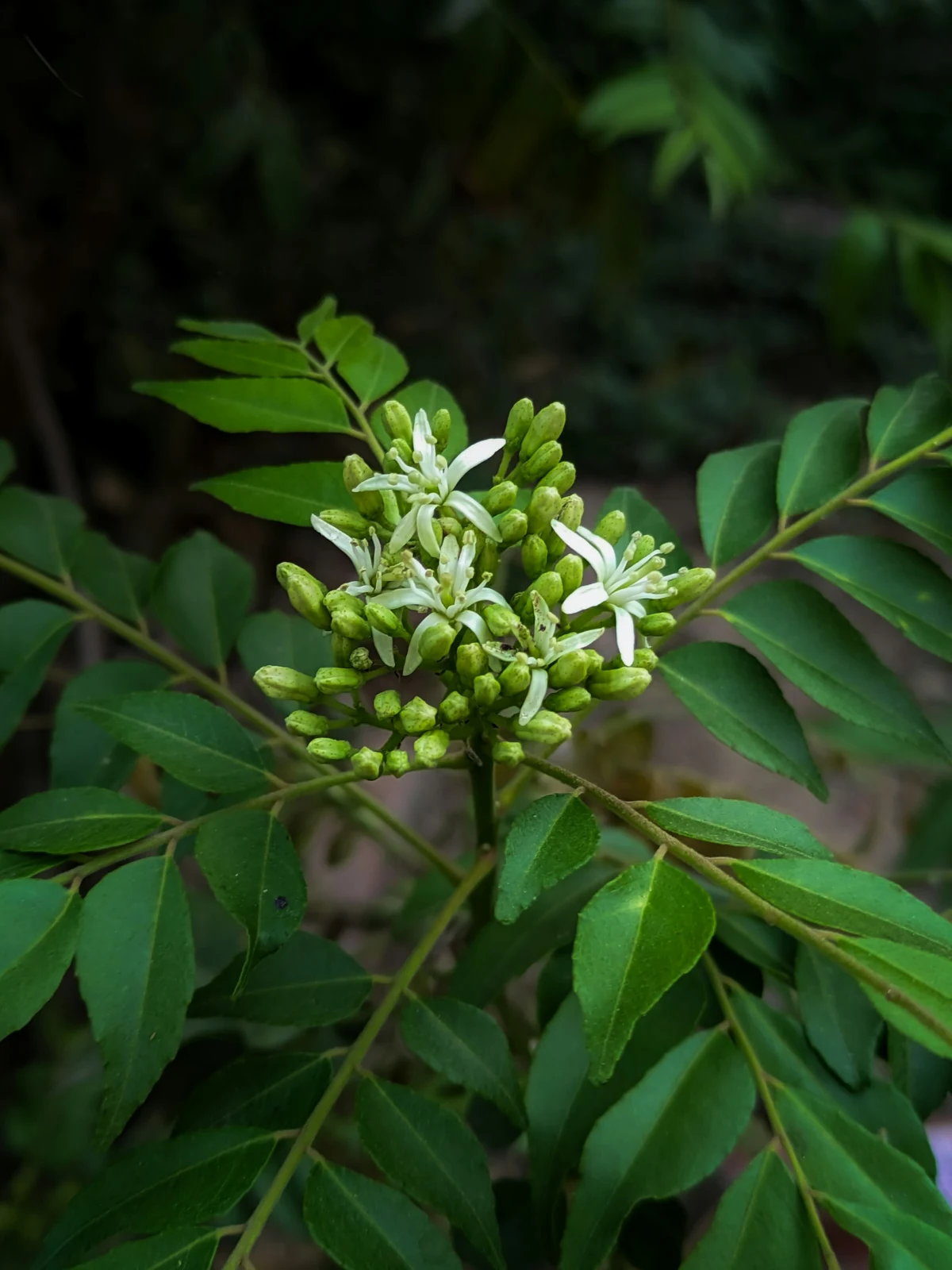 Curry Leaves