
Cilantro
Research status: AI draft — awaiting expert review


Overview
Cilantro is the fresh leaves and tender stems of Coriandrum sativum, the plant that also produces coriander seeds. It is widely used in salsas, curries, soups, salads, and chutneys.
Origin & cultivation
Coriander is native to the Mediterranean region and southwestern Asia and has been cultivated for thousands of years. Today it is grown widely, including in India, China, Mexico, and the United States; fresh cilantro is often supplied by regional growers.
Season
Cilantro grows best in cool weather, with spring and fall harvests common in temperate regions. Heat encourages flowering and seed production, so summer leaves may be less abundant or more pungent. Commercial supplies are available year-round in many places.
Texture & flavor
The leaves are delicate, while tender stems add a light crunch and plenty of flavor. Its taste is bright, citrusy, and grassy; some people perceive a soapy flavor, partly because of genetic differences in smell perception.
Nutrition
Typical values estimated with AI, not yet checked against lab data. For guidance only.
| Energy | 23 kcal | raw, per 100 g edible portion | FoodPulse AI estimate |
| Protein | 2.13 g | raw, per 100 g edible portion | FoodPulse AI estimate |
| Total fat | 0.52 g | raw, per 100 g edible portion | FoodPulse AI estimate |
| Saturated fat | 0.014 g | raw, per 100 g edible portion | FoodPulse AI estimate |
| Carbohydrate | 3.67 g | raw, per 100 g edible portion | FoodPulse AI estimate |
| Dietary fiber | 2.8 g | raw, per 100 g edible portion | FoodPulse AI estimate |
| Total sugars | 0.87 g | raw, per 100 g edible portion | FoodPulse AI estimate |
| Water | 92.21 g | raw, per 100 g edible portion | FoodPulse AI estimate |
| Calcium | 67 mg | raw, per 100 g edible portion | FoodPulse AI estimate |
| Iron | 1.77 mg | raw, per 100 g edible portion | FoodPulse AI estimate |
| Magnesium | 26 mg | raw, per 100 g edible portion | FoodPulse AI estimate |
| Potassium | 521 mg | raw, per 100 g edible portion | FoodPulse AI estimate |
| Sodium | 46 mg | raw, per 100 g edible portion | FoodPulse AI estimate |
| Zinc | 0.5 mg | raw, per 100 g edible portion | FoodPulse AI estimate |
| Vitamin C | 27 mg | raw, per 100 g edible portion | FoodPulse AI estimate |
| Vitamin A (RAE) | 337 µg | raw, per 100 g edible portion | FoodPulse AI estimate |
| Folate | 62 µg | raw, per 100 g edible portion | FoodPulse AI estimate |
| Vitamin B12 | 0 µg | raw, per 100 g edible portion | FoodPulse AI estimate |
| Cholesterol | 0 mg | raw, per 100 g edible portion | FoodPulse AI estimate |
Glycemic index: Not established.
Cilantro provides vitamin K and small amounts of other nutrients, although garnish-sized servings contribute modest amounts. Evidence does not establish that ordinary culinary use detoxifies the body or treats disease. Allergic reactions are possible, including cross-reactions in some people with celery, carrot, or related pollen allergies; people taking warfarin should keep vitamin K intake consistent. Educational, not medical advice.
Educational information, not medical advice.
Storage
- Room temperature · About 60–75°F (16–24°C) · A few hours for whole bunches; refrigerate for longer storage. Keep out of direct sun and away from raw animal foods. Refrigerate chopped cilantro within 2 hours, or within 1 hour above 90°F (32°C). Discard if slimy, moldy, or foul-smelling. FoodPulse AI estimate
- Refrigerator · 32–40°F (0–4°C) · Usually 7–10 days for whole bunches; use chopped cilantro within 3–4 days. Store dry leaves loosely wrapped in a paper towel in a container or bag, or stand stems in a jar of water with leaves loosely covered. Change water every 1–2 days and wash before use. Discard moldy bunches or herbs with slime or an off odor; simple wilting is mainly a quality issue. FoodPulse AI estimate
- Freezer · 0°F (−18°C) or below · Best quality within 4–6 months; continuously frozen food remains safe longer. Wash, dry, and freeze chopped cilantro in airtight packaging, or freeze it with water in small trays and transfer the cubes to a freezer container. Use directly from frozen in cooked dishes because thawed leaves lose their crisp texture. Freezing does not sanitize spoiled herbs; discard cilantro that was moldy or slimy before freezing. FoodPulse AI estimate
Preparation
Remove ties, yellowed leaves, and damaged stems, then rinse under cool running water without soap; pay particular attention to gritty stem bases and roots. Dry well and chop leaves and tender stems with a sharp knife, trimming only tough or damaged portions. Keep cilantro separate from raw meat, poultry, fish, and seafood, and wash hands, knives, boards, and counters after handling those foods.
Cooking
Use leaves raw or stir them into hot dishes off the heat or during the final 30–60 seconds to preserve their aroma. Finely chopped stems can be sautéed with aromatics for about 1–3 minutes; larger stem pieces may need 3–5 minutes to soften. In soups and stews, stems can simmer longer, but reserve some fresh leaves for finishing.
Recipes
No verified recipes yet.
Waste less
Use tender stems along with the leaves, and scrub edible roots thoroughly for curry pastes or marinades. Blend surplus clean cilantro into chutney or freeze it with water in small portions for soups and sauces. Refrigerate prepared leftovers promptly, and compost sound trimmings where accepted rather than trying to salvage slimy or moldy herbs.
Food waste tips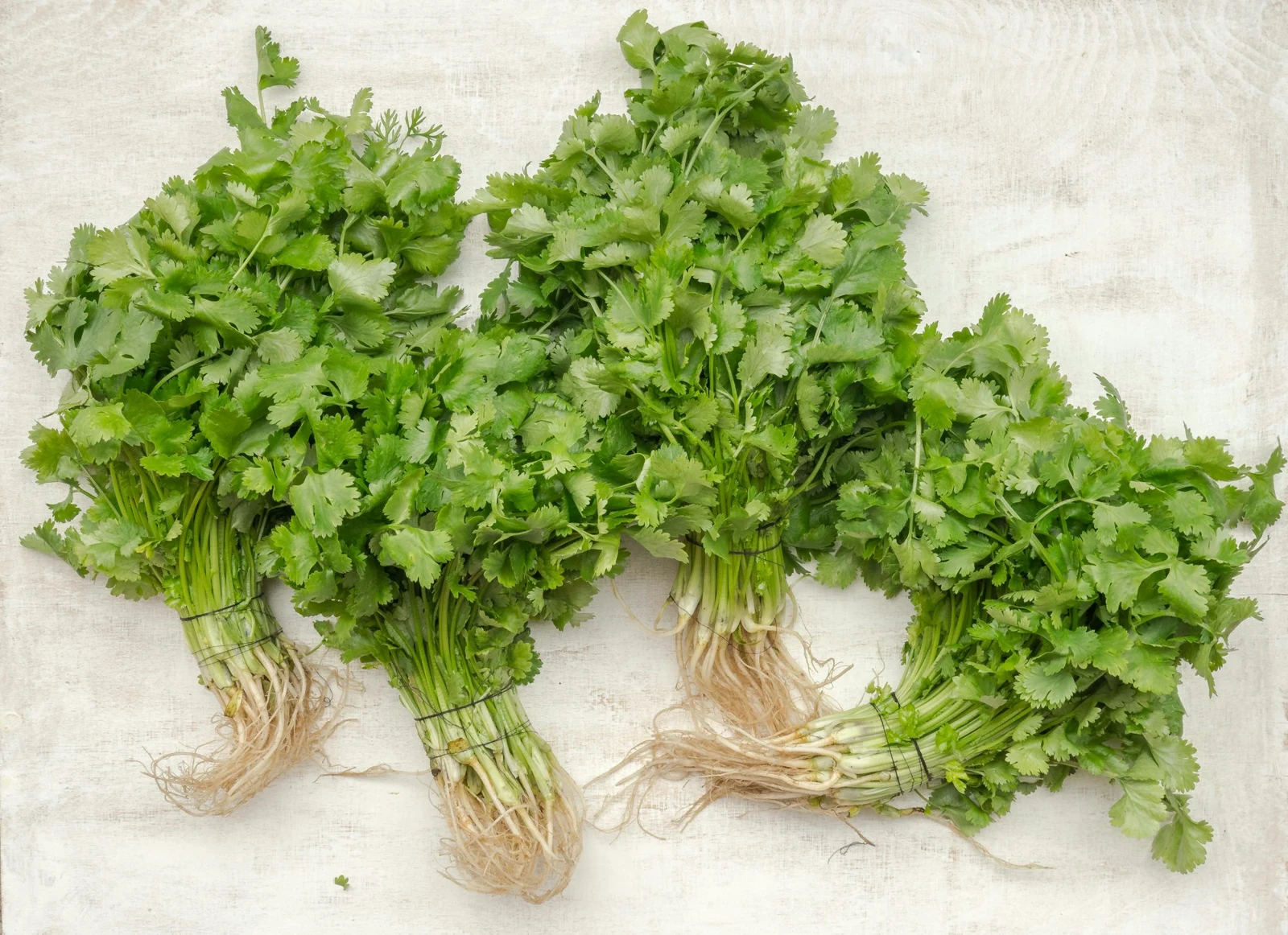 Cilantro - Coriander Leaves