
Carrot
Research status: AI draft — awaiting expert review


Overview
Carrots are edible roots, usually orange but also purple, yellow, red, or white. Sold loose, bunched with greens, or trimmed into baby-cut carrots, they work well raw or cooked.
Origin & cultivation
Cultivated carrots originated in Central Asia, particularly around present-day Afghanistan, and spread through the Middle East into Europe and Asia. Today, major producing regions include China, Central Asia, Europe, and North America.
Season
Carrots are available year-round thanks to successive plantings and refrigerated storage. Local harvests commonly peak from spring through fall, with winter harvests in mild climates; cool weather can increase sweetness.
Texture & flavor
Raw carrots are crisp and juicy, with sweet, earthy flavors and occasional mild bitterness near the crown. Cooking softens their fibers, while roasting adds browned, caramel-like flavors.
Nutrition
Typical values estimated with AI, not yet checked against lab data. For guidance only.
| Energy | 41 kcal | raw, per 100 g edible portion | FoodPulse AI estimate |
| Protein | 0.93 g | raw, per 100 g edible portion | FoodPulse AI estimate |
| Total fat | 0.24 g | raw, per 100 g edible portion | FoodPulse AI estimate |
| Saturated fat | 0.037 g | raw, per 100 g edible portion | FoodPulse AI estimate |
| Carbohydrate | 9.58 g | raw, per 100 g edible portion | FoodPulse AI estimate |
| Dietary fiber | 2.8 g | raw, per 100 g edible portion | FoodPulse AI estimate |
| Total sugars | 4.74 g | raw, per 100 g edible portion | FoodPulse AI estimate |
| Water | 88.29 g | raw, per 100 g edible portion | FoodPulse AI estimate |
| Calcium | 33 mg | raw, per 100 g edible portion | FoodPulse AI estimate |
| Iron | 0.3 mg | raw, per 100 g edible portion | FoodPulse AI estimate |
| Magnesium | 12 mg | raw, per 100 g edible portion | FoodPulse AI estimate |
| Potassium | 320 mg | raw, per 100 g edible portion | FoodPulse AI estimate |
| Sodium | 69 mg | raw, per 100 g edible portion | FoodPulse AI estimate |
| Zinc | 0.24 mg | raw, per 100 g edible portion | FoodPulse AI estimate |
| Vitamin C | 5.9 mg | raw, per 100 g edible portion | FoodPulse AI estimate |
| Vitamin A (RAE) | 835 µg | raw, per 100 g edible portion | FoodPulse AI estimate |
| Folate | 19 µg | raw, per 100 g edible portion | FoodPulse AI estimate |
| Vitamin B12 | 0 µg | raw, per 100 g edible portion | FoodPulse AI estimate |
| Cholesterol | 0 mg | raw, per 100 g edible portion | FoodPulse AI estimate |
Glycemic index: Not established.
Orange carrots provide beta-carotene, which the body converts to vitamin A, plus fiber; cooking and eating them with a little fat can improve carotenoid absorption. Carrot allergy is possible, particularly as pollen-food allergy syndrome in people sensitive to birch pollen, and may cause mouth itching or more serious symptoms. Educational, not medical advice.
Educational information, not medical advice.
Storage
- Room temperature · About 60–70°F (16–21°C), away from sunlight · 1–2 days for best quality. Suitable only for whole, uncut carrots; refrigerate for longer keeping. Discard carrots with mold, slime, or a rotten odor; mild limpness alone is usually a quality issue. FoodPulse AI estimate
- Refrigerator · 32–40°F (0–4°C) · Whole carrots: about 2–3 weeks; cut carrots: about 1 week; cooked carrots: 3–4 days. Remove greens and keep roots in a bag or covered container in the crisper, avoiding excess moisture. Refrigerate cut or cooked carrots within 2 hours, or 1 hour above 90°F (32°C). Discard moldy, slimy, or foul-smelling carrots. FoodPulse AI estimate
- Freezer · 0°F (−18°C) or below · 8–12 months for best quality. Wash and trim; water-blanch small whole carrots for 5 minutes or diced, sliced, or lengthwise-cut carrots for 2 minutes, then cool promptly in ice water, drain, and pack airtight. Continuously frozen carrots remain safe beyond the quality window; freezer burn affects quality, not safety. Discard thawed carrots held above 40°F (4°C) for more than 2 hours. FoodPulse AI estimate
Preparation
Scrub under running water, trim the stem end and damaged areas, and peel only if desired; do not use soap or bleach. Slice into coins, sticks, or evenly sized chunks for consistent cooking. Keep carrots and their utensils separate from raw meat, poultry, seafood, and their juices, and wash hands and equipment after handling animal foods.
Cooking
Steam or simmer thin slices for about 5–10 minutes and larger chunks for 10–20 minutes, until as tender as desired. Roast evenly cut sticks or chunks at 400–425°F (204–218°C) for roughly 20–35 minutes, turning once; thick or whole carrots may take 35–50 minutes. Thinly sliced or shredded carrots can be stir-fried in about 3–7 minutes.
Recipes
No verified recipes yet.
Waste less
Use well-scrubbed carrots unpeeled, and add clean trimmings to stock; washed carrot greens can be chopped into sauces or cooked dishes. Turn cooked leftovers into soup, mash, or grain bowls, refrigerating promptly. Compost sound scraps and spoiled carrots where local composting rules allow.
Food waste tips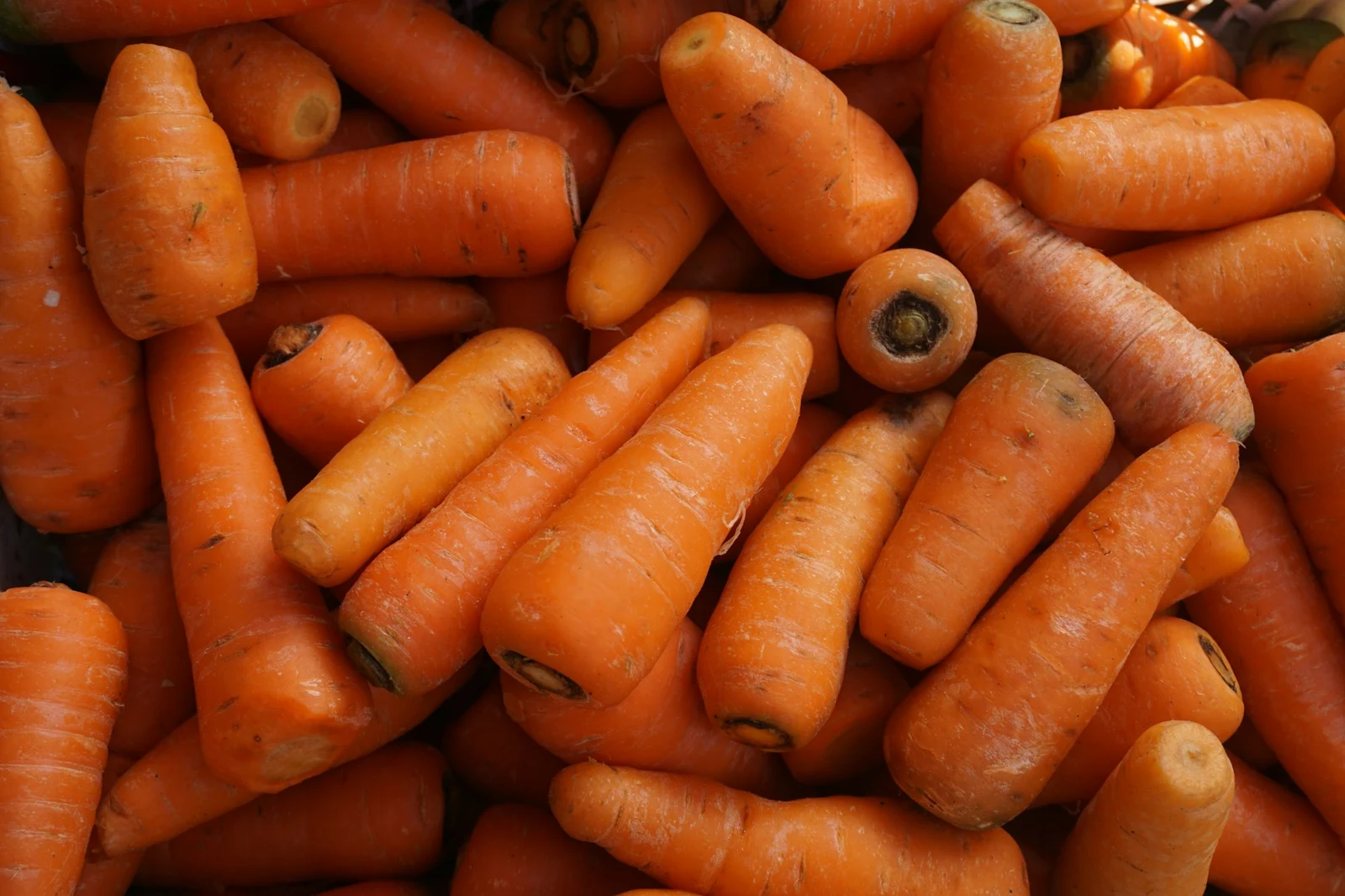 Carrots