
Radish
Research status: AI draft — awaiting expert review


Overview
Radishes are edible roots in the mustard family, ranging from small red globe types to long white daikon and firm winter varieties. Their leafy tops are also edible.
Origin & cultivation
Radishes have been cultivated since antiquity, though their precise origin is uncertain; proposed origins span parts of Europe and Asia. They are now grown worldwide, with major production in China, Japan, Korea, Europe, and North America.
Season
Small salad radishes are generally best in spring and fall, when cool weather encourages tender roots. Daikon and other winter radishes are commonly harvested in fall and winter, although supermarkets often carry radishes year-round.
Texture & flavor
Raw radishes are crisp and juicy, with peppery heat that varies by variety and growing conditions. Cooking softens their crunch and mellows their bite into a mild, slightly sweet flavor.
Nutrition
Typical values estimated with AI, not yet checked against lab data. For guidance only.
| Energy | 16 kcal | raw, per 100 g edible portion | FoodPulse AI estimate |
| Protein | 0.68 g | raw, per 100 g edible portion | FoodPulse AI estimate |
| Total fat | 0.1 g | raw, per 100 g edible portion | FoodPulse AI estimate |
| Saturated fat | 0.032 g | raw, per 100 g edible portion | FoodPulse AI estimate |
| Carbohydrate | 3.4 g | raw, per 100 g edible portion | FoodPulse AI estimate |
| Dietary fiber | 1.6 g | raw, per 100 g edible portion | FoodPulse AI estimate |
| Total sugars | 1.86 g | raw, per 100 g edible portion | FoodPulse AI estimate |
| Water | 95.27 g | raw, per 100 g edible portion | FoodPulse AI estimate |
| Calcium | 25 mg | raw, per 100 g edible portion | FoodPulse AI estimate |
| Iron | 0.34 mg | raw, per 100 g edible portion | FoodPulse AI estimate |
| Magnesium | 10 mg | raw, per 100 g edible portion | FoodPulse AI estimate |
| Potassium | 233 mg | raw, per 100 g edible portion | FoodPulse AI estimate |
| Sodium | 39 mg | raw, per 100 g edible portion | FoodPulse AI estimate |
| Zinc | 0.28 mg | raw, per 100 g edible portion | FoodPulse AI estimate |
| Vitamin C | 14.8 mg | raw, per 100 g edible portion | FoodPulse AI estimate |
| Vitamin A (RAE) | 0 µg | raw, per 100 g edible portion | FoodPulse AI estimate |
| Folate | 25 µg | raw, per 100 g edible portion | FoodPulse AI estimate |
| Vitamin B12 | 0 µg | raw, per 100 g edible portion | FoodPulse AI estimate |
| Cholesterol | 0 mg | raw, per 100 g edible portion | FoodPulse AI estimate |
Glycemic index: Not established.
Radishes provide vitamin C and some fiber while being low in calories; evidence does not establish special disease-preventing or curative effects. Radish allergy is uncommon but possible, particularly for people with allergies to related mustard-family foods. Educational, not medical advice.
Educational information, not medical advice.
Storage
- Room temperature · 60–75°F (16–24°C) · Whole, uncut roots: ideally use the same day.. Keep out of sunlight; room-temperature storage quickly reduces crispness. Refrigerate cut radishes within 2 hours, or within 1 hour above 90°F (32°C). Discard roots with mold, slime, or soft rot. FoodPulse AI estimate
- Refrigerator · 32–40°F (0–4°C) · Small roots: about 1–2 weeks; whole daikon: about 2–3 weeks; detached greens: 2–3 days.. Remove greens and store roots and greens separately in bags or covered containers, avoiding excess moisture. Refrigerate cut radishes and use within 3–5 days. Discard moldy, slimy, foul-smelling, or rotting pieces; slight loss of crispness alone is a quality issue. FoodPulse AI estimate
- Freezer · 0°F (−18°C) or below · Cooked radishes: about 2–3 months for best quality.. Freezing softens radishes, so reserve them for cooked dishes rather than salads. Cool and package cooked portions promptly, refrigerating or freezing within 2 hours; thaw in the refrigerator. Continuous freezing preserves safety, but does not make previously spoiled or improperly handled food safe. FoodPulse AI estimate
Preparation
Remove the tops and trim the root tip, then scrub the roots under running water; rinse greens thoroughly to remove grit, without soap or produce wash. Small radishes usually need no peeling, while tough-skinned daikon may benefit from it; slice, grate, halve, or quarter as needed. Keep radishes separate from raw meat, poultry, fish, and their juices, and wash hands, knives, and boards after handling those foods.
Cooking
Roast halved or quartered small radishes at 425°F (220°C) for about 15–25 minutes, or sauté thin slices for 5–8 minutes, until tender. Simmer daikon chunks for roughly 15–30 minutes depending on size, checking with a fork. Sauté washed greens for about 2–5 minutes, discarding tough stems or chopping them finely first.
Recipes
No verified recipes yet.
Waste less
Use fresh tops in soups, stir-fries, or pesto, and add finely sliced roots to salads and sandwiches. Refrigerate cooked leftovers promptly and use within 3–4 days, reheating only what you need. Compost sound trimmings rather than discarding usable greens or roots.
Food waste tips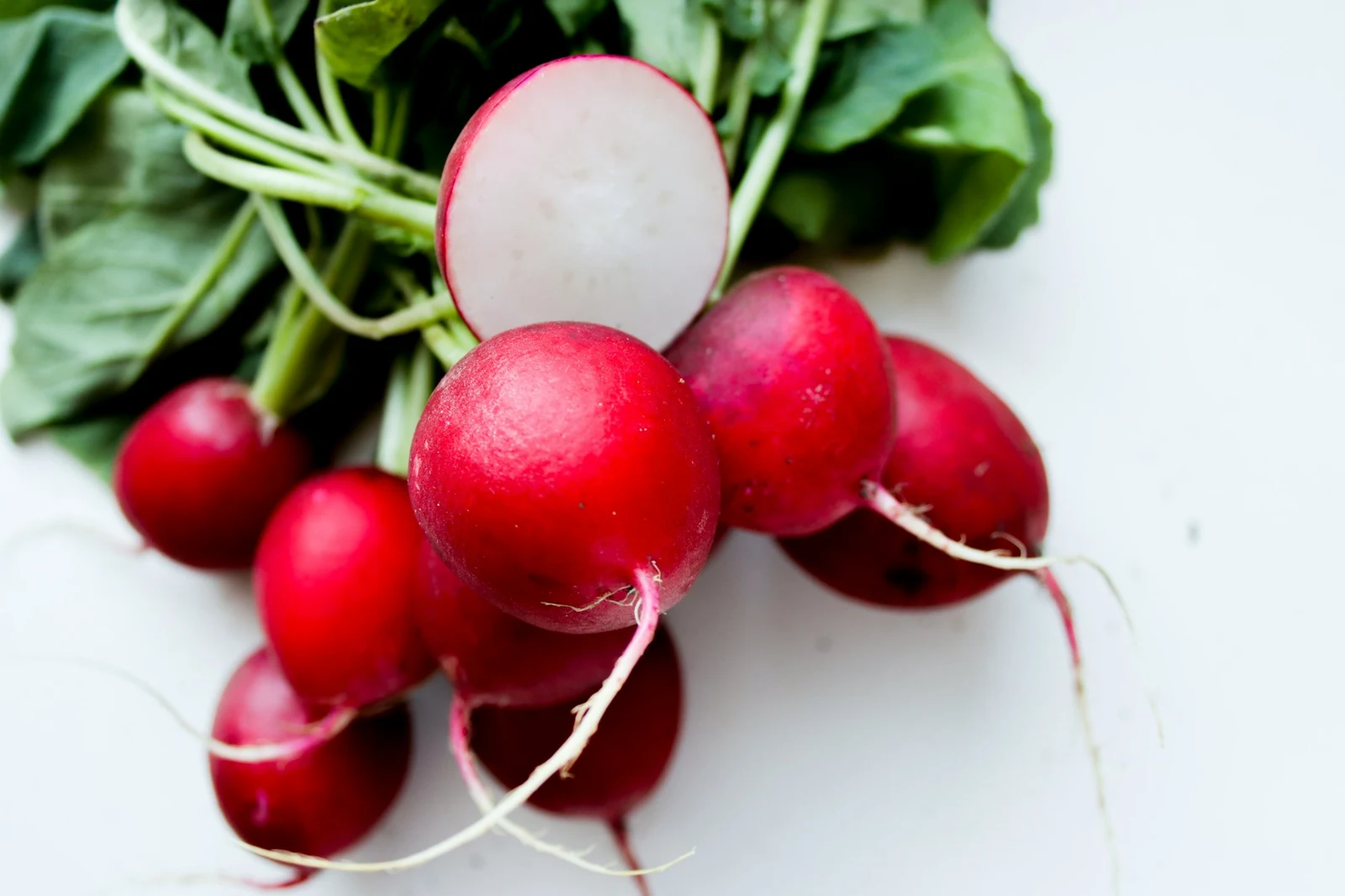 Radish