
Watermelon
Research status: AI draft — awaiting expert review


Overview
Watermelon is a large, thick-rinded fruit in the gourd family, with juicy flesh that may be red, pink, yellow, or orange. Seeded and seedless varieties range from small personal melons to large picnic types.
Origin & cultivation
Watermelon originated in Africa, with genetic evidence linking modern sweet varieties to northeastern African ancestors. It is now grown in warm regions worldwide; major producers include China, India, Turkey, and countries across the Middle East and North Africa.
Season
Watermelon is typically at its best in summer through early fall in temperate regions, although imports extend availability. Choose a melon that feels heavy for its size, with a creamy-yellow ground spot and no cracks, mold, or soft areas.
Texture & flavor
The flesh is crisp, tender, and exceptionally juicy, with mild sweetness and a fresh, sometimes grassy aroma. The white rind is firmer and much less sweet, making it useful for cooked dishes or pickles.
Nutrition
Typical values estimated with AI, not yet checked against lab data. For guidance only.
| Energy | 30 kcal | raw, per 100 g edible portion | FoodPulse AI estimate |
| Protein | 0.61 g | raw, per 100 g edible portion | FoodPulse AI estimate |
| Total fat | 0.15 g | raw, per 100 g edible portion | FoodPulse AI estimate |
| Saturated fat | 0.016 g | raw, per 100 g edible portion | FoodPulse AI estimate |
| Carbohydrate | 7.55 g | raw, per 100 g edible portion | FoodPulse AI estimate |
| Dietary fiber | 0.4 g | raw, per 100 g edible portion | FoodPulse AI estimate |
| Total sugars | 6.2 g | raw, per 100 g edible portion | FoodPulse AI estimate |
| Water | 91.45 g | raw, per 100 g edible portion | FoodPulse AI estimate |
| Calcium | 7 mg | raw, per 100 g edible portion | FoodPulse AI estimate |
| Iron | 0.24 mg | raw, per 100 g edible portion | FoodPulse AI estimate |
| Magnesium | 10 mg | raw, per 100 g edible portion | FoodPulse AI estimate |
| Potassium | 112 mg | raw, per 100 g edible portion | FoodPulse AI estimate |
| Sodium | 1 mg | raw, per 100 g edible portion | FoodPulse AI estimate |
| Zinc | 0.1 mg | raw, per 100 g edible portion | FoodPulse AI estimate |
| Vitamin C | 8.1 mg | raw, per 100 g edible portion | FoodPulse AI estimate |
| Vitamin A (RAE) | 28 µg | raw, per 100 g edible portion | FoodPulse AI estimate |
| Folate | 3 µg | raw, per 100 g edible portion | FoodPulse AI estimate |
| Vitamin B12 | 0 µg | raw, per 100 g edible portion | FoodPulse AI estimate |
| Cholesterol | 0 mg | raw, per 100 g edible portion | FoodPulse AI estimate |
Glycemic index: Not established.
Watermelon supplies water, some vitamin C, and—in red-fleshed varieties—lycopene, but eating it is not a treatment for disease. Allergy is possible, including pollen-related itching of the mouth; people sensitive to fermentable carbohydrates may experience digestive symptoms with larger portions. Educational, not medical advice.
Educational information, not medical advice.
Storage
- Room temperature, whole · 60–75°F (16–24°C) · About 7–10 days, depending on freshness and room warmth. Keep intact melons dry and out of direct sun; refrigerate sooner in hot conditions. Discard if leaking, moldy, deeply cracked, or developing soft, sunken areas. FoodPulse AI estimate
- Refrigerator, whole or cut · 32–40°F (0–4°C) · Whole: about 2 weeks if fresh; cut: 3–4 days. Cover cut surfaces or place pieces in a clean, covered container. Refrigerate within 2 hours of cutting, or 1 hour above 90°F (32°C); discard fruit left out longer. Discard for slime, mold, or sour or fermented odor, but do not rely on smell alone to judge safety. FoodPulse AI estimate
- Freezer, cut or puréed · 0°F (−18°C) or below · About 8–12 months for best quality. Freeze sound flesh in airtight containers, leaving headspace for purée; continuously frozen food remains safe beyond the quality window. Thaw in the refrigerator or blend directly from frozen; thawed pieces become soft. Discard thawed fruit held above 40°F (4°C) for more than 2 hours, or showing mold, slime, or fermented odor. FoodPulse AI estimate
Preparation
Wash hands, then scrub the whole rind under running water with a clean produce brush before cutting; do not use soap or bleach. Dry it, trim a stable base, and use a sturdy knife to cut wedges or remove the rind and cube the flesh. Keep knives, boards, and cut fruit separate from raw meat, poultry, seafood, and their juices, washing equipment thoroughly between uses.
Cooking
Serve raw, blend into drinks or chilled soup, or freeze puréed flesh into ice pops. For grilling, pat 1–2-inch-thick wedges dry and cook over medium-high heat for about 2–4 minutes per side, adjusting for thickness and heat. For stir-fries, peel off the green outer skin and cook thin slices of white rind for roughly 5–10 minutes, until tender-crisp.
Recipes
No verified recipes yet.
Waste less
Use sound leftover flesh in salsa, smoothies, or granita, and cook the peeled white rind as a vegetable. For shelf-stable rind pickles, follow a tested NCHFP recipe and its specified canning process; do not improvise acidity or processing times. Compost unusable rind and seeds where accepted, and discard rather than salvage spoiled fruit.
Food waste tips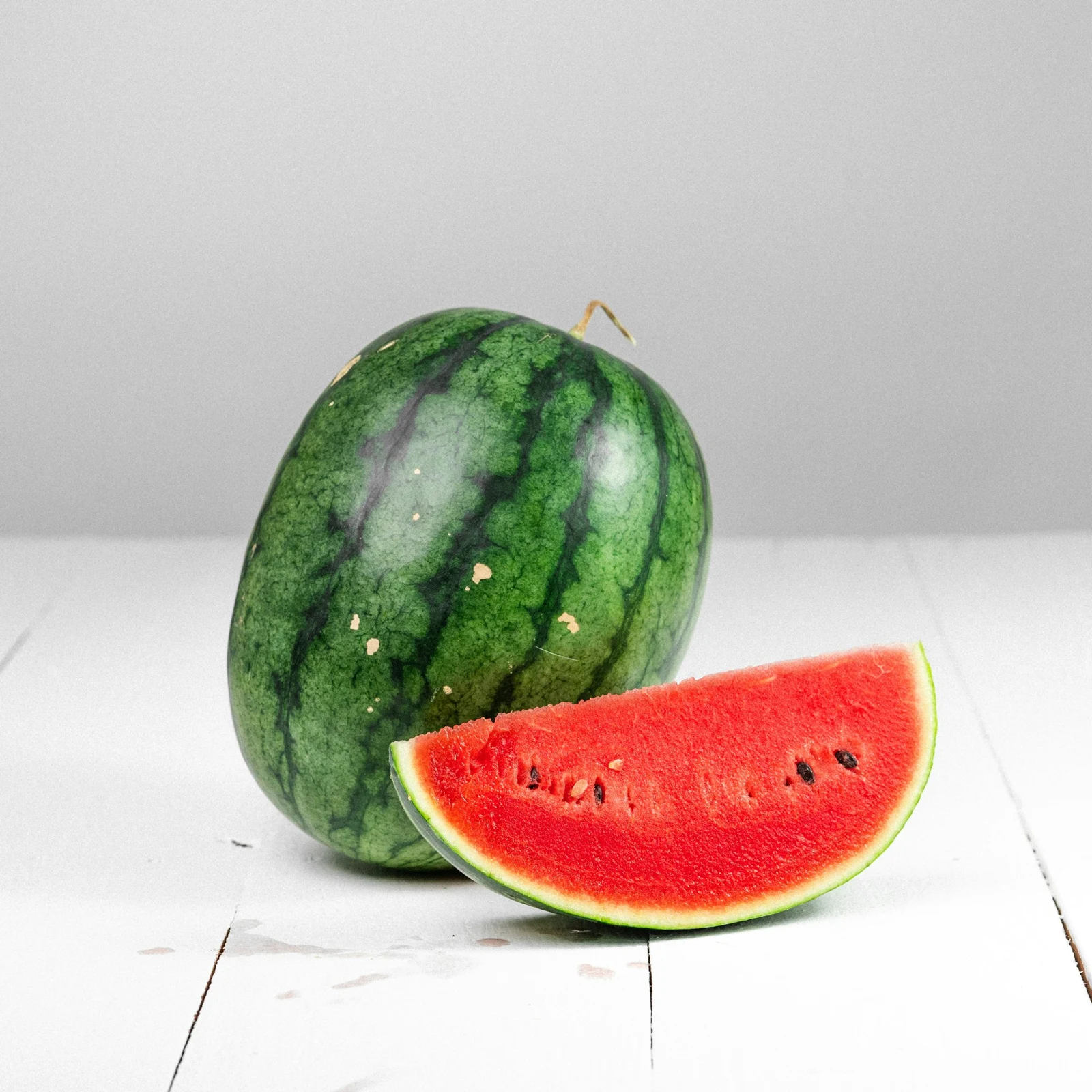 Watermelon