
Cantaloupe
Research status: AI draft — awaiting expert review


Overview
Cantaloupe is a sweet melon in the gourd family, usually with orange flesh and a central cavity of seeds. In North America, the name commonly refers to netted-rind muskmelons; choose fruit that feels heavy, smells pleasantly sweet at the blossom end, and has no cracks or soft, leaking spots.
Origin & cultivation
Melons originated in parts of Africa and Asia and were cultivated widely before reaching Europe and the Americas. Major melon-producing regions include China, Turkey, Iran, and the Mediterranean; California and Arizona are important U.S. cantaloupe sources.
Season
In the United States, locally grown cantaloupe is generally best from June through September, with timing varying by climate. Imports from Mexico and Central America help supply stores during cooler months.
Texture & flavor
Ripe cantaloupe has juicy, tender flesh with a honeyed sweetness and musky, floral aroma. Underripe fruit is firmer and less aromatic; after harvest, it may soften and become more fragrant but does not appreciably gain sugar.
Nutrition
Typical values estimated with AI, not yet checked against lab data. For guidance only.
| Energy | 34 kcal | raw, per 100 g edible portion | FoodPulse AI estimate |
| Protein | 0.84 g | raw, per 100 g edible portion | FoodPulse AI estimate |
| Total fat | 0.19 g | raw, per 100 g edible portion | FoodPulse AI estimate |
| Saturated fat | 0.051 g | raw, per 100 g edible portion | FoodPulse AI estimate |
| Carbohydrate | 8.16 g | raw, per 100 g edible portion | FoodPulse AI estimate |
| Dietary fiber | 0.9 g | raw, per 100 g edible portion | FoodPulse AI estimate |
| Total sugars | 7.86 g | raw, per 100 g edible portion | FoodPulse AI estimate |
| Water | 90.15 g | raw, per 100 g edible portion | FoodPulse AI estimate |
| Calcium | 9 mg | raw, per 100 g edible portion | FoodPulse AI estimate |
| Iron | 0.21 mg | raw, per 100 g edible portion | FoodPulse AI estimate |
| Magnesium | 12 mg | raw, per 100 g edible portion | FoodPulse AI estimate |
| Potassium | 267 mg | raw, per 100 g edible portion | FoodPulse AI estimate |
| Sodium | 16 mg | raw, per 100 g edible portion | FoodPulse AI estimate |
| Zinc | 0.18 mg | raw, per 100 g edible portion | FoodPulse AI estimate |
| Vitamin C | 36.7 mg | raw, per 100 g edible portion | FoodPulse AI estimate |
| Vitamin A (RAE) | 169 µg | raw, per 100 g edible portion | FoodPulse AI estimate |
| Folate | 21 µg | raw, per 100 g edible portion | FoodPulse AI estimate |
| Vitamin B12 | 0 µg | raw, per 100 g edible portion | FoodPulse AI estimate |
| Cholesterol | 0 mg | raw, per 100 g edible portion | FoodPulse AI estimate |
Glycemic index: Not established.
Cantaloupe provides vitamin C, beta-carotene, potassium, and water, making it a useful part of a varied diet rather than a treatment for disease. Melon allergy is possible, including pollen-food allergy syndrome in some people with ragweed or grass pollen allergies; symptoms may include mouth itching, and severe reactions require urgent care. Educational, not medical advice.
Educational information, not medical advice.
Storage
- Room temperature, whole only · About 60–75°F (16–24°C), away from sunlight · Usually 1–2 days to soften and develop aroma; refrigerate once ripe. Keep whole melon clean, dry, and away from raw animal foods. Discard fruit with mold, leaking cracks, extensive soft spots, or a fermented odor; never use room-temperature storage for cut melon. FoodPulse AI estimate
- Refrigerator · 32–40°F (0–4°C) · Whole ripe melon: about 3–5 days; cut melon: 3–4 days. Cover cut melon and refrigerate within 2 hours of cutting, or within 1 hour if the surrounding temperature exceeds 90°F (32°C). Discard cut melon left out beyond these limits, even if it smells normal, and discard any melon with mold, slime, or a sour odor. FoodPulse AI estimate
- Freezer · 0°F (−18°C) or below · About 8–12 months for best quality. Freeze freshly prepared, chilled cubes on a tray, then transfer to airtight freezer containers or bags; thaw in the refrigerator or use frozen. Continuously frozen fruit remains safe beyond this quality window, but freezing does not make spoiled or improperly handled melon safe; discard thawed fruit with mold, slime, or an off odor. FoodPulse AI estimate
Preparation
Wash hands, then scrub the whole melon under running water with a clean produce brush and dry it before cutting; do not use soap or bleach. Halve it with a clean knife, scoop out the seeds, remove the rind, and cut into wedges or cubes. Keep melon and its utensils separate from raw meat, poultry, seafood, and their juices, and wash and sanitize contaminated surfaces before preparing ready-to-eat fruit.
Cooking
Cantaloupe is usually served raw in fruit salads, chilled soups, or smoothies. For a cooked option, grill thick wedges over medium-high heat for about 2–4 minutes per side, or roast 1-inch chunks at 425°F (220°C) for roughly 10–20 minutes, depending on size and desired softness. Cook only until lightly browned and warmed through, since prolonged heat makes the flesh mushy.
Recipes
No verified recipes yet.
Waste less
Use sound, overripe flesh promptly in smoothies, purées, or frozen pops, and freeze surplus cubes before they deteriorate. Seeds from a freshly cut, washed melon can be rinsed, dried, and roasted until crisp; compost unwanted seeds and rind where accepted. Do not salvage moldy or spoiled melon by trimming away the affected area.
Food waste tips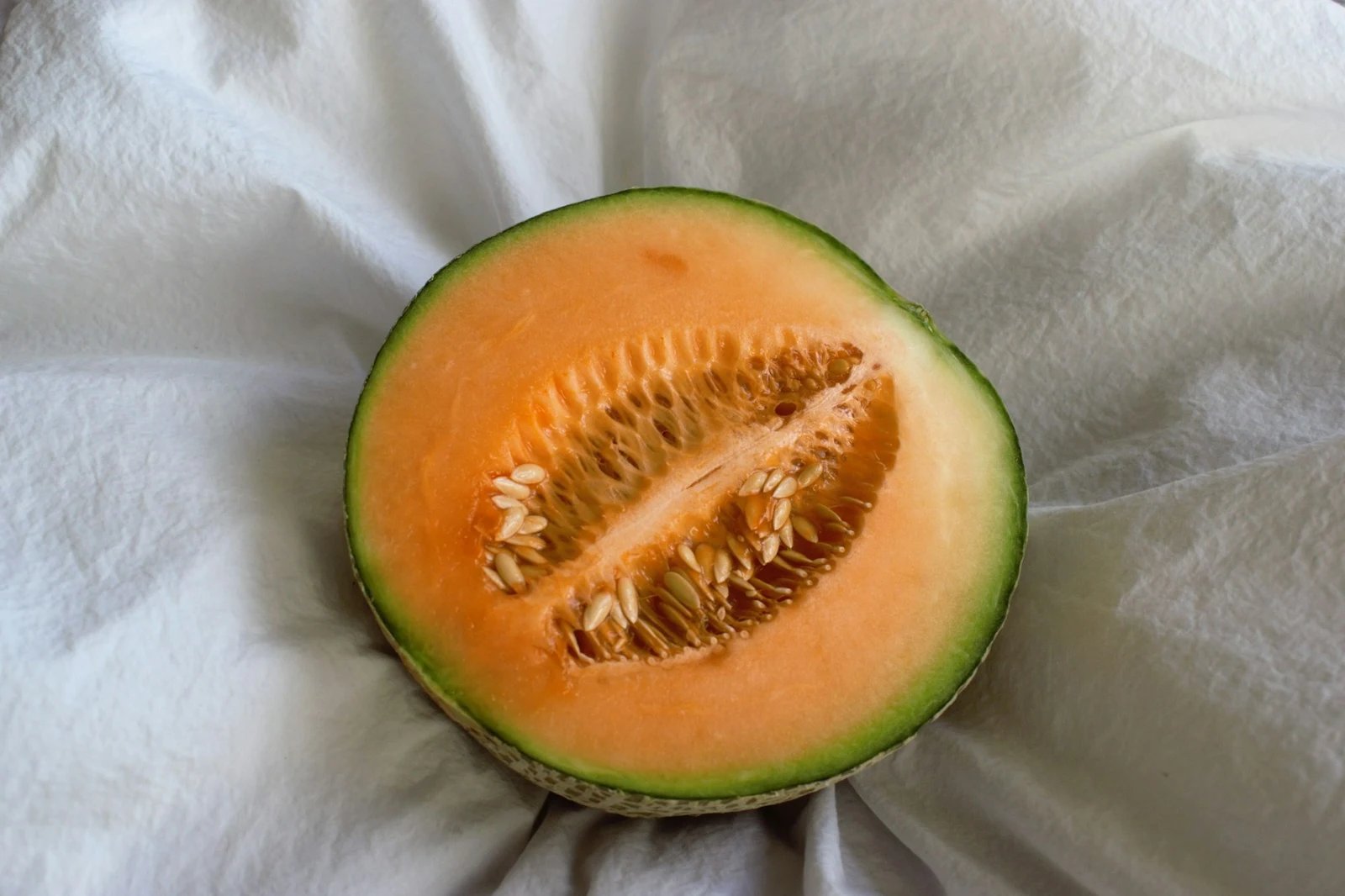 Cantaloupe