
Salmon
Research status: AI draft — awaiting expert review


Overview
Salmon is an oily fish sold whole, as steaks or fillets, and canned, smoked, or frozen. Common choices include Atlantic salmon and Pacific species such as sockeye, coho, Chinook, pink, and chum.
Origin & cultivation
Salmon are native to the cold waters of the North Atlantic and North Pacific, with most species migrating into freshwater to spawn. Major farmed producers include Norway, Chile, Canada, and the United Kingdom; wild Pacific catches come largely from Alaska, Russia, and Canada.
Season
Fresh wild Pacific salmon is generally most available from late spring through early fall, with timing varying by species and fishing area. Farmed, frozen, and canned salmon are available year-round.
Texture & flavor
Salmon has moist, flaky flesh and a rich flavor, with higher-fat varieties generally tasting more buttery. Sockeye is typically firm and robust, while pink and chum are usually milder and leaner.
Nutrition
Typical values estimated with AI, not yet checked against lab data. For guidance only.
| Energy | 208 kcal | raw (Atlantic salmon, farmed), per 100 g edible portion | FoodPulse AI estimate |
| Protein | 20.42 g | raw (Atlantic salmon, farmed), per 100 g edible portion | FoodPulse AI estimate |
| Total fat | 13.42 g | raw (Atlantic salmon, farmed), per 100 g edible portion | FoodPulse AI estimate |
| Saturated fat | 3.05 g | raw (Atlantic salmon, farmed), per 100 g edible portion | FoodPulse AI estimate |
| Carbohydrate | 0 g | raw (Atlantic salmon, farmed), per 100 g edible portion | FoodPulse AI estimate |
| Dietary fiber | 0 g | raw (Atlantic salmon, farmed), per 100 g edible portion | FoodPulse AI estimate |
| Total sugars | 0 g | raw (Atlantic salmon, farmed), per 100 g edible portion | FoodPulse AI estimate |
| Water | 64.89 g | raw (Atlantic salmon, farmed), per 100 g edible portion | FoodPulse AI estimate |
| Calcium | 9 mg | raw (Atlantic salmon, farmed), per 100 g edible portion | FoodPulse AI estimate |
| Iron | 0.34 mg | raw (Atlantic salmon, farmed), per 100 g edible portion | FoodPulse AI estimate |
| Magnesium | 27 mg | raw (Atlantic salmon, farmed), per 100 g edible portion | FoodPulse AI estimate |
| Potassium | 363 mg | raw (Atlantic salmon, farmed), per 100 g edible portion | FoodPulse AI estimate |
| Sodium | 59 mg | raw (Atlantic salmon, farmed), per 100 g edible portion | FoodPulse AI estimate |
| Zinc | 0.36 mg | raw (Atlantic salmon, farmed), per 100 g edible portion | FoodPulse AI estimate |
| Vitamin C | 3.9 mg | raw (Atlantic salmon, farmed), per 100 g edible portion | FoodPulse AI estimate |
| Vitamin A (RAE) | 58 µg | raw (Atlantic salmon, farmed), per 100 g edible portion | FoodPulse AI estimate |
| Folate | 26 µg | raw (Atlantic salmon, farmed), per 100 g edible portion | FoodPulse AI estimate |
| Vitamin B12 | 3.23 µg | raw (Atlantic salmon, farmed), per 100 g edible portion | FoodPulse AI estimate |
| Cholesterol | 55 mg | raw (Atlantic salmon, farmed), per 100 g edible portion | FoodPulse AI estimate |
Glycemic index: Not applicable / not meaningful (very little carbohydrate).
Salmon provides protein, vitamin B12, vitamin D, and omega-3 fats; eating fish as part of a balanced diet may support cardiovascular health. It is generally a lower-mercury choice, though local advisories matter for self-caught fish, and fish is a major food allergen. Educational, not medical advice.
Educational information, not medical advice.
Storage
- Room temperature · Above 40°F (4°C); typical rooms are 68–77°F (20–25°C) · No more than 2 hours total, or 1 hour above 90°F (32°C). These are handling limits, not storage recommendations. Discard perishable salmon left out longer, even if it smells normal. FoodPulse AI estimate
- Refrigerator · 32–40°F (0–4°C) · Raw: 1–2 days; cooked: 3–4 days. Keep raw salmon sealed on a tray below ready-to-eat foods; refrigerate cooked fish promptly in shallow containers. Discard fish with sour or ammonia-like odors, unusual slime, or mold, but do not rely on smell to detect unsafe storage. FoodPulse AI estimate
- Freezer · 0°F (−18°C) or below · Raw salmon: 2–3 months for best quality; cooked salmon: 2–3 months. Wrap airtight and label; continuously frozen food remains safe beyond these quality windows. Thaw in the refrigerator, or use cold-water or microwave thawing followed by immediate cooking; follow vacuum-pack instructions, which commonly require removing fish before thawing. Freezer burn affects quality rather than safety; discard thawed fish that has exceeded safe handling limits. FoodPulse AI estimate
Preparation
Do not rinse raw salmon: splashing can spread bacteria, and cooking provides the safety step. Pat dry with paper towels, remove scales if needed, pull out pin bones, and cut into similar-sized portions. Keep raw fish and its juices away from ready-to-eat foods, and wash hands, knives, boards, and counters after handling.
Cooking
Bake, grill, pan-sear, poach, or steam salmon; portions about 1 inch thick often take 10–15 minutes in a 400°F (204°C) oven or 6–10 minutes total in a skillet, while thicker pieces take longer. USDA recommends cooking fish to an internal temperature of 145°F (63°C), measured in the thickest part; timing alone does not establish safety. Reheat cooked leftovers to 165°F (74°C).
Recipes
Kerala-Inspired Salmon with Coconut, Ginger and Green Mango · 35 min · serves 4
An original home-style curry pairing salmon with tart green mango, coconut milk and a fragrant mustard-seed tempering.
Ingredients
- 600 g skinless salmon, cut into 4 cm chunks
- 2 tablespoons coconut oil
- 1 teaspoon black mustard seeds
- 12 fresh curry leaves, washed and thoroughly dried
- 1 medium onion, thinly sliced
- 20 g fresh ginger, finely chopped
- 3 garlic cloves, minced
- 1 green chile, slit lengthwise
- 1/2 teaspoon ground turmeric
- 1 teaspoon ground coriander
- 150 g peeled, firm green mango, cut into thin slices
- 400 ml canned unsweetened coconut milk
- 100 ml water
- 3/4 teaspoon fine salt
- 2 tablespoons chopped fresh cilantro
Steps
- Pat the salmon dry with paper towels. Prepare the remaining ingredients, keeping the raw fish and its utensils separate from ready-to-eat foods.
- Heat the coconut oil in a wide, deep skillet over medium heat. Add the mustard seeds and cover briefly until they begin popping, about 30 seconds. Carefully add the dry curry leaves; they may sputter.
- Add the onion and cook for 6 minutes, stirring occasionally. Stir in the ginger, garlic and green chile and cook for 1 minute.
- Add the turmeric and coriander and stir for 20 seconds. Add the mango, coconut milk, water and salt, then bring to a gentle simmer.
- Simmer uncovered for 7–9 minutes, until the mango begins to soften. Nestle the salmon into the sauce and spoon a little sauce over each piece.
- Cover and cook gently for 6–10 minutes, depending on the thickness of the fish, until the thickest pieces reach 145°F (63°C). Avoid vigorous stirring, which can break up the salmon.
- Remove from the heat, scatter with cilantro and serve in shallow bowls.
Safety: Cook salmon to 145°F (63°C), checking the center of a thick piece with a food thermometer. Contains fish and coconut; check packaged ingredients for additional allergens. Refrigerate leftovers in shallow containers within 2 hours, or 1 hour above 90°F (32°C). Keep at 40°F (4°C) or below, use within 3–4 days and reheat to 165°F (74°C).
Recipe written with AI by FoodPulse — check it before cooking.
Waste less
Cook the skin until crisp, and use fresh bones and heads, with gills removed, for stock; strain carefully to remove bones. Refrigerate stock promptly and turn cooked salmon leftovers into fish cakes, pasta, or salads within 3–4 days. Keep fish scraps out of ordinary backyard compost because they attract pests; use a municipal organics service only if it accepts fish.
Food waste tips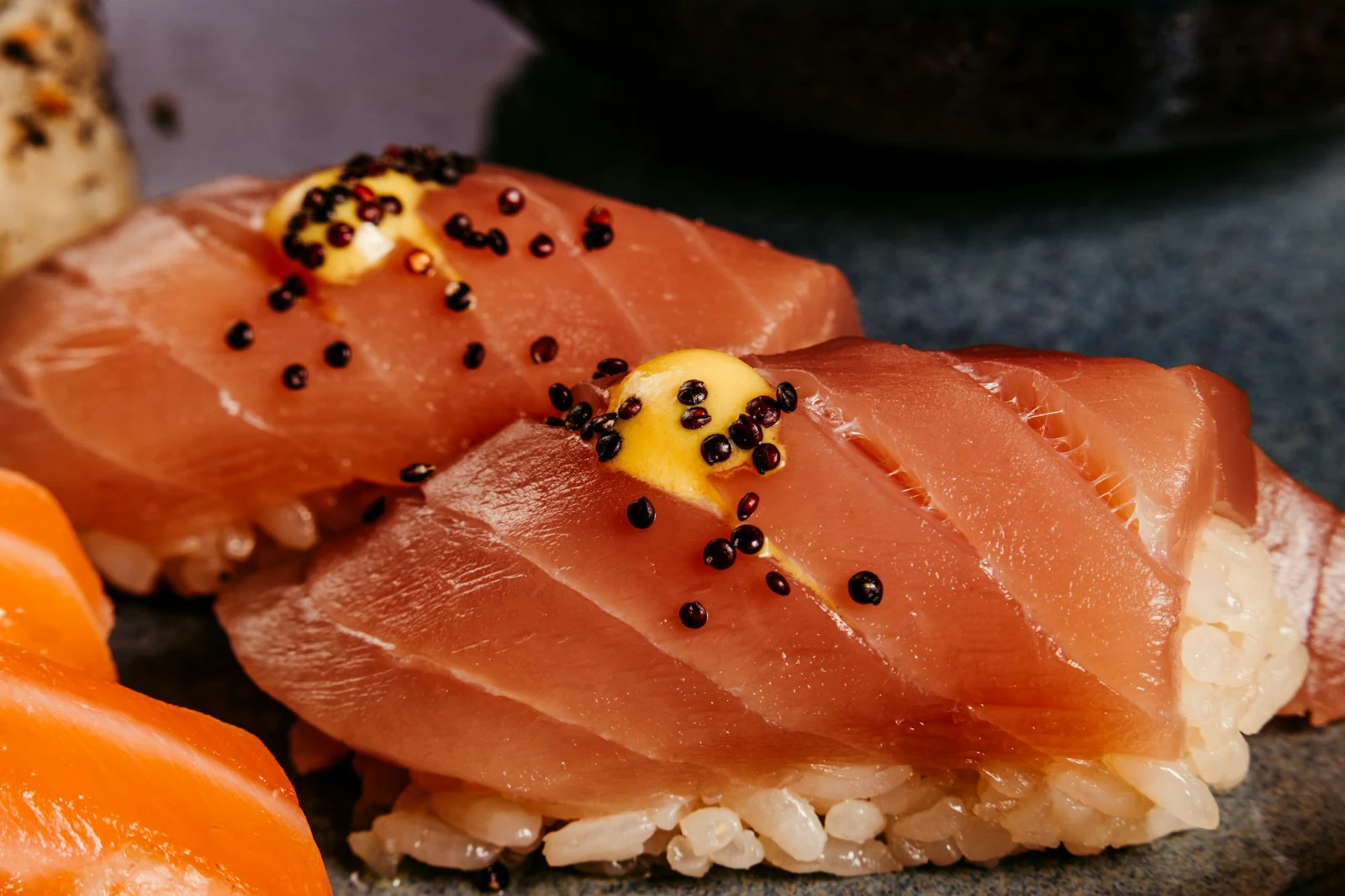 Salmon