
Mackerel
Research status: AI draft — awaiting expert review


Overview
Mackerel is a group of streamlined, oily fish sold whole, as fillets, smoked, or canned. Species vary greatly in size and mercury content, so check the label rather than treating all mackerel alike.
Origin & cultivation
Mackerel live in temperate and tropical seas worldwide. Major fisheries include the Northeast Atlantic around Norway, the United Kingdom, and Ireland, and Pacific waters around Japan, China, and other East Asian countries.
Season
Fresh availability depends on species, region, and fishing regulations; many Atlantic fisheries have strong summer and autumn seasons. Frozen and canned mackerel are available year-round.
Texture & flavor
Mackerel has rich, distinctly fishy flavor and moist, firm flesh that separates into substantial flakes. Its edible skin crisps well, and lemon, vinegar, mustard, or tomatoes balance its richness.
Nutrition
Typical values estimated with AI, not yet checked against lab data. For guidance only.
| Energy | 205 kcal | raw (Atlantic mackerel), per 100 g edible portion | FoodPulse AI estimate |
| Protein | 18.6 g | raw (Atlantic mackerel), per 100 g edible portion | FoodPulse AI estimate |
| Total fat | 13.89 g | raw (Atlantic mackerel), per 100 g edible portion | FoodPulse AI estimate |
| Saturated fat | 3.257 g | raw (Atlantic mackerel), per 100 g edible portion | FoodPulse AI estimate |
| Carbohydrate | 0 g | raw (Atlantic mackerel), per 100 g edible portion | FoodPulse AI estimate |
| Dietary fiber | 0 g | raw (Atlantic mackerel), per 100 g edible portion | FoodPulse AI estimate |
| Total sugars | 0 g | raw (Atlantic mackerel), per 100 g edible portion | FoodPulse AI estimate |
| Water | 63.55 g | raw (Atlantic mackerel), per 100 g edible portion | FoodPulse AI estimate |
| Calcium | 12 mg | raw (Atlantic mackerel), per 100 g edible portion | FoodPulse AI estimate |
| Iron | 1.63 mg | raw (Atlantic mackerel), per 100 g edible portion | FoodPulse AI estimate |
| Magnesium | 76 mg | raw (Atlantic mackerel), per 100 g edible portion | FoodPulse AI estimate |
| Potassium | 314 mg | raw (Atlantic mackerel), per 100 g edible portion | FoodPulse AI estimate |
| Sodium | 90 mg | raw (Atlantic mackerel), per 100 g edible portion | FoodPulse AI estimate |
| Zinc | 0.63 mg | raw (Atlantic mackerel), per 100 g edible portion | FoodPulse AI estimate |
| Vitamin C | 0.4 mg | raw (Atlantic mackerel), per 100 g edible portion | FoodPulse AI estimate |
| Vitamin A (RAE) | 50 µg | raw (Atlantic mackerel), per 100 g edible portion | FoodPulse AI estimate |
| Folate | 1 µg | raw (Atlantic mackerel), per 100 g edible portion | FoodPulse AI estimate |
| Vitamin B12 | 8.71 µg | raw (Atlantic mackerel), per 100 g edible portion | FoodPulse AI estimate |
| Cholesterol | 70 mg | raw (Atlantic mackerel), per 100 g edible portion | FoodPulse AI estimate |
Glycemic index: Not applicable / not meaningful (very little carbohydrate).
Mackerel supplies protein, omega-3 fats, vitamin B12, and vitamin D; omega-3-rich fish can support a heart-healthy eating pattern. Atlantic and Pacific chub mackerel are lower-mercury choices, while FDA/EPA advise avoiding king mackerel during pregnancy, breastfeeding, and childhood because of high mercury. Fish is a major allergen, and poorly chilled mackerel can develop histamine that cooking or freezing cannot destroy. Educational, not medical advice.
Educational information, not medical advice.
Storage
- Room temperature — handling only · 40–140°F (4–60°C); especially hazardous above 90°F (32°C) · No more than 2 hours total out of refrigeration, or 1 hour above 90°F (32°C).. Keep fish chilled until preparation. Discard after these limits or if its cold-chain history is doubtful; histamine may be present without obvious odor and is not destroyed by cooking. FoodPulse AI estimate
- Refrigerator · 32–40°F (0–4°C) · Raw: 1–2 days; cooked: 3–4 days.. Store covered on a tray below ready-to-eat foods; refrigerate cooked fish promptly in shallow containers. Discard fish with sour or ammonia-like odor, unusual slime, or mold, but do not rely on appearance or smell to establish safety. FoodPulse AI estimate
- Freezer · 0°F (-18°C) or below · Raw fatty fish: 2–3 months for best quality; cooked fish: 2–3 months.. Wrap airtight and freeze while fresh; continuously frozen food remains safe longer, though quality declines. Follow package thawing instructions, removing vacuum-packed fish from its packaging before refrigerator thawing unless the label explicitly permits otherwise. Freezing does not eliminate preformed histamine; discard fish that was temperature-abused before freezing. FoodPulse AI estimate
Preparation
Thaw in the refrigerator, or in a leakproof bag in cold water changed every 30 minutes; cook promptly after cold-water thawing. Avoid rinsing raw fish because splashes can spread bacteria; pat dry, gut whole fish promptly if needed, and remove gills, fins, and pin bones before portioning. Wash hands, knives, boards, and work surfaces after contact, and keep raw fish and its juices away from ready-to-eat foods.
Cooking
Grill, broil, pan-fry, or bake; fillets roughly ½–1 inch thick often take 6–12 minutes, while small whole fish may take 15–25 minutes at 400°F (204°C). USDA recommends cooking fish to an internal temperature of 145°F (63°C), measured in the thickest flesh without touching bone; time varies with thickness and method. Reheat cooked leftovers to 165°F (74°C).
Recipes
No verified recipes yet.
Waste less
Eat crisped skin and use safely chilled heads and frames, with gills and guts removed, for a short-simmered stock; strain carefully for bones. Turn cooked leftovers into fish cakes, toast toppings, or salads within their refrigerated storage limit. Keep fish scraps out of ordinary backyard compost because they attract pests; use a municipal program that explicitly accepts animal foods.
Food waste tips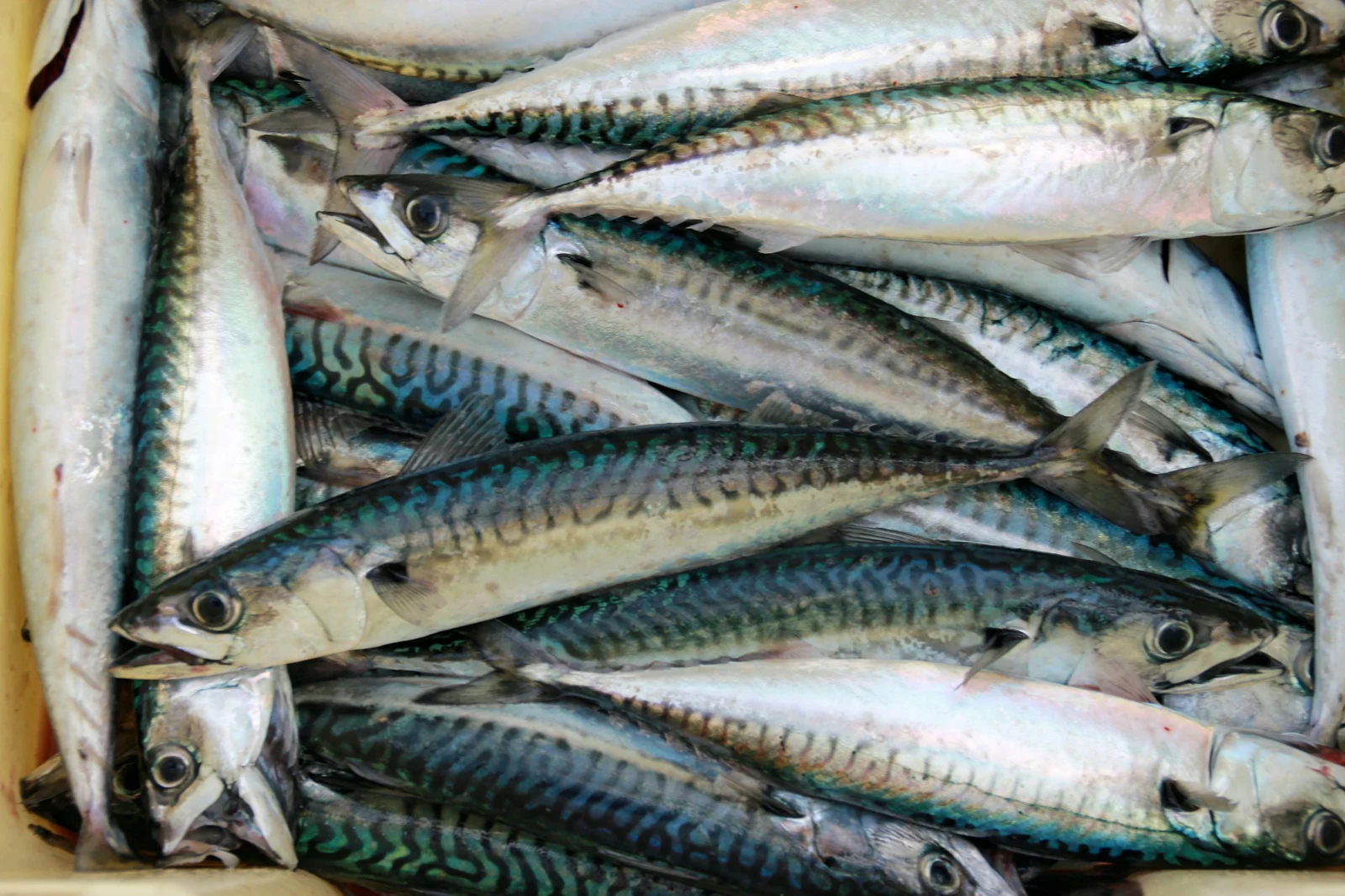 Mackerel