
Pork
Research status: AI draft — awaiting expert review


Overview
Pork is meat from domestic pigs, sold as fresh cuts, ground meat, offal, and cured products such as bacon and ham. Common cuts include loin, tenderloin, shoulder, ribs, and belly; their fat and connective tissue determine the best cooking method.
Origin & cultivation
Pigs were domesticated from wild boar in several parts of Eurasia and are now raised worldwide. Major pork-producing regions include China, the European Union, the United States, and Brazil.
Season
Pork is available year-round, with no strong natural retail season. Seasonal demand often favors hams around holidays, ribs for summer grilling, and roasts in cooler months.
Texture & flavor
Pork has a mild, savory flavor, with richer flavor in fattier cuts. Loin and tenderloin are lean and tender but dry out if overcooked, while shoulder and belly become succulent with slower cooking.
Nutrition
Typical values estimated with AI, not yet checked against lab data. For guidance only.
| Energy | 263 kcal | raw (ground pork, representative lean-and-fat mixture), per 100 g edible portion | FoodPulse AI estimate |
| Protein | 16.88 g | raw (ground pork, representative lean-and-fat mixture), per 100 g edible portion | FoodPulse AI estimate |
| Total fat | 21.19 g | raw (ground pork, representative lean-and-fat mixture), per 100 g edible portion | FoodPulse AI estimate |
| Saturated fat | 7.87 g | raw (ground pork, representative lean-and-fat mixture), per 100 g edible portion | FoodPulse AI estimate |
| Carbohydrate | 0 g | raw (ground pork, representative lean-and-fat mixture), per 100 g edible portion | FoodPulse AI estimate |
| Dietary fiber | 0 g | raw (ground pork, representative lean-and-fat mixture), per 100 g edible portion | FoodPulse AI estimate |
| Total sugars | 0 g | raw (ground pork, representative lean-and-fat mixture), per 100 g edible portion | FoodPulse AI estimate |
| Water | 61.06 g | raw (ground pork, representative lean-and-fat mixture), per 100 g edible portion | FoodPulse AI estimate |
| Calcium | 14 mg | raw (ground pork, representative lean-and-fat mixture), per 100 g edible portion | FoodPulse AI estimate |
| Iron | 0.88 mg | raw (ground pork, representative lean-and-fat mixture), per 100 g edible portion | FoodPulse AI estimate |
| Magnesium | 19 mg | raw (ground pork, representative lean-and-fat mixture), per 100 g edible portion | FoodPulse AI estimate |
| Potassium | 287 mg | raw (ground pork, representative lean-and-fat mixture), per 100 g edible portion | FoodPulse AI estimate |
| Sodium | 56 mg | raw (ground pork, representative lean-and-fat mixture), per 100 g edible portion | FoodPulse AI estimate |
| Zinc | 2.2 mg | raw (ground pork, representative lean-and-fat mixture), per 100 g edible portion | FoodPulse AI estimate |
| Vitamin C | 0.7 mg | raw (ground pork, representative lean-and-fat mixture), per 100 g edible portion | FoodPulse AI estimate |
| Vitamin A (RAE) | 2 µg | raw (ground pork, representative lean-and-fat mixture), per 100 g edible portion | FoodPulse AI estimate |
| Folate | 5 µg | raw (ground pork, representative lean-and-fat mixture), per 100 g edible portion | FoodPulse AI estimate |
| Vitamin B12 | 0.7 µg | raw (ground pork, representative lean-and-fat mixture), per 100 g edible portion | FoodPulse AI estimate |
| Cholesterol | 72 mg | raw (ground pork, representative lean-and-fat mixture), per 100 g edible portion | FoodPulse AI estimate |
Glycemic index: Not applicable / not meaningful (very little carbohydrate).
Pork supplies protein, thiamin, vitamin B12, zinc, and iron; saturated fat varies substantially by cut, and cured products can be high in sodium. Evidence links regular processed-meat consumption with increased colorectal cancer risk, so limit bacon, ham, and sausages within a balanced diet. Pork can cause allergic reactions, including in people with alpha-gal syndrome; marinades and processed products may also contain milk, soy, wheat, or other allergens. Educational, not medical advice.
Educational information, not medical advice.
Storage
- Room temperature · Above 40°F (4°C); typical room temperature is 68–77°F (20–25°C) · No more than 2 hours total, or 1 hour if the surroundings exceed 90°F (32°C). These are handling limits, not storage recommendations. Discard pork left out beyond these limits even if it looks and smells normal; cooking does not reliably make it safe. FoodPulse AI estimate
- Refrigerator · 32–40°F (0–4°C) · Raw whole cuts: 3–5 days; ground pork or raw sausage: 1–2 days; cooked leftovers: 3–4 days. Keep raw pork in a sealed, leakproof container on a low shelf; refrigerate cooked pork promptly in shallow containers. Discard meat with slime, mold, or an off odor, but do not rely on these signs to establish safety. Cured products have different storage limits; follow package guidance. FoodPulse AI estimate
- Freezer · 0°F (−18°C) or below · For best quality: raw whole cuts 4–12 months; ground pork 3–4 months; raw sausage 1–2 months; cooked pork 2–3 months. Wrap airtight, label, and freeze while still within safe refrigerated storage time. Continuously frozen food remains safe indefinitely, although quality declines; freezer burn alone is not a safety hazard. Discard thawed pork held above 40°F (4°C) for more than 2 hours. FoodPulse AI estimate
Preparation
Do not wash raw pork, because splashing can spread bacteria; trim excess external fat or tough silverskin as needed. Cut into even pieces for consistent cooking, and slice cooked meat across the grain for tenderness. Keep raw pork and its juices away from ready-to-eat foods, wash hands with soap for 20 seconds after handling, and clean utensils and surfaces thoroughly. Thaw in the refrigerator, in a leakproof bag in cold water changed every 30 minutes, or in the microwave; cook immediately after cold-water or microwave thawing.
Cooking
Grill or pan-fry chops, roast loin, and braise shoulder or ribs: chops about 1 inch thick may take 8–15 minutes, tenderloins 20–35 minutes at 425°F (218°C), and shoulder pieces 3–6 hours or longer in a low oven, depending on size and method. USDA recommends cooking whole pork steaks, chops, and roasts to at least 145°F (63°C), followed by a 3-minute rest; cook ground pork and raw pork sausage to 160°F (71°C). Reheat leftovers to 165°F (74°C), and follow product-specific instructions for ham and other cured products. Check with a food thermometer rather than color or elapsed time; shoulder often needs cooking beyond the safety minimum to become tender.
Recipes
No verified recipes yet.
Waste less
Use suitable bones and trimmings for stock, and portion cooked meat into soups, tacos, or fried rice before its refrigerated storage time expires. Freeze surplus meat or stock promptly in meal-sized containers. Keep meat, fat, and bones out of ordinary home compost because they attract pests; use a municipal food-waste service only if it accepts them.
Food waste tips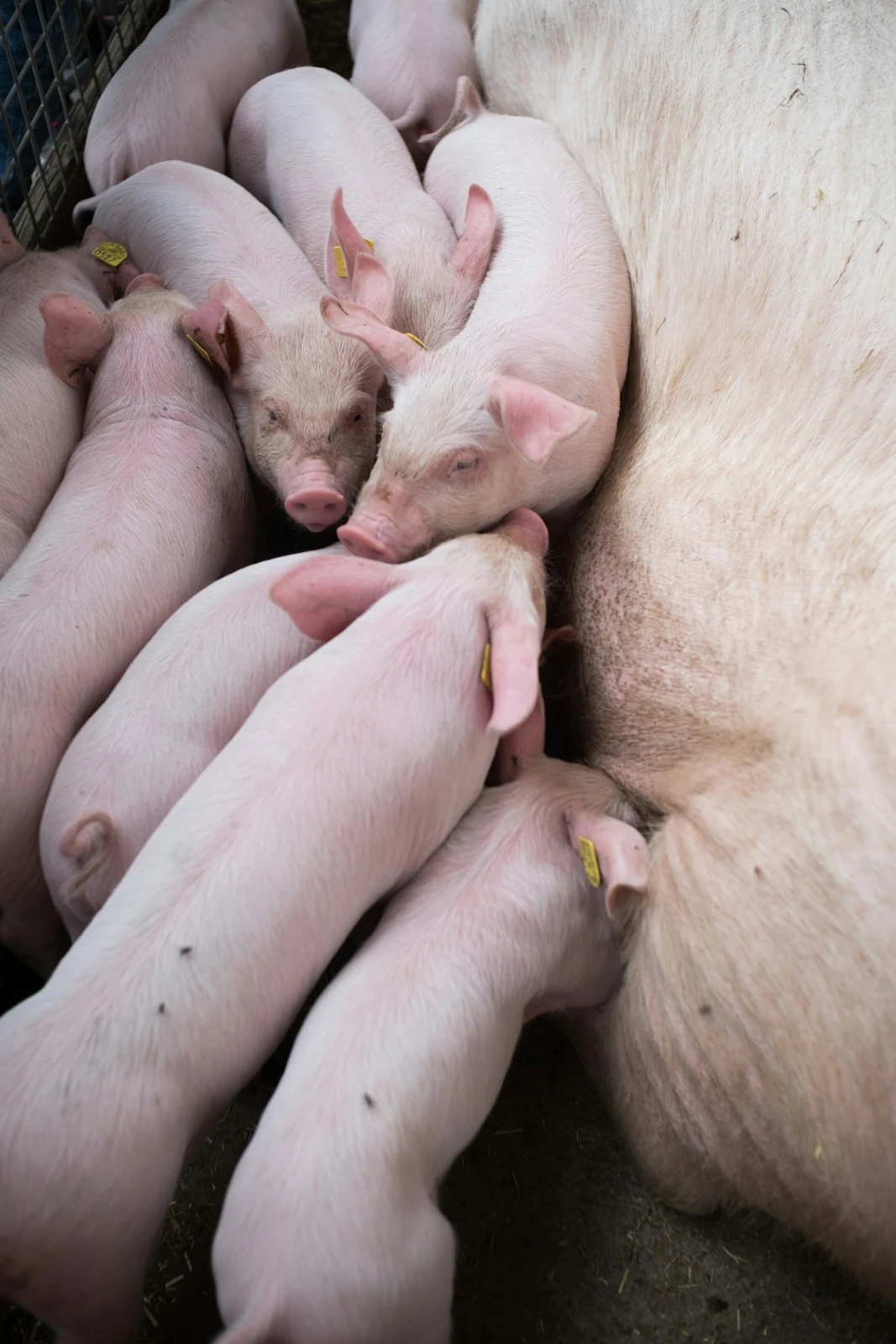 Pig Farms & Pork Production