
Beef
Research status: AI draft — awaiting expert review


Overview
Beef is meat from cattle, sold as steaks, roasts, ground meat, ribs, and organ meats. Tender cuts suit quick cooking, while tougher, connective-tissue-rich cuts usually need slow, moist heat.
Origin & cultivation
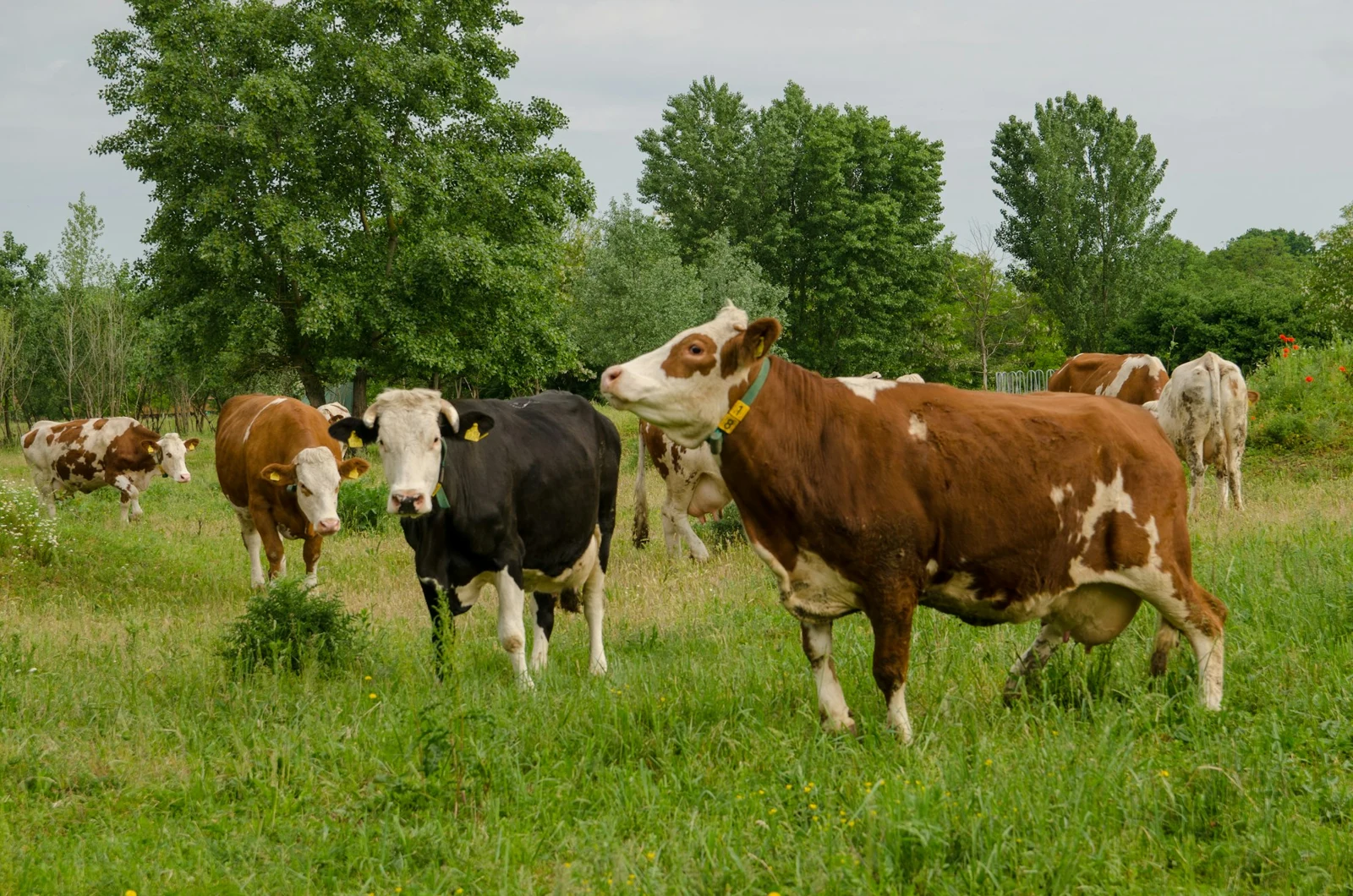
Beef comes from cattle raised on pasture, grain-based feeds, or a combination of both. Major producing regions include the United States, Brazil, China, the European Union, Australia, and Argentina.
Season
Beef is available year-round, fresh or frozen. Local pasture-raised beef may have seasonal availability depending on grazing conditions and processing schedules.
Texture & flavor
Beef has a savory, rich flavor that varies with cut, fat content, feed, and aging. Marbling contributes juiciness, while connective tissue can become tender and gelatinous during slow cooking; lean cuts become dry when overcooked.
Nutrition
Typical values estimated with AI, not yet checked against lab data. For guidance only.
| Energy | 215 kcal | raw (typical beef represented by 85% lean, 15% fat ground beef; values per 100 g edible portion), per 100 g edible portion | FoodPulse AI estimate |
| Protein | 18.59 g | raw (typical beef represented by 85% lean, 15% fat ground beef; values per 100 g edible portion), per 100 g edible portion | FoodPulse AI estimate |
| Total fat | 15 g | raw (typical beef represented by 85% lean, 15% fat ground beef; values per 100 g edible portion), per 100 g edible portion | FoodPulse AI estimate |
| Saturated fat | 5.73 g | raw (typical beef represented by 85% lean, 15% fat ground beef; values per 100 g edible portion), per 100 g edible portion | FoodPulse AI estimate |
| Carbohydrate | 0 g | raw (typical beef represented by 85% lean, 15% fat ground beef; values per 100 g edible portion), per 100 g edible portion | FoodPulse AI estimate |
| Dietary fiber | 0 g | raw (typical beef represented by 85% lean, 15% fat ground beef; values per 100 g edible portion), per 100 g edible portion | FoodPulse AI estimate |
| Total sugars | 0 g | raw (typical beef represented by 85% lean, 15% fat ground beef; values per 100 g edible portion), per 100 g edible portion | FoodPulse AI estimate |
| Water | 65.72 g | raw (typical beef represented by 85% lean, 15% fat ground beef; values per 100 g edible portion), per 100 g edible portion | FoodPulse AI estimate |
| Calcium | 15 mg | raw (typical beef represented by 85% lean, 15% fat ground beef; values per 100 g edible portion), per 100 g edible portion | FoodPulse AI estimate |
| Iron | 2.24 mg | raw (typical beef represented by 85% lean, 15% fat ground beef; values per 100 g edible portion), per 100 g edible portion | FoodPulse AI estimate |
| Magnesium | 19 mg | raw (typical beef represented by 85% lean, 15% fat ground beef; values per 100 g edible portion), per 100 g edible portion | FoodPulse AI estimate |
| Potassium | 295 mg | raw (typical beef represented by 85% lean, 15% fat ground beef; values per 100 g edible portion), per 100 g edible portion | FoodPulse AI estimate |
| Sodium | 66 mg | raw (typical beef represented by 85% lean, 15% fat ground beef; values per 100 g edible portion), per 100 g edible portion | FoodPulse AI estimate |
| Zinc | 4.48 mg | raw (typical beef represented by 85% lean, 15% fat ground beef; values per 100 g edible portion), per 100 g edible portion | FoodPulse AI estimate |
| Vitamin C | 0 mg | raw (typical beef represented by 85% lean, 15% fat ground beef; values per 100 g edible portion), per 100 g edible portion | FoodPulse AI estimate |
| Vitamin A (RAE) | 0 µg | raw (typical beef represented by 85% lean, 15% fat ground beef; values per 100 g edible portion), per 100 g edible portion | FoodPulse AI estimate |
| Folate | 7 µg | raw (typical beef represented by 85% lean, 15% fat ground beef; values per 100 g edible portion), per 100 g edible portion | FoodPulse AI estimate |
| Vitamin B12 | 2.09 µg | raw (typical beef represented by 85% lean, 15% fat ground beef; values per 100 g edible portion), per 100 g edible portion | FoodPulse AI estimate |
| Cholesterol | 68 mg | raw (typical beef represented by 85% lean, 15% fat ground beef; values per 100 g edible portion), per 100 g edible portion | FoodPulse AI estimate |
Glycemic index: Not applicable / not meaningful (very little carbohydrate).
Beef provides protein, vitamin B12, zinc, and readily absorbed iron; saturated fat varies by cut. Evidence links higher processed-meat intake to colorectal cancer, while associations for unprocessed red meat are less certain; lean cuts and moderate portions can fit a balanced diet. Beef can cause allergic reactions, including alpha-gal syndrome, and marinades or processed products may contain milk, soy, wheat, or other allergens. Educational, not medical advice.
Educational information, not medical advice.
Storage
- Room temperature · Above 40°F (4°C); especially above 90°F (32°C) · No more than 2 hours total, or 1 hour above 90°F (32°C). Not suitable for storage or thawing. Discard beef left out beyond these limits, even if it looks and smells normal; cooking does not reliably rescue temperature-abused food. FoodPulse AI estimate
- Refrigerator · 32–40°F (0–4°C) · Raw steaks and roasts: 3–5 days; ground beef and organ meats: 1–2 days; cooked beef: 3–4 days. Keep raw beef in a leakproof container on the lowest shelf, separate from ready-to-eat foods. Refrigerate leftovers promptly in shallow containers. Discard meat with mold, an off odor, or a slimy surface, but do not rely on smell or color to establish safety; color changes alone do not necessarily indicate spoilage. FoodPulse AI estimate
- Freezer · 0°F (−18°C) or below · Best quality: raw steaks and roasts 4–12 months; ground beef 3–4 months; organ meats 3–4 months; cooked beef 2–3 months. Wrap airtight, label, and freeze while fresh. Continuously frozen beef remains safe indefinitely, although quality declines; freezer burn is a quality issue, not a safety hazard. After a thawing incident, discard beef held above 40°F (4°C) for more than 2 hours. FoodPulse AI estimate
Preparation
Do not wash raw beef: splashing can spread bacteria around the kitchen. Trim excess surface fat and tough silverskin as needed, and slice across the grain for easier chewing. Keep raw beef and its juices away from ready-to-eat foods; wash hands with soap for 20 seconds and clean utensils, boards, and surfaces after contact. Thaw in the refrigerator, in a leakproof bag in cold water changed every 30 minutes, or in the microwave; cook immediately after cold-water or microwave thawing.
Cooking
Grill or pan-sear steaks, roast tender joints, and braise or stew tougher cuts. Depending on thickness, size, and heat, steaks may take roughly 6–20 minutes, roasts 1–3 hours, and braises 2–4 hours or longer; time alone does not establish safety. USDA minimum internal temperatures are 145°F (63°C) for whole-cut steaks, chops, and roasts followed by a 3-minute rest, and 160°F (71°C) for ground beef and organ meats. Check with a food thermometer in the thickest part away from bone, and reheat leftovers to 165°F (74°C).
Recipes
No verified recipes yet.
Waste less
Use suitable trimmings in stews and bones for stock, then cool stock promptly in shallow containers. Turn refrigerated cooked beef into sandwiches, soups, or stir-fries within 3–4 days, or freeze it sooner. Keep meat, bones, and fat out of backyard compost; use municipal food-scrap collection only if it explicitly accepts them.
Food waste tips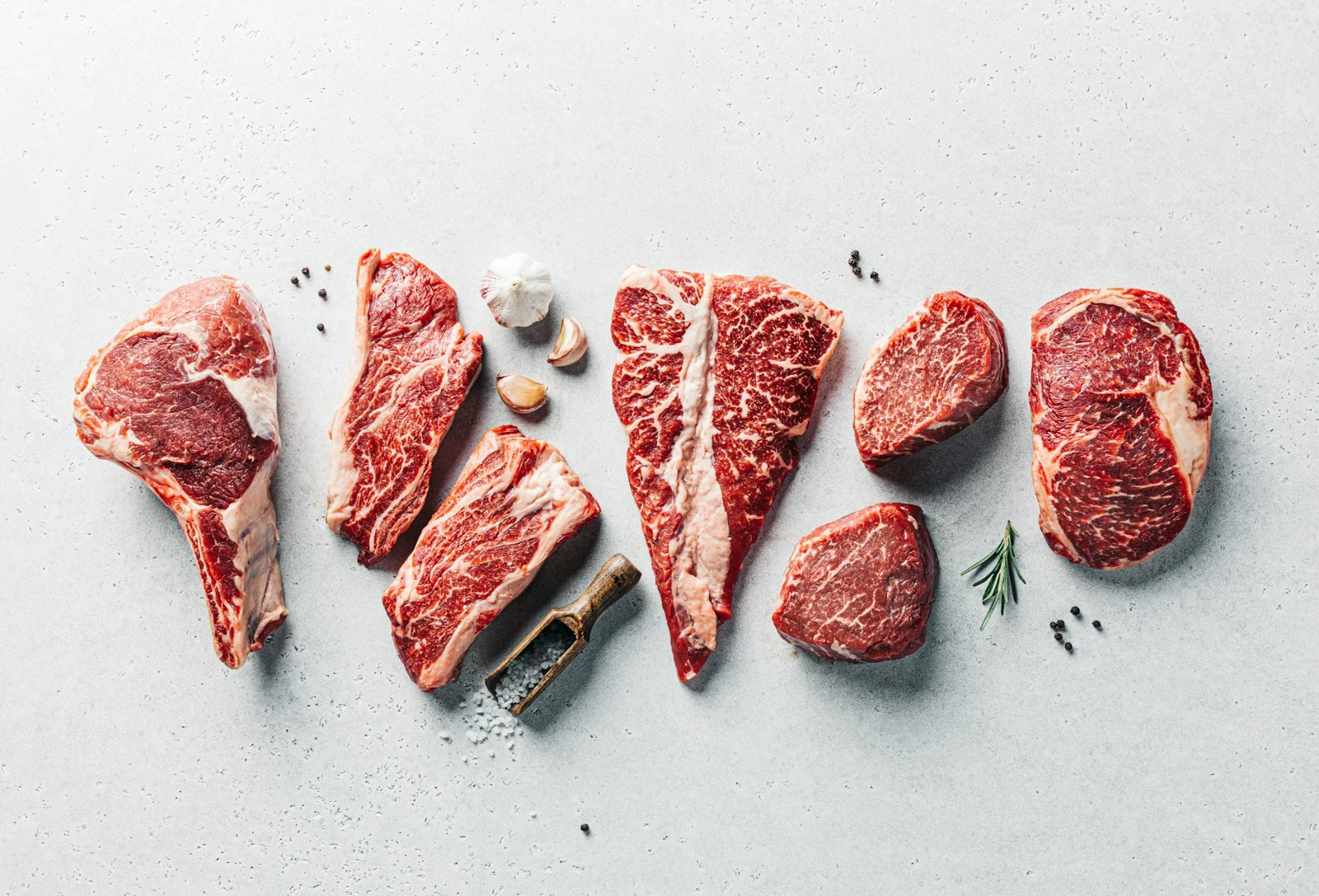 Beef
 Cattle Farms - Beef & Dairy