
Leek
Research status: AI draft — awaiting expert review


Overview
Leeks are allium vegetables related to onions and garlic, with overlapping leaf bases forming a long white-to-pale-green stalk. The tender stalk is most commonly eaten; tougher dark-green leaves are useful for stock or longer cooking.
Origin & cultivation
Leeks were cultivated in the ancient Mediterranean and Near East, although their precise origin is uncertain. Today they are grown widely, with substantial production in Turkey and European countries including France, Belgium, and the Netherlands.
Season
Leeks are available year-round in many markets, but their main season in temperate climates runs from autumn through early spring. Choose firm stalks with fresh-looking leaves and no slimy patches or extensive yellowing.
Texture & flavor
Raw leeks are crisp and mildly pungent, with a sweeter, gentler onion flavor than many bulb onions. Cooking softens them to a silky texture and brings out their sweetness; dark-green leaves remain more fibrous.
Nutrition
Typical values estimated with AI, not yet checked against lab data. For guidance only.
| Energy | 61 kcal | raw, per 100 g edible portion | FoodPulse AI estimate |
| Protein | 1.5 g | raw, per 100 g edible portion | FoodPulse AI estimate |
| Total fat | 0.3 g | raw, per 100 g edible portion | FoodPulse AI estimate |
| Saturated fat | 0.04 g | raw, per 100 g edible portion | FoodPulse AI estimate |
| Carbohydrate | 14.15 g | raw, per 100 g edible portion | FoodPulse AI estimate |
| Dietary fiber | 1.8 g | raw, per 100 g edible portion | FoodPulse AI estimate |
| Total sugars | 3.9 g | raw, per 100 g edible portion | FoodPulse AI estimate |
| Water | 83 g | raw, per 100 g edible portion | FoodPulse AI estimate |
| Calcium | 59 mg | raw, per 100 g edible portion | FoodPulse AI estimate |
| Iron | 2.1 mg | raw, per 100 g edible portion | FoodPulse AI estimate |
| Magnesium | 28 mg | raw, per 100 g edible portion | FoodPulse AI estimate |
| Potassium | 180 mg | raw, per 100 g edible portion | FoodPulse AI estimate |
| Sodium | 20 mg | raw, per 100 g edible portion | FoodPulse AI estimate |
| Zinc | 0.12 mg | raw, per 100 g edible portion | FoodPulse AI estimate |
| Vitamin C | 12 mg | raw, per 100 g edible portion | FoodPulse AI estimate |
| Vitamin A (RAE) | 83 µg | raw, per 100 g edible portion | FoodPulse AI estimate |
| Folate | 64 µg | raw, per 100 g edible portion | FoodPulse AI estimate |
| Vitamin B12 | 0 µg | raw, per 100 g edible portion | FoodPulse AI estimate |
| Cholesterol | 0 mg | raw, per 100 g edible portion | FoodPulse AI estimate |
Glycemic index: Not established.
Leeks provide fiber, vitamin K, and folate, though amounts depend on portion size and preparation. Their fructans may cause digestive symptoms in people sensitive to FODMAPs, and allium allergies, while uncommon, can occur. Educational, not medical advice.
Educational information, not medical advice.
Storage
- Room temperature · 60–75°F (16–24°C) · Same day only for best quality; refrigerate promptly. Keep whole, uncut leeks away from sunlight and heat. Refrigerate cut or cooked leeks within 2 hours, or within 1 hour above 90°F (32°C); discard if moldy, slimy, or foul-smelling. FoodPulse AI estimate
- Refrigerator · 34–40°F (1–4°C) · Whole raw leeks: about 1–2 weeks; cut raw leeks: 3–5 days; cooked leeks: 3–4 days. Store whole leeks unwashed in a loosely closed bag; keep washed, cut leeks dried and covered. Refrigerate cooked leeks promptly in shallow containers. Discard for mold, slime, sour odor, or unsafe time-temperature exposure; unsafe food may show no visible signs. FoodPulse AI estimate
- Freezer · 0°F (−18°C) or below · About 8–12 months for best quality. Wash and trim, then water-blanch small whole leeks for 4 minutes, following NCHFP guidance; cool promptly in ice water, drain, and pack airtight. Continuously frozen food remains safe beyond the quality window, although texture declines. Freezer burn is a quality defect, not spoilage; discard thawed leeks held above 40°F (4°C) for more than 2 hours. FoodPulse AI estimate
Preparation
Trim off the roots and any damaged leaves, retaining usable green tops. Split stalks lengthwise and rinse between the layers under running water, or slice and swish in a bowl of water, lift out the pieces, and rinse away remaining grit. Cut into half-moons, rings, or lengths as needed, and keep washed leeks and their utensils separate from raw meat, poultry, fish, and seafood.
Cooking
Sweat thinly sliced leeks in a little oil or butter over medium-low heat for about 8–15 minutes, stirring until tender without excessive browning. Simmer slices in soups for 15–25 minutes, or braise thick lengths for 25–40 minutes, depending on size. Roast halved or thick-cut leeks at 400°F (204°C) for about 20–35 minutes, turning and checking for tenderness.
Recipes
No verified recipes yet.
Waste less
Finely slice tender green portions for soups or sautés, and use well-washed tough tops in stock, straining them out afterward. Add promptly refrigerated cooked leftovers to eggs, rice, or soup within 3–4 days, reheating leftovers to 165°F (74°C). Compost roots and unusable plant trimmings where local composting rules allow.
Food waste tips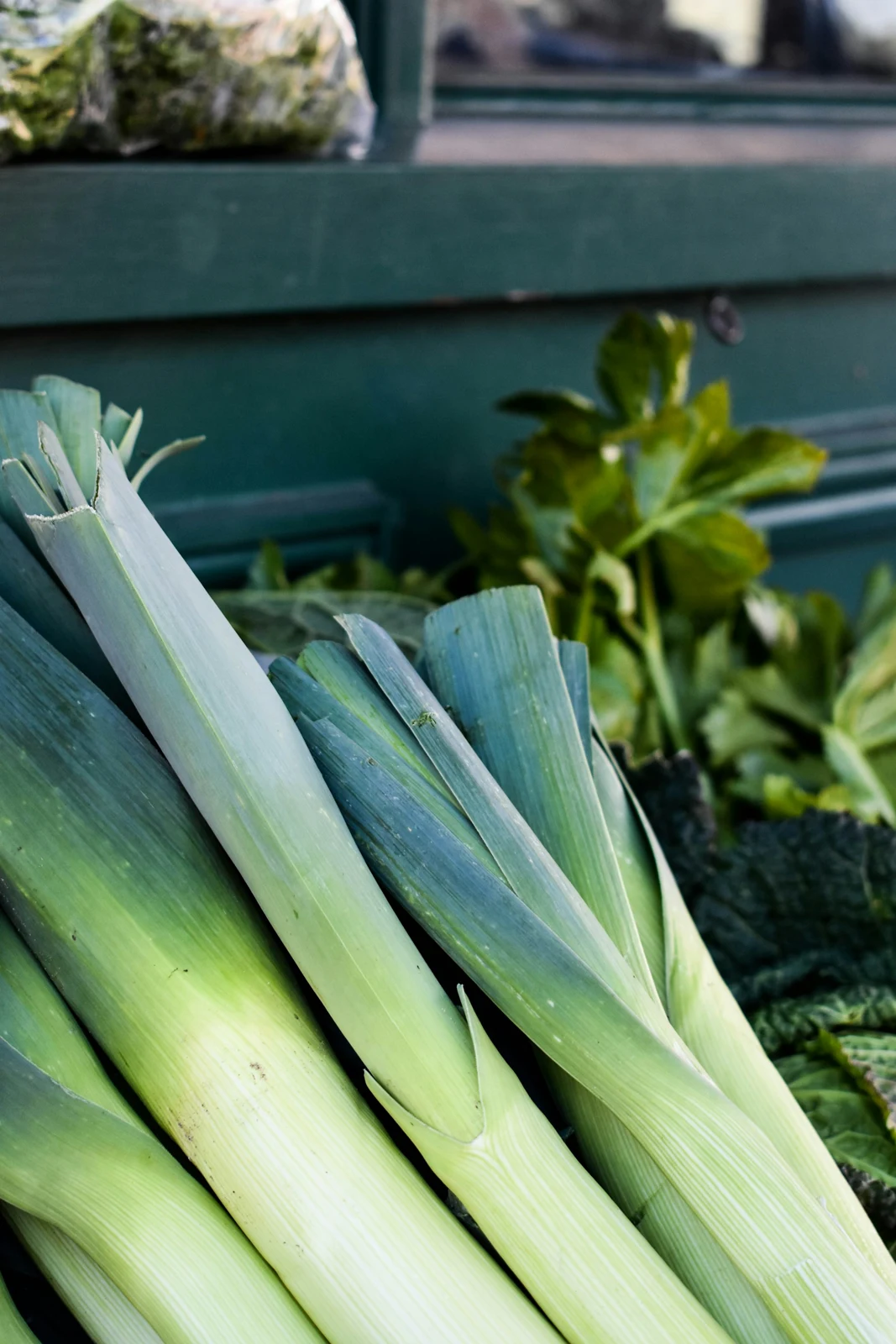 Leeks