
Garlic
Research status: AI draft — awaiting expert review


Overview
Garlic is a bulb vegetable in the onion family, made up of individual cloves wrapped in papery skins. It is commonly used as an aromatic seasoning, either fresh or cooked.
Origin & cultivation
Garlic originated in Central Asia and has been cultivated for thousands of years. China is the leading producer; other major growing regions include India, Bangladesh, Egypt, Spain, and California.
Season
Fresh garlic is generally harvested from late spring through summer, depending on climate. Cured bulbs are available year-round, while tender green garlic and garlic scapes appear mainly in spring and early summer.
Texture & flavor
Raw garlic is firm, crisp, pungent, and sulfurous; crushing or finely chopping it intensifies its bite. Gentle cooking softens its flavor, while roasting makes cloves creamy and sweet. Burned garlic tastes bitter.
Nutrition
Typical values estimated with AI, not yet checked against lab data. For guidance only.
| Energy | 149 kcal | raw, per 100 g edible portion | FoodPulse AI estimate |
| Protein | 6.36 g | raw, per 100 g edible portion | FoodPulse AI estimate |
| Total fat | 0.5 g | raw, per 100 g edible portion | FoodPulse AI estimate |
| Saturated fat | 0.089 g | raw, per 100 g edible portion | FoodPulse AI estimate |
| Carbohydrate | 33.06 g | raw, per 100 g edible portion | FoodPulse AI estimate |
| Dietary fiber | 2.1 g | raw, per 100 g edible portion | FoodPulse AI estimate |
| Total sugars | 1 g | raw, per 100 g edible portion | FoodPulse AI estimate |
| Water | 58.58 g | raw, per 100 g edible portion | FoodPulse AI estimate |
| Calcium | 181 mg | raw, per 100 g edible portion | FoodPulse AI estimate |
| Iron | 1.7 mg | raw, per 100 g edible portion | FoodPulse AI estimate |
| Magnesium | 25 mg | raw, per 100 g edible portion | FoodPulse AI estimate |
| Potassium | 401 mg | raw, per 100 g edible portion | FoodPulse AI estimate |
| Sodium | 17 mg | raw, per 100 g edible portion | FoodPulse AI estimate |
| Zinc | 1.16 mg | raw, per 100 g edible portion | FoodPulse AI estimate |
| Vitamin C | 31.2 mg | raw, per 100 g edible portion | FoodPulse AI estimate |
| Vitamin A (RAE) | 0 µg | raw, per 100 g edible portion | FoodPulse AI estimate |
| Folate | 3 µg | raw, per 100 g edible portion | FoodPulse AI estimate |
| Vitamin B12 | 0 µg | raw, per 100 g edible portion | FoodPulse AI estimate |
| Cholesterol | 0 mg | raw, per 100 g edible portion | FoodPulse AI estimate |
Glycemic index: Not established.
Garlic contains sulfur compounds, but typical culinary portions provide only small amounts of nutrients. Studies of garlic supplements suggest modest effects on some cardiovascular markers, but findings vary and do not establish that eating garlic treats disease; supplements can also increase bleeding risk with some medicines. Garlic allergy is possible, and its fructans can trigger digestive symptoms in people sensitive to FODMAPs. Educational, not medical advice.
Educational information, not medical advice.
Storage
- Room temperature: whole, cured bulbs · 60–70°F (16–21°C), ideally toward the cooler end · About 1–2 months; separated unpeeled cloves about 1–2 weeks. Keep dry in a dark, well-ventilated basket or mesh bag, not sealed plastic. Discard moldy, wet, mushy, or foul-smelling cloves; sprouting alone is not a safety concern. FoodPulse AI estimate
- Refrigerator: peeled or chopped garlic · 32–40°F (0–4°C) · Peeled cloves up to 1 week; chopped garlic 1–2 days. Store in a clean, covered container and refrigerate promptly. Discard garlic with mold, slime, unusual discoloration, or an off odor. FoodPulse AI estimate
- Freezer: peeled cloves or chopped garlic · 0°F (-18°C) or below · About 3–6 months for best quality. Pack airtight, label, and use directly from frozen when convenient; texture may soften. Continuous freezing keeps food safe longer, but does not make previously spoiled garlic safe. FoodPulse AI estimate
- Other: homemade garlic-in-oil mixtures · Refrigerate at 40°F (4°C) or below, or freeze at 0°F (-18°C) or below · Refrigerate no longer than 4 days; freeze for longer storage. Never store homemade garlic-in-oil at room temperature because of botulism risk, and do not improvise canning or acidification methods. Discard refrigerated mixtures after 4 days or if left unrefrigerated longer than 2 hours, or 1 hour above 90°F (32°C); dangerous contamination may have no visible signs or odor, so never taste to check. FoodPulse AI estimate
Preparation
Separate cloves, remove papery skins, trim tough root ends, and rinse peeled cloves under running water before cutting; do not use soap. Slice for a milder effect, mince for wider distribution, or crush into a paste for stronger flavor. Keep garlic and clean utensils separate from raw meat, poultry, fish, and their juices, and wash hands, knives, and boards after handling animal foods.
Cooking
Sauté minced or thinly sliced garlic over medium-low heat for about 30 seconds to 2 minutes, just until fragrant and lightly golden. Roast whole heads, with their tops trimmed and wrapped or covered, at 400°F (204°C) for roughly 35–60 minutes, depending on size, until the cloves are soft. Simmer whole peeled cloves in soups or sauces for about 15–30 minutes, or longer for large cloves, until tender.
Recipes
No verified recipes yet.
Waste less
Use firm sprouted cloves after removing any green shoots that taste bitter; edible garlic scapes and green garlic can also go into stir-fries, soups, or pesto. Add clean skins and root trimmings to stock, then strain them out, or compost them. Freeze spare peeled cloves or small portions of chopped garlic before they deteriorate.
Food waste tips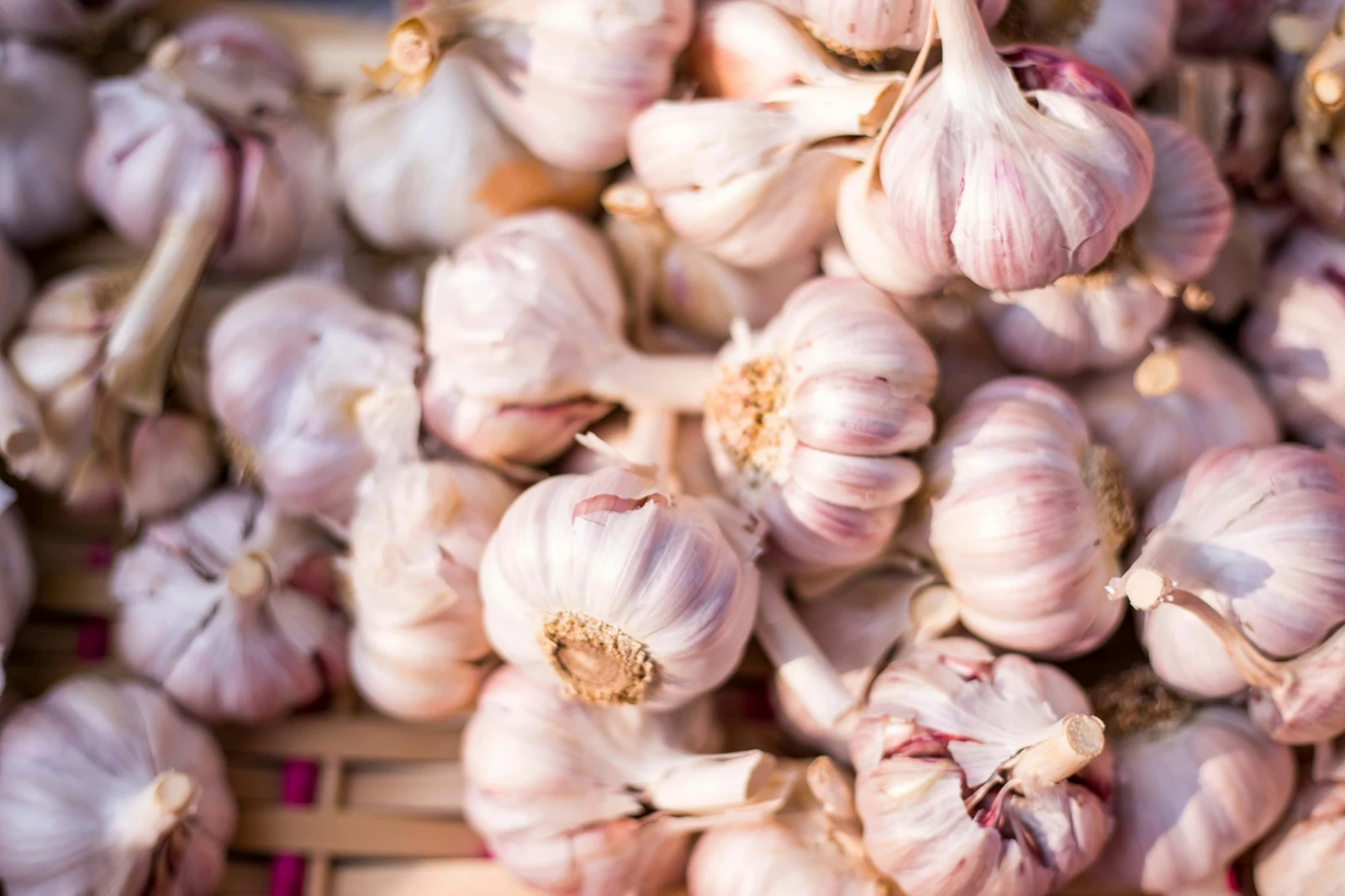 Garlic