
Moringa leaves
Research status: AI draft — awaiting expert review

Overview
Moringa leaves are the small green leaflets of Moringa oleifera, a tropical tree also called the drumstick tree. Used as a leafy vegetable, they are sold fresh, frozen, dried, or powdered; fresh leaves are best suited to soups, curries, and quick sautés.
Origin & cultivation
Moringa is native to the foothills of the Himalayas in northern India and nearby areas. India is a major producer, and the tree is also widely grown across South and Southeast Asia, tropical Africa, and parts of Latin America.
Season
Fresh leaves can be harvested much of the year in warm, frost-free climates, with availability generally best during active growth and rainy periods. Drought or cool weather can reduce supply; frozen and dried leaves are available year-round.
Texture & flavor
Tender leaflets have a grassy, slightly peppery flavor with mild bitterness, somewhat like spinach crossed with mustard greens. Older leaves are tougher and more bitter, while stems can remain stringy after cooking.
Nutrition
Typical values estimated with AI, not yet checked against lab data. For guidance only.
| Energy | 64 kcal | raw, per 100 g edible portion | FoodPulse AI estimate |
| Protein | 9.4 g | raw, per 100 g edible portion | FoodPulse AI estimate |
| Total fat | 1.4 g | raw, per 100 g edible portion | FoodPulse AI estimate |
| Saturated fat | 0.366 g | raw, per 100 g edible portion | FoodPulse AI estimate |
| Carbohydrate | 8.28 g | raw, per 100 g edible portion | FoodPulse AI estimate |
| Dietary fiber | 2 g | raw, per 100 g edible portion | FoodPulse AI estimate |
| Total sugars | 0 g | raw, per 100 g edible portion | FoodPulse AI estimate |
| Water | 78.66 g | raw, per 100 g edible portion | FoodPulse AI estimate |
| Calcium | 185 mg | raw, per 100 g edible portion | FoodPulse AI estimate |
| Iron | 4 mg | raw, per 100 g edible portion | FoodPulse AI estimate |
| Magnesium | 42 mg | raw, per 100 g edible portion | FoodPulse AI estimate |
| Potassium | 337 mg | raw, per 100 g edible portion | FoodPulse AI estimate |
| Sodium | 9 mg | raw, per 100 g edible portion | FoodPulse AI estimate |
| Zinc | 0.6 mg | raw, per 100 g edible portion | FoodPulse AI estimate |
| Vitamin C | 51.7 mg | raw, per 100 g edible portion | FoodPulse AI estimate |
| Vitamin A (RAE) | 378 µg | raw, per 100 g edible portion | FoodPulse AI estimate |
| Folate | 40 µg | raw, per 100 g edible portion | FoodPulse AI estimate |
| Vitamin B12 | 0 µg | raw, per 100 g edible portion | FoodPulse AI estimate |
| Cholesterol | 0 mg | raw, per 100 g edible portion | FoodPulse AI estimate |
Glycemic index: Not established.
Moringa leaves provide carotenoids, vitamin C, and minerals, although amounts vary with serving size and cooking. Human evidence does not establish moringa as a treatment for diabetes or other illnesses, and concentrated powders or supplements are not equivalent to ordinary vegetable portions. Allergic reactions are possible; people with a known moringa allergy should avoid it. Educational, not medical advice.
Educational information, not medical advice.
Storage
- Room temperature · About 60–80°F (16–27°C), away from sun · Only briefly during preparation; refrigerate fresh leaves promptly. Fresh leaves wilt quickly in warmth. Refrigerate cut leaves and cooked dishes within 2 hours, or within 1 hour above 90°F (32°C); discard if those limits are exceeded. Discard leaves with slime, mold, or an abnormal sour odor. FoodPulse AI estimate
- Refrigerator · 32–40°F (0–4°C) · Fresh leaves: approximately 3–5 days; cooked leaves: 3–4 days. Keep fresh leaves dry in a loosely closed bag or container with a paper towel, and wash just before use. Refrigerate cooked leaves promptly in shallow covered containers. Discard moldy, slimy, or sour-smelling leaves, and discard cooked leftovers after 4 days even if they smell normal. FoodPulse AI estimate
- Freezer · 0°F (−18°C) or below · About 8–12 months for best quality. Using NCHFP's general guidance for tender greens, blanch washed leaves in boiling water for 2 minutes, cool promptly in ice water, drain, and pack airtight. This is general greens guidance, not a moringa-specific tested schedule. Continuously frozen food remains safe beyond the quality window; freezer burn affects quality, but discard thawed leaves held above 40°F (4°C) for more than 2 hours. FoodPulse AI estimate
Preparation
Strip leaflets from coarse stalks and discard yellowed, slimy, or moldy material. Rinse under running water without soap, drain well, and leave small leaflets whole or roughly chop larger clusters. Keep leaves and clean utensils separate from raw meat, poultry, fish, and seafood, and wash hands and food-contact surfaces after handling those foods.
Cooking
Stir tender leaflets into soups or curries for the final 3–5 minutes, or sauté with a little water or oil for about 3–6 minutes until tender. Larger quantities or older leaves may need 8–12 minutes of simmering; taste for tenderness and remove any stringy stems. Cooking softens the flavor, while prolonged boiling can make the leaves dull and mushy.
Recipes
No verified recipes yet.
Waste less
Use tender tips and fine stems if they soften readily, but remove woody stalks. Add leftover cooked leaves to soups, omelets, or rice, reheating leftovers to 165°F (74°C). Compost sound stalks and other plant trimmings where local composting rules allow.
Food waste tips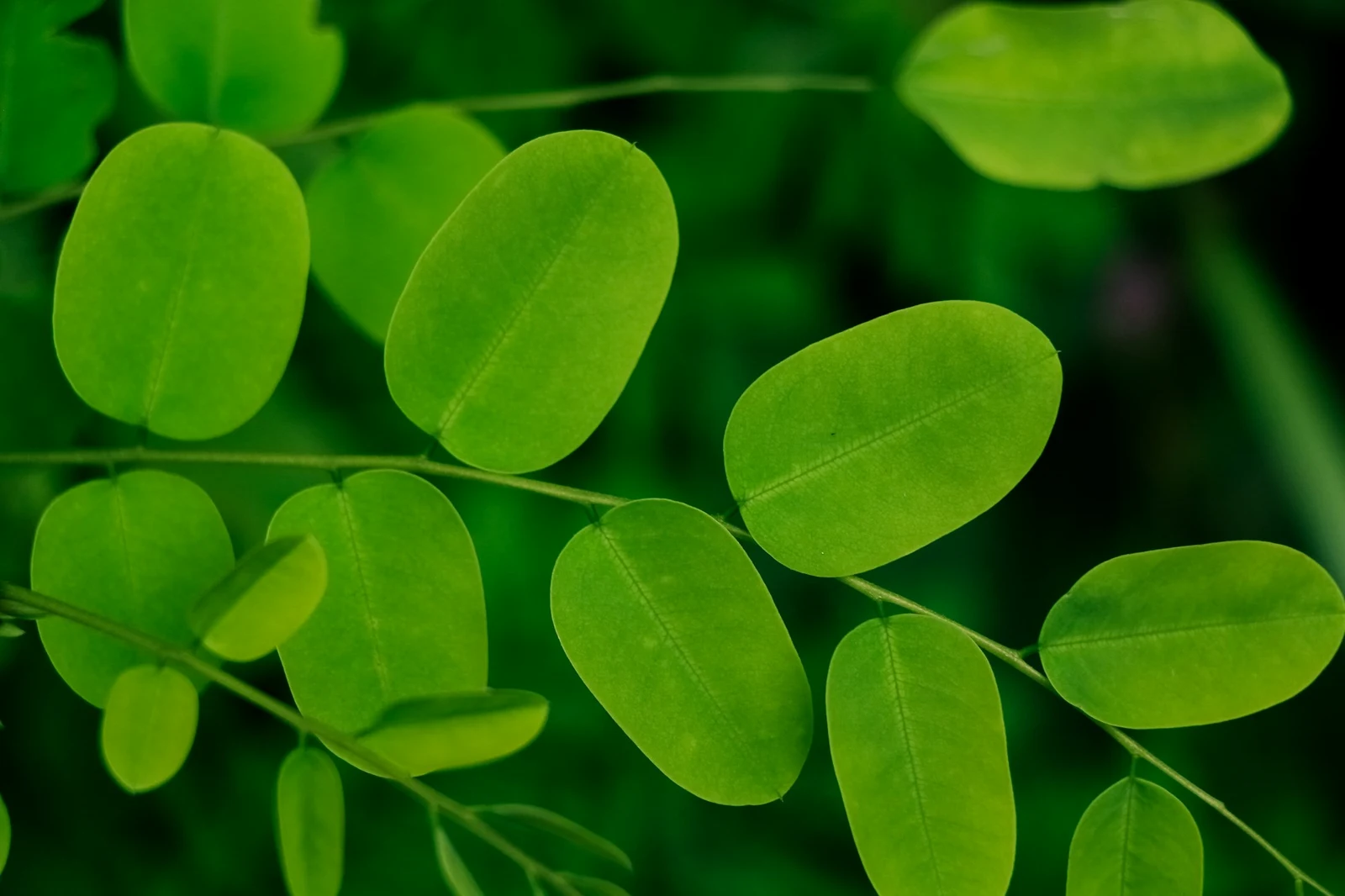 Moringa Leaves