
Cabbage
Research status: AI draft — awaiting expert review


Overview
Cabbage is a leafy vegetable in the brassica family that forms a compact head. Common types include green, red, and crinkled savoy cabbage; napa cabbage has a longer shape and more tender leaves.
Origin & cultivation
Head cabbage was domesticated in Europe from wild brassicas associated with coastal regions. Today it is grown worldwide, with China, India, Russia, and other European countries among major producing regions.
Season
Cabbage is available year-round thanks to staggered harvests and good storage life. It grows best in cool weather, with local harvests often peaking in spring and fall; light frost can improve sweetness.
Texture & flavor
Raw cabbage is crisp and mildly peppery, while cooking softens the leaves and brings out sweetness. Green cabbage is versatile, red cabbage is usually firmer, and savoy and napa are more tender; prolonged cooking can produce strong sulfurous aromas.
Nutrition
Typical values estimated with AI, not yet checked against lab data. For guidance only.
| Energy | 25 kcal | raw, per 100 g edible portion | FoodPulse AI estimate |
| Protein | 1.28 g | raw, per 100 g edible portion | FoodPulse AI estimate |
| Total fat | 0.1 g | raw, per 100 g edible portion | FoodPulse AI estimate |
| Saturated fat | 0.034 g | raw, per 100 g edible portion | FoodPulse AI estimate |
| Carbohydrate | 5.8 g | raw, per 100 g edible portion | FoodPulse AI estimate |
| Dietary fiber | 2.5 g | raw, per 100 g edible portion | FoodPulse AI estimate |
| Total sugars | 3.2 g | raw, per 100 g edible portion | FoodPulse AI estimate |
| Water | 92.18 g | raw, per 100 g edible portion | FoodPulse AI estimate |
| Calcium | 40 mg | raw, per 100 g edible portion | FoodPulse AI estimate |
| Iron | 0.47 mg | raw, per 100 g edible portion | FoodPulse AI estimate |
| Magnesium | 12 mg | raw, per 100 g edible portion | FoodPulse AI estimate |
| Potassium | 170 mg | raw, per 100 g edible portion | FoodPulse AI estimate |
| Sodium | 18 mg | raw, per 100 g edible portion | FoodPulse AI estimate |
| Zinc | 0.18 mg | raw, per 100 g edible portion | FoodPulse AI estimate |
| Vitamin C | 36.6 mg | raw, per 100 g edible portion | FoodPulse AI estimate |
| Vitamin A (RAE) | 5 µg | raw, per 100 g edible portion | FoodPulse AI estimate |
| Folate | 43 µg | raw, per 100 g edible portion | FoodPulse AI estimate |
| Vitamin B12 | 0 µg | raw, per 100 g edible portion | FoodPulse AI estimate |
| Cholesterol | 0 mg | raw, per 100 g edible portion | FoodPulse AI estimate |
Glycemic index: Not established.
Cabbage provides fiber, vitamin C, and vitamin K, though nutrient levels vary by variety and cooking method. Cabbage allergy is uncommon but possible; people taking warfarin should keep vitamin K intake consistent and discuss dietary changes with their clinician. Large portions may cause gas or bloating. Educational, not medical advice.
Educational information, not medical advice.
Storage
- Room temperature · 60–75°F (16–24°C) · Whole, uncut head: preferably no more than 1 day for quality. Keep in a cool place away from sunlight; refrigerate for longer storage. Refrigerate cut or cooked cabbage within 2 hours, or 1 hour above 90°F (32°C). Discard if slimy, rotten-smelling, or extensively moldy. FoodPulse AI estimate
- Refrigerator · 32–40°F (0–4°C) · Whole head: about 1–2 weeks; cut cabbage: 3–5 days; cooked cabbage: 3–4 days. Keep whole cabbage unwashed in a bag in the crisper; cover cut cabbage and store cooked cabbage in shallow, covered containers. Discard cabbage with slime, mold, or a sour or rotten odor, and discard cooked leftovers after 4 days even if they look normal. FoodPulse AI estimate
- Freezer · 0°F (−18°C) or below · Blanched cabbage: 8–12 months for best quality. For wedges, thin shreds, or separated leaves, water-blanch for 1½ minutes, cool promptly in ice water, drain, and pack in freezer containers. Continuously frozen cabbage remains safe beyond the quality window, but becomes softer and is best cooked. Freezer burn affects quality rather than safety; discard thawed cabbage that has been above 40°F (4°C) for more than 2 hours. FoodPulse AI estimate
Preparation
Remove damaged outer leaves, rinse under running water without soap, and trim the stem end. Quarter the head, cut out the tough core if desired, then shred, slice, or cut into wedges. Keep cabbage and its utensils separate from raw meat, poultry, and seafood, and wash hands, knives, and boards after handling animal foods.
Cooking
Steam or simmer shredded cabbage for about 5–10 minutes, or wedges for 10–20 minutes, depending on thickness and desired tenderness. Stir-fry thin strips for 4–8 minutes, or roast lightly oiled wedges at 425°F (220°C) for 20–35 minutes, turning once. Smaller pieces cook faster; stop when tender to avoid mushiness and strong odors.
Recipes
No verified recipes yet.
Waste less
Thinly slice the core for stir-fries or soup, and use sound outer leaves in braises or as wrappers after blanching. Add leftover cooked cabbage to soups, grain bowls, or fried rice, reheating leftovers to 165°F (74°C). Compost unusable plant trimmings where accepted, but do not use spoiled leaves in food.
Food waste tips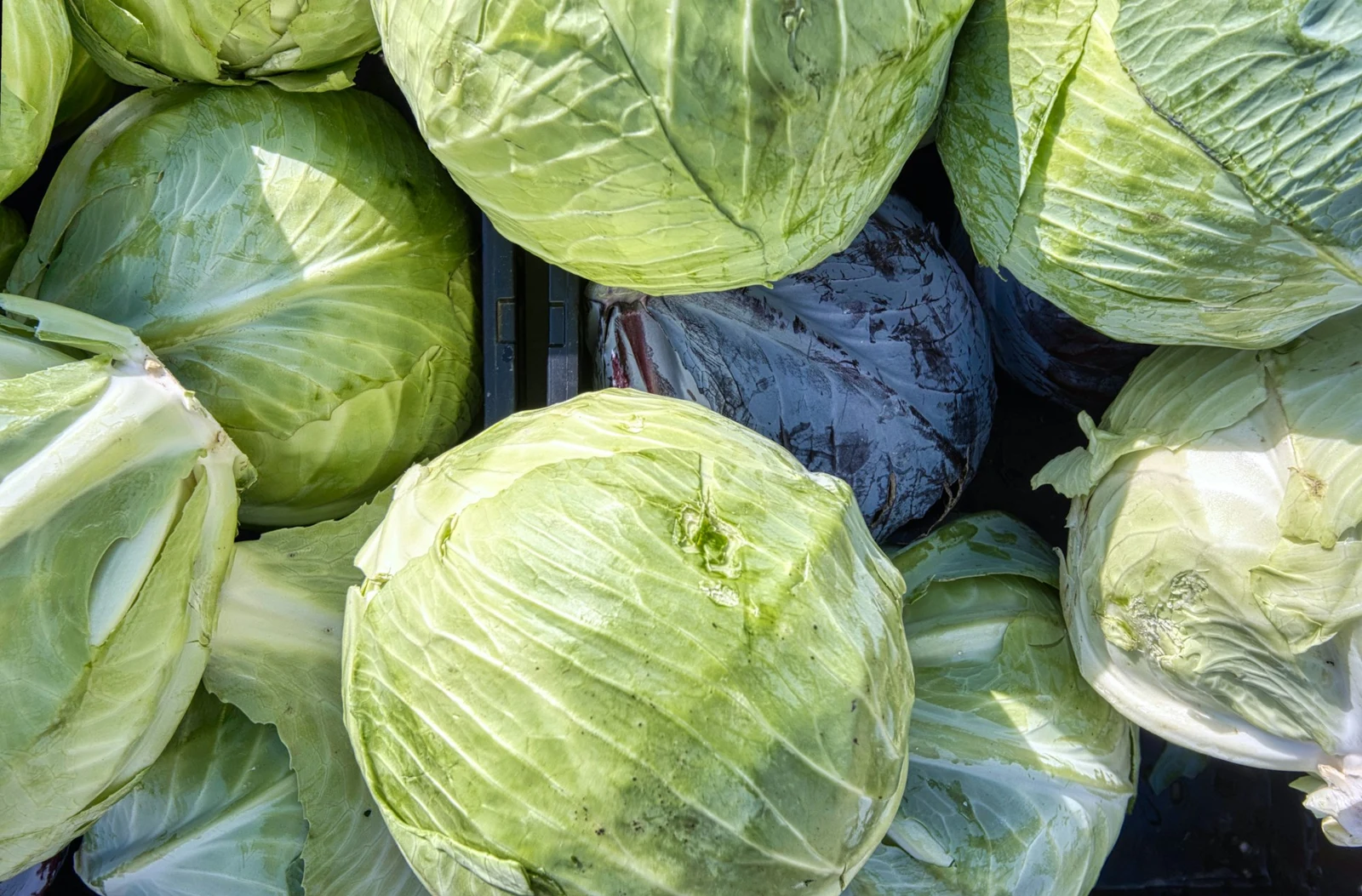 Cabbage