
Bok choy
Research status: AI draft — awaiting expert review


Overview
Bok choy, also called pak choi, is a leafy Chinese cabbage with crisp stalks and smooth green leaves that grow in an open cluster. Common types have white or pale-green stalks; baby bok choy is harvested young and is convenient for cooking whole or halved.
Origin & cultivation
Bok choy originated in China and has long been cultivated across East Asia. China is a major producer, with commercial crops also grown elsewhere in Asia, North America, Europe, and Australia.
Season
Bok choy is a cool-season crop, typically at its best in spring and fall in temperate regions. It is available year-round in many markets through imports and protected cultivation; choose firm stalks and fresh leaves without slime or extensive yellowing.
Texture & flavor
The stalks are juicy and crunchy, while the leaves soften quickly when heated. Its flavor is mild, cabbage-like, and slightly mustardy, with young plants generally more tender.
Nutrition
Typical values estimated with AI, not yet checked against lab data. For guidance only.
| Energy | 13 kcal | raw, per 100 g edible portion | FoodPulse AI estimate |
| Protein | 1.5 g | raw, per 100 g edible portion | FoodPulse AI estimate |
| Total fat | 0.2 g | raw, per 100 g edible portion | FoodPulse AI estimate |
| Saturated fat | 0.027 g | raw, per 100 g edible portion | FoodPulse AI estimate |
| Carbohydrate | 2.18 g | raw, per 100 g edible portion | FoodPulse AI estimate |
| Dietary fiber | 1 g | raw, per 100 g edible portion | FoodPulse AI estimate |
| Total sugars | 1.18 g | raw, per 100 g edible portion | FoodPulse AI estimate |
| Water | 95.32 g | raw, per 100 g edible portion | FoodPulse AI estimate |
| Calcium | 105 mg | raw, per 100 g edible portion | FoodPulse AI estimate |
| Iron | 0.8 mg | raw, per 100 g edible portion | FoodPulse AI estimate |
| Magnesium | 19 mg | raw, per 100 g edible portion | FoodPulse AI estimate |
| Potassium | 252 mg | raw, per 100 g edible portion | FoodPulse AI estimate |
| Sodium | 65 mg | raw, per 100 g edible portion | FoodPulse AI estimate |
| Zinc | 0.19 mg | raw, per 100 g edible portion | FoodPulse AI estimate |
| Vitamin C | 45 mg | raw, per 100 g edible portion | FoodPulse AI estimate |
| Vitamin A (RAE) | 223 µg | raw, per 100 g edible portion | FoodPulse AI estimate |
| Folate | 66 µg | raw, per 100 g edible portion | FoodPulse AI estimate |
| Vitamin B12 | 0 µg | raw, per 100 g edible portion | FoodPulse AI estimate |
| Cholesterol | 0 mg | raw, per 100 g edible portion | FoodPulse AI estimate |
Glycemic index: Not established.
Bok choy provides vitamins C and K, carotenoids, and some fiber as part of a varied diet. People taking warfarin should keep vitamin K intake consistent and discuss major dietary changes with their clinician. Allergy is uncommon but possible, including in people sensitive to mustard-family plants. Educational, not medical advice.
Educational information, not medical advice.
Storage
- Room temperature · 60–75°F (16–24°C) · Whole heads: only briefly, preferably a few hours; refrigerate promptly.. Warm storage quickly causes wilting and quality loss. Refrigerate cut bok choy within 2 hours, or within 1 hour above 90°F (32°C); discard cut greens left out longer. Discard any bok choy with slime, mold, or a rotten odor. FoodPulse AI estimate
- Refrigerator · 32–40°F (0–4°C) · Raw: about 3–7 days; cooked: 3–4 days.. Keep raw heads unwashed in a loosely closed or perforated bag in the crisper; if washed, dry well before storing. Refrigerate cooked bok choy promptly in shallow, covered containers. Discard for slime, mold, or sour or rotten odors, and do not rely on appearance or smell alone to judge overdue leftovers. FoodPulse AI estimate
- Freezer · 0°F (−18°C) or below · Best quality within 8–12 months.. Following NCHFP guidance for most greens, remove tough stems, wash, and blanch tender greens in boiling water for 2 minutes; cool promptly in ice water, drain, and pack in freezer containers. Thawed bok choy softens and is best used in cooked dishes. Continuously frozen food remains safe beyond the quality window; discard thawed greens held above 40°F (4°C) for more than 2 hours. FoodPulse AI estimate
Preparation
Trim the dry base, then separate the stalks or halve small heads lengthwise to expose trapped grit. Rinse thoroughly under running water, especially near the base, and drain; do not use soap or produce detergent. Slice stalks and leaves separately so the thicker pieces can cook first. Keep bok choy and its cutting tools separate from raw meat, poultry, fish, and seafood, and wash hands and equipment after handling those foods.
Cooking
Stir-fry sliced stalks for about 3–5 minutes, adding leaves for the final 1–2 minutes, until tender-crisp. Steam baby heads or halves for roughly 4–7 minutes, allowing longer for thick, mature stalks. Roast lightly oiled halves at 425°F (220°C) for about 10–15 minutes, or add chopped bok choy to simmering soup for the last 3–6 minutes; timing varies with size.
Recipes
No verified recipes yet.
Waste less
Use both stalks and leaves, trimming only damaged tissue and the tough root end. Add clean, sound trimmings to stock, and use refrigerated cooked leftovers in soups, noodles, or fried rice within 3–4 days, reheating to 165°F (74°C). Compost unusable plant scraps where appropriate, but discard slimy or moldy bok choy rather than trying to rescue it by cooking.
Food waste tips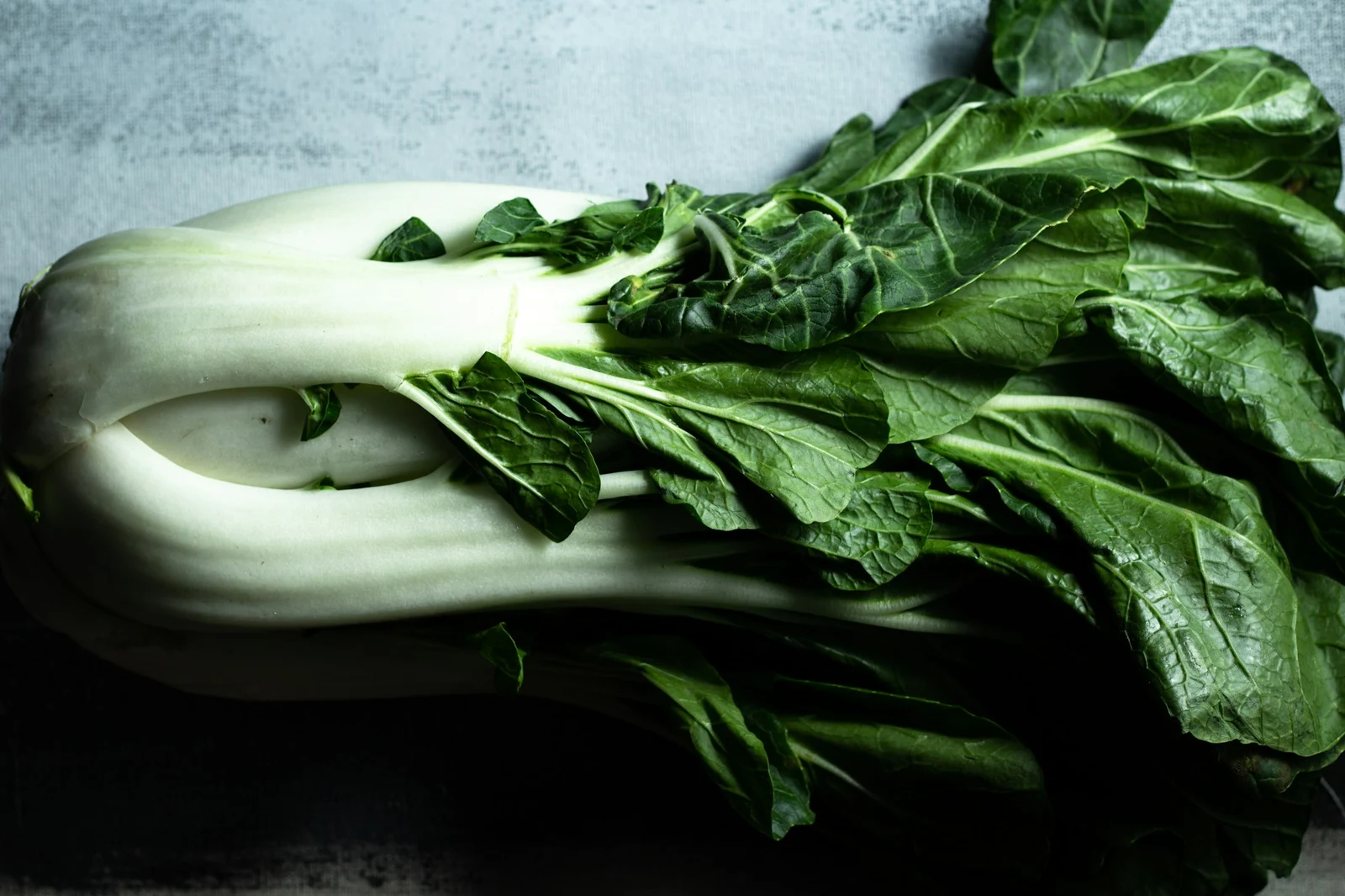 Bok Choy - Chinese Cabbage