Imported source research draft. Nutrition, health claims and linked references have not been independently verified.
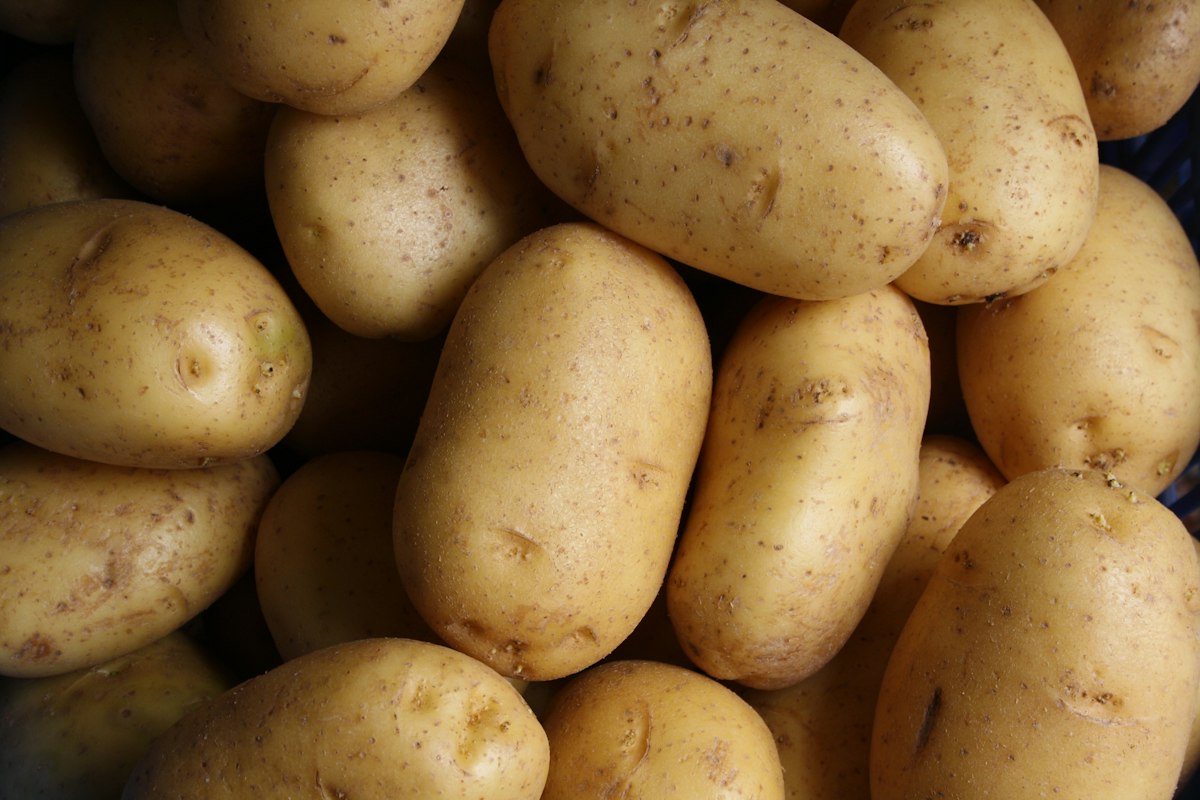
Original source illustration; may show a general food category.
The Russet potato, known for its rough brown skin and fluffy white flesh, is a popular choice for baking, frying, and mashing. It has a high starch content which makes it ideal for crispy fries and baked potato dishes.
Country stock records are private to assigned managers.
Food-waste calculator
Estimate food you can keep out of the bin by using or sharing it.
Potential food saved1 kg
If you use or share 1 kg of Russet Potato instead of discarding it, that is 1 kg kept out of the bin.
This uses only your entered amount. It does not claim measured waste reduction or convert pieces and packs into invented weights.
Overview
The Russet potato, known for its rough brown skin and fluffy white flesh, is a popular choice for baking, frying, and mashing. It has a high starch content which makes it ideal for crispy fries and baked potato dishes.
Origin & history
ancient uses: Used by indigenous peoples of the Andes as a staple food.
region of origin: Idaho
country of origin: United States
historical timeline: year: 1870
event: The Burbank Potato was introduced.
year: 1900
event: First marketed as Russet.
cultural significance: Key ingredient in many American recipes, such as mashed potatoes and French fries.
domestication history: Originally domesticated in the Andes region of South America.
traditional importance: Culinary staple in American cuisine for over a century.
historical trade routes: Spread through North America via early settlers and trade.
Growing & production
climate: Temperate
rainfall: Moderate, around 15-20 inches per season.
harvesting: Done when plants die back; typically using machinery.
irrigation: Requires consistent moisture, especially during tuber formation.
temperature: Optimal growing temperature is 60-70°F.
growing season: Typically planted in late spring and harvested in late summer to early fall.
harvest period: August to September.
yield per acre: Varies; typically 300-500 cwt.
growing regions: North America
Europe
pest management: Common pests include Colorado potato beetles and aphids.
planting methods: Seed potatoes are cut into pieces and planted in rows.
soil requirements: Well-drained, sandy loam with high organic matter.
organic cultivation: Can be grown organically with appropriate pest management.
fertilizer requirements: Fertile soil with balanced N-P-K fertilizer.
Nutrition draft
per 100g: fat g: 0.1
carbs g: 17.6
fiber g: 2.2
iron mg: 0.81
sugar g: 0.8
water g: 79
zinc mg: 0.29
calories: 77
omega3 g: 0
omega6 g: 0
protein g: 2
sodium mg: 6
calcium mg: 12
folate mcg: 9
magnesium mg: 23
potassium mg: 425
vitamin a iu: 2
vitamin c mg: 9
vitamin k mcg: 2.9
saturated fat g: 0.03
per serving: fat g: 0.15
carbs g: 26.4
calories: 115
protein g: 3
serving size: 1 medium potato (150g)
glycemic index: 78
Nutrition notes
Russet potatoes are an excellent source of carbohydrates, providing quick energy. They contain potassium which is essential for maintaining fluid balance and normal muscle function. The fiber content supports digestive health. Rich in vitamin C, they help boost the immune system and promote skin health.
Health notes
major: Rich in fibre, vitamins A and C, folate, potassium and plant polyphenols.
Low in calories and high in water content — supports weight management and hydration.
Regular vegetable intake is linked to lower rates of cardiovascular disease and type 2 diabetes.
evidence: Consensus among USDA, NIH and WHO reviews is that russet potato contributes positively to a balanced eating pattern when consumed in appropriate portions.
Storage
freezing: Not recommended unless blanched.
shelf life: Up to 5 months if stored properly.
dry storage: Ideal for long-term storage.
refrigeration: Not recommended for long-term; can cause sweetening.
best practices: Store in a paper bag
Keep away from onions
common mistakes: Storing in light
Treating damaged potatoes badly
storage methods: Cool, dark place
Refrigeration for short term
spoilage indicators: Sprouting
Wrinkled skin
Soft spots
Preparation
cutting: Cut into desired shapes for preparation.
peeling: Peel if desired, though nutrients are highest in the skin.
washing: Rinse with water before cooking.
cleaning: Wash thoroughly under running water to remove dirt.
buying tips: Choose firm potatoes with no sprouting or bruises.
cooking methods: Boiling
Baking
Frying
Mashing
Roasting
freshness indicators: Firm texture
Smooth skin
seasonal buying guide: Best from late summer to early winter.
Practical tips
**Cleaning**
Wash thoroughly under running water to remove dirt.
**Washing**
Rinse with water before cooking.
**Peeling**
Peel if desired, though nutrients are highest in the skin.
**Cutting**
Cut into desired shapes for preparation.
Recipes
name: Classic Mashed Potatoes
tags: mashed potatoes
sides
American
tips: Use warm milk for creamier texture.
method: Peel and cube the Russet potatoes.
Boil in salted water until tender.
Drain and return to pot.
Mash with milk and butter until smooth.
Season with salt to taste.
region: North America
country: United States
cuisine: American
servings: 4
cook time: 20 minutes
image url: https://example.com/mashed_potatoes.jpg
nutrition: fat g: 8
carbs g: 28
calories: 190
protein g: 4
prep time: 15 minutes
chef notes: Using a potato ricer will yield the smoothest mash.
difficulty: Easy
description: Creamy and fluffy mashed potatoes.
ingredients: 4 Russet potatoes
1/2 cup milk
1/4 cup butter
Salt to taste
recipe source: Family Recipe
Transportation
humidity: Low humidity to prevent rot.
packaging: Bulk bags or cartons to allow ventilation.
shelf life: 3-5 months in cool, dark storage.
shipping methods: Truck shipping is common.
storage temperature: 45-50°F for long term storage.
cold chain requirements: Not critical; can be stored at ambient temperatures.
Sustainability
climate resilience: Requires soil moisture management.
sustainable farming: Encouraged through crop rotation and organic practices.
environmental impact: Low, when sustainably farmed.
organic certification: Available from various suppliers.
regenerative agriculture: Promoted in several farming initiatives.
More about this food
Considered the most popular potato variety in the United States.
Developed from the Burbank Potato by Luther Burbank in the late 19th century.
Source references
url: https://example.com/potato_nutrition
type: journal
year: 2022
title: Nutritional Composition of Potatoes
authors: John Doe, Jane Smith
publisher: Journal of Food Science
Kerala & United States locality guides
Regional guides; these links do not establish local product availability.