Imported source research draft. Nutrition, health claims and linked references have not been independently verified.
Original source illustration; may show a general food category.
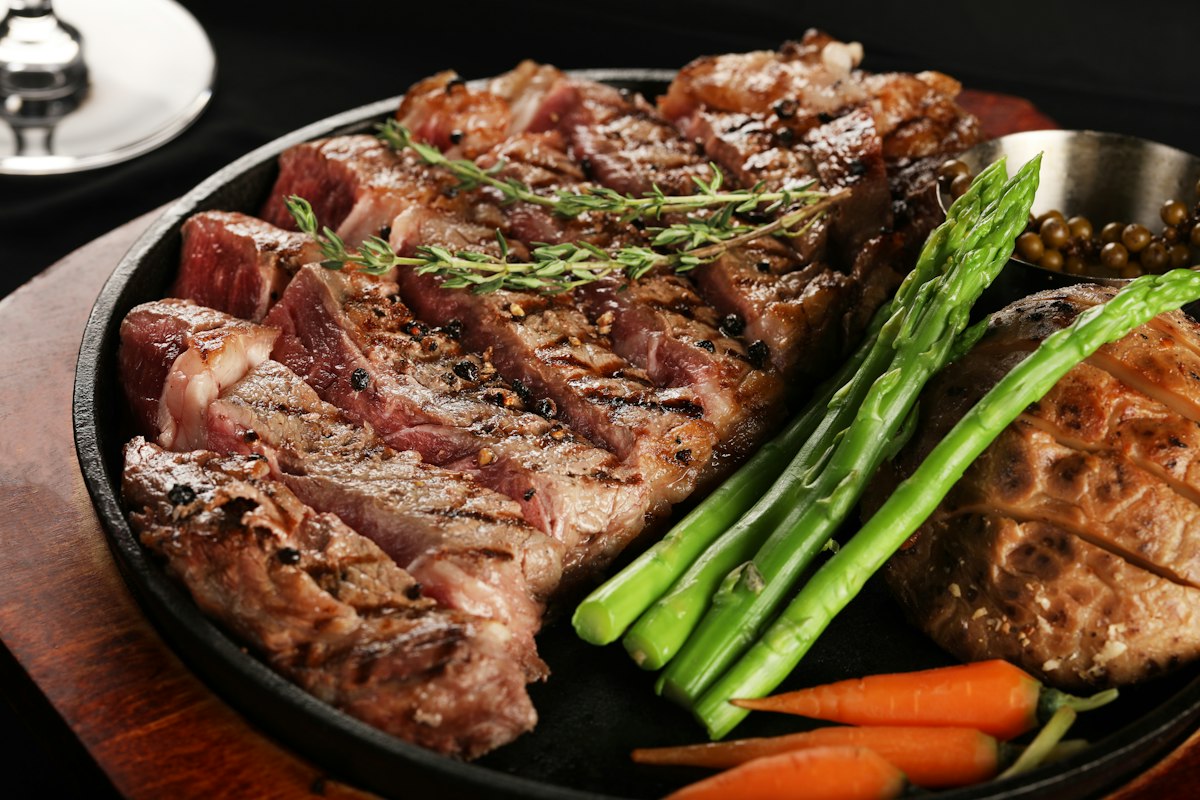
The Porterhouse steak is a large cut of beef, derived from the rear of the short loin. It features a T-shaped bone and includes a portion of the tenderloin along with a larger portion of the strip loin. Renowned for its tenderness and flavor, it can easily feed two people.
Country stock records are private to assigned managers.
Food-waste calculator
Estimate food you can keep out of the bin by using or sharing it.
Potential food saved1 kg
If you use or share 1 kg of Porterhouse Steak instead of discarding it, that is 1 kg kept out of the bin.
This uses only your entered amount. It does not claim measured waste reduction or convert pieces and packs into invented weights.
Overview
The Porterhouse steak is a large cut of beef, derived from the rear of the short loin. It features a T-shaped bone and includes a portion of the tenderloin along with a larger portion of the strip loin. Renowned for its tenderness and flavor, it can easily feed two people.
Origin & history
ancient uses: Primarily consumed by Indigenous peoples as a rich source of protein.
region of origin: North America
country of origin: United States
historical timeline: year: 1800
event: Cattle raised specifically for beef began to emerge in the US.
cultural significance: Seen as a premium cut of meat enjoyed during special occasions.
domestication history: Cattle were domesticated from wild aurochs around 10,500 years ago.
traditional importance: Often featured in American barbecues and steak houses.
historical trade routes: Cattle were driven from ranches to markets along cattle trails across the Midwest.
Growing & production
climate: Temperate to subtropical climates are preferred for cattle farming.
diseases: Mad Cow Disease
Foot and Mouth Disease
rainfall: Moderate rainfall is beneficial, ideally 20-30 inches per year.
harvesting: Cattle are typically slaughtered at 18-24 months.
temperature: Optimal temperatures are between 60-80°F (15-27°C).
growing season: Year-round, with grazing primarily in spring and summer.
harvest period: Most cattle are harvested in late summer to early fall.
yield per acre: Approximately 1-2 cattle per acre per year.
growing regions: North America
Australia
Brazil
pest management: Regular vaccinations and vet checks to prevent diseases.
soil requirements: Well-drained soils with adequate grass growth.
organic cultivation: Possible, with pasture grazing and non-GMO feed.
fertilizer requirements: Pasture fertilization may be necessary depending on soil quality.
Porterhouse steak is high in protein, iron, and essential amino acids, making it a great choice for muscle building and overall health. It supports immune function, provides energy, and is beneficial for individuals engaged in heavy physical activities.
Health notes
major: Excellent source of complete protein, heme iron, zinc and vitamin B12.
Supports muscle maintenance, immune function and cognitive health.
Choose leaner cuts and moderate portions for the best long-term health profile.
evidence: Consensus among USDA, NIH and WHO reviews is that porterhouse steak contributes positively to a balanced eating pattern when consumed in appropriate portions.
Storage
freezing: Can be frozen for extended storage.
shelf life: Refrigerated: 3-5 days; Frozen: 6-12 months.
refrigeration: Store at temperatures below 40°F (4°C).
best practices: Store in the coldest part of the fridge.
Use within recommended time frame.
common mistakes: Thawing and refreezing
Not wrapping properly.
storage methods: Refrigeration
Freezing
spoilage indicators: Off smell
Change in color
Slime on the surface.
Preparation
cutting: Use a sharp knife to cut against the grain for tenderness.
cleaning: Rinse under cold water if needed.
buying tips: Look for a bright red color and good marbling.
cooking methods: Grilling
Roasting
Searing
freshness indicators: Firm texture, no off odors.
seasonal buying guide: Best purchased in spring and summer months when grilling is popular.
Practical tips
**Cleaning**
Rinse under cold water if needed.
**Cutting**
Use a sharp knife to cut against the grain for tenderness.
Recipes
name: Classic Porterhouse Steak
tags: grilling
steak
easy
tips: Pair with a glass of red wine.
method: Preheat the grill.
Rub steaks with olive oil, salt, and pepper.
Place on the grill for 5-7 minutes per side.
Let rest before slicing.
region: South
country: USA
cuisine: American
servings: 2
cook time: 15 minutes
image url: https://example.com/porterhouse_steak.jpg
nutrition: protein: 40
calories: 600
prep time: 10 minutes
video url: https://youtube.com/example
chef notes: Cook to medium-rare for the best flavor.
difficulty: Easy
description: A simple yet delicious way to cook the perfect Porterhouse steak on the grill.
ingredients: 2 Porterhouse steaks
Salt
Black pepper
Olive oil
youtube url: https://youtube.com/example
recipe source: Food Network
suitable diets: Paleo
Keto
Transportation
humidity: Low humidity to prevent spoilage during transport.
packaging: Vacuum sealed or modified atmosphere packaging is preferred.
shelf life: Refrigerated for 3-5 days, frozen for 6-12 months.
export handling: Must meet specific health and safety standards for international trade.
shipping methods: Refrigerated trucks or freight containers.
storage temperature: Should be stored at 32-40°F (0-4°C).
cold chain requirements: Must be kept at or below 40°F (4°C) during transport.
transportation constraints: Logistical issues can arise with cross-border beef shipments.
Sustainability
climate resilience: Efforts in rotational grazing to improve land resilience.
land use m2 per kg: 30
sustainable farming: Encouraged through regenerative practices and grass-fed options.
environmental impact: Concerns regarding methane emissions and resource use.
organic certification: Available for certain products based on farming practices.
regenerative agriculture: Promoted in various ranching methods.
water footprint l per kg: 15000
carbon footprint kgco2e per kg: 14
More about this food
Named after a specific restaurant in New York City in the late 19th century.
Often confused with T-bone steak, but is larger and has more tenderloin.
Source references
url: https://www.usda.gov
type: report
year: 2022
title: Nutrition of Beef
authors: U.S. Department of Agriculture
publisher: USDA
Kerala & United States locality guides
Regional guides; these links do not establish local product availability.