Onions are the edible bulb of Allium cepa, widely cultivated throughout the world. They have a pungent flavor, commonly used in various cuisines.
Origin & history
ancient uses: Used for cooking and medicinal purposes in ancient times.
region of origin: Western Asia
country of origin: Iran and Pakistan
historical timeline: year: -5000
event: Used by ancient civilizations as food.
year: -2000
event: Cultivated in ancient Egypt.
cultural significance: Symbol of unity and friendship in some cultures.
domestication history: Domesticated thousands of years ago.
traditional importance: An essential ingredient in various cuisines.
historical trade routes: Spread through trade routes in ancient Egypt and Rome.
Growing & production
climate: Temperate to subtropical
diseases: Downy mildew
Onion rot
rainfall: Moderate rainfall, around 600-1000 mm annually.
harvesting: Harvested when tops have fallen over.
irrigation: Regular irrigation needed.
hydroponics: Possible but not widely practiced.
temperature: Optimal growth at 13-25°C.
growing season: Spring to fall, varies by region.
harvest period: Late summer to early fall.
yield per acre: 20,000-25,000 kg
growing regions: Asia
Africa
Europe
North America
pest management: Common pests include onion flies and thrips.
planting methods: Seed sowing or transplanting seedlings.
soil requirements: Well-drained, fertile soil.
organic cultivation: Possible with proper pest management practices.
fertilizer requirements: Requires nitrogen-rich fertilizers.
Onions offer several health benefits including anti-inflammatory and antioxidant properties. They are known to support heart health, improve digestion, and may have cancer-preventive properties.
Health notes
major: Rich in fibre, vitamins A and C, folate, potassium and plant polyphenols.
Low in calories and high in water content — supports weight management and hydration.
Regular vegetable intake is linked to lower rates of cardiovascular disease and type 2 diabetes.
evidence: Consensus among USDA, NIH and WHO reviews is that onion contributes positively to a balanced eating pattern when consumed in appropriate portions.
Storage
freezing: Can be frozen but changes texture.
shelf life: Up to 6 months when stored properly.
dry storage: Best stored in a dry location.
refrigeration: Can be refrigerated for short-term storage.
best practices: Keep away from potatoes
Store in mesh bags
common mistakes: Storing in plastic bags
Exposing to light
storage methods: Cool, dark place
Refrigeration
spoilage indicators: Softness
Sprouting
Mold
Preparation
cutting: Use a sharp knife to minimize tears.
peeling: Peel outer layers to remove dirt.
washing: Wash immediately before use.
cleaning: Rinse under cold water.
buying tips: Choose firm bulbs without soft spots.
Look for a papery skin.
cooking methods: Sauteing
Grilling
Roasting
Boiling
freshness indicators: Firmness
Attached roots
seasonal buying guide: Best purchased in late summer.
Practical tips
**Cleaning**
Rinse under cold water.
**Washing**
Wash immediately before use.
**Peeling**
Peel outer layers to remove dirt.
**Cutting**
Use a sharp knife to minimize tears.
Recipes
name: French Onion Soup
tips: Use a good quality broth.
Don’t rush the caramelization.
method: Slice onions and cook in butter until caramelized.
Add wine and broth, simmer for 30 minutes.
Serve in bowls topped with cheese and bread, baked until golden.
region: Île-de-France
country: France
cuisine: French
servings: 4
cook time: 1 hour
image url: http://example.com/french_onion_soup.jpg
prep time: 15 minutes
chef notes: Adding thyme enhances flavor.
difficulty: Medium
description: A delicious soup made with caramelized onions and cheese.
ingredients: 4 large onions
4 cups beef broth
1 cup white wine
4 slices of bread
1 cup Gruyère cheese
recipe source: Culinary Institute
Transportation
humidity: Low humidity preferred.
packaging: Netted bags or crates for transport.
shelf life: 3-6 months under proper conditions.
export handling: Careful handling to avoid bruising.
shipping methods: Truck, rail, sea.
storage temperature: Store at 0-4°C for best results.
cold chain requirements: Not strict, can be transported at ambient temperatures.
Sustainability
climate resilience: Varieties adapted to various climates are available.
sustainable farming: Practices include crop rotation and organic methods.
environmental impact: Minimal, but pesticide usage is a concern.
organic certification: Available from various certifying bodies.
pollinator importance: Supports various pollinators.
regenerative agriculture: Encouraged for sustainability.
More about this food
Onions are a staple in culinary practices worldwide.
They can be consumed raw, cooked, or dried.
Source references
url: http://example.com/onions_article
type: journal
year: 2022
title: The Role of Onions in Food Industry
authors: Smith, J.
publisher: Journal of Agriculture
Kerala & United States locality guides
Regional guides; these links do not establish local product availability.

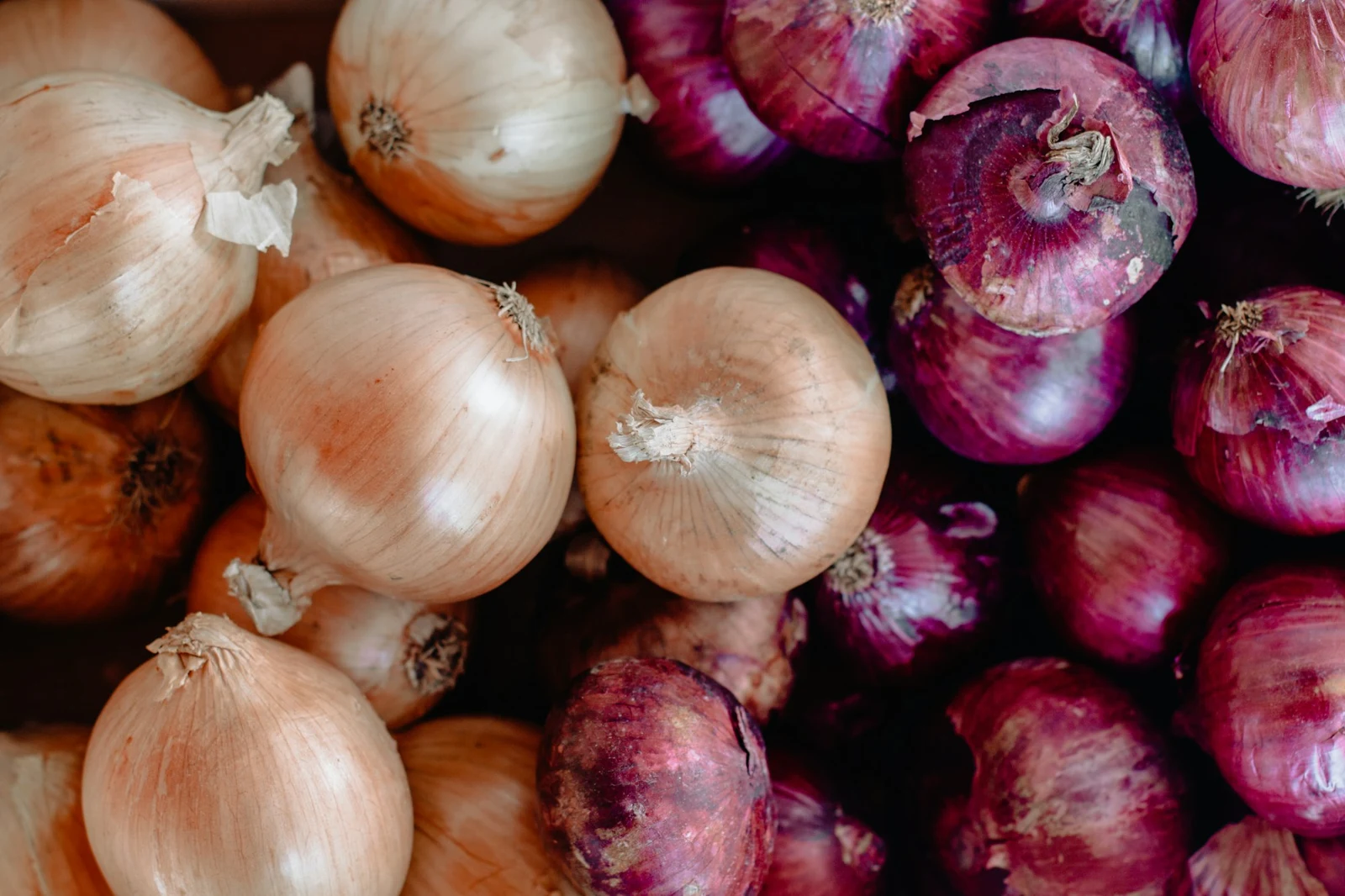 Onions