Imported source research draft. Nutrition, health claims and linked references have not been independently verified.
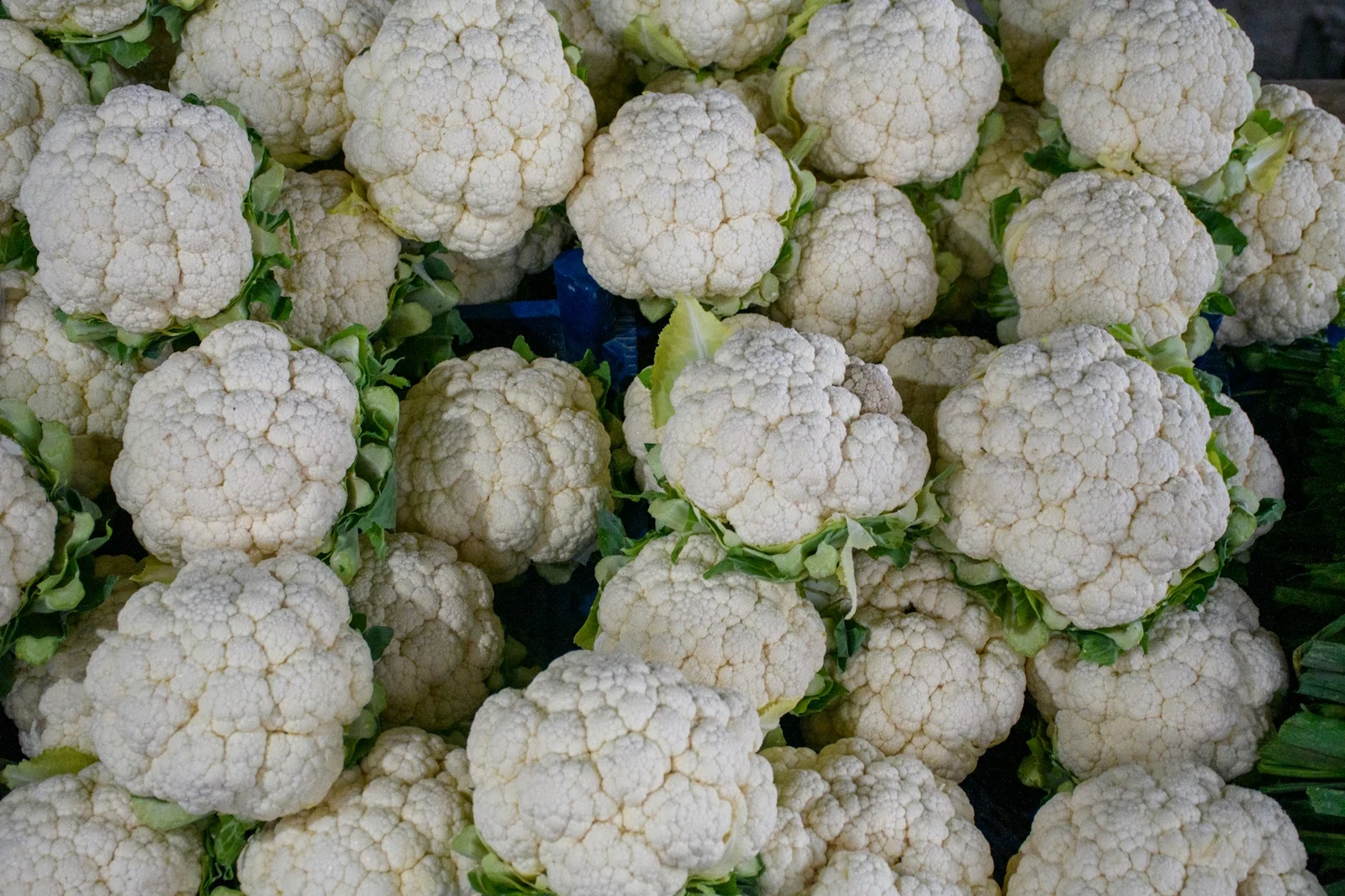
Original source illustration; may show a general food category.
Cauliflower is a member of the cabbage family, known for its white, tightly packed flower buds. It can be consumed raw or cooked, with a mild flavor and a versatile use in various cuisines.
Country stock records are private to assigned managers.
Food-waste calculator
Estimate food you can keep out of the bin by using or sharing it.
Potential food saved1 kg
If you use or share 1 kg of Cauliflower instead of discarding it, that is 1 kg kept out of the bin.
This uses only your entered amount. It does not claim measured waste reduction or convert pieces and packs into invented weights.
Cauliflower is a member of the cabbage family, known for its white, tightly packed flower buds. It can be consumed raw or cooked, with a mild flavor and a versatile use in various cuisines.
Origin & history
ancient uses: Historically valued for its nutritional content and used in medieval European cooking.
region of origin: Western Asia
country of origin: Mediterranean region
historical timeline: year: 600
event: Cultivation of cauliflower begins in Asia.
year: 1500
event: Introduced to Europe by the French.
cultural significance: Widely used in various cuisines, especially Mediterranean and Asian.
domestication history: Domesticated from wild cabbage in the Mediterranean region around the 6th century.
traditional importance: An essential vegetable in many traditional dishes around the world.
historical trade routes: Trade routes from Asia to Europe facilitated its spread.
Growing & production
climate: Cool temperate climates are ideal.
diseases: Downy mildew
Black rot
rainfall: Moderate rainfall of about 50-60 cm annually.
harvesting: Harvested when the heads are firm and compact.
irrigation: Regular irrigation is required during dry spells.
hydroponics: Can be successfully grown hydroponically.
temperature: Best grown at temperatures between 15°C and 20°C.
growing season: Spring and fall.
harvest period: Varies from 55 to 100 days after planting.
yield per acre: Approximately 5,000 to 6,000 pounds.
growing regions: North America
Europe
Asia
pest management: Common pests include aphids and cabbage worms.
planting methods: Transplants are commonly used.
vertical farming: Possible but requires specific conditions for optimal yield.
soil requirements: Well-drained, fertile soils with high organic matter.
organic cultivation: Yes, can be grown organically.
greenhouse production: Commonly grown in greenhouses for early production.
fertilizer requirements: High in nitrogen for optimal growth.
Cauliflower is low in calories and rich in vitamins, particularly vitamin C, K, and folate. It contains antioxidants that help reduce inflammation and may assist in cancer prevention.
Health notes
major: Rich in fibre, vitamins A and C, folate, potassium and plant polyphenols.
Low in calories and high in water content — supports weight management and hydration.
Regular vegetable intake is linked to lower rates of cardiovascular disease and type 2 diabetes.
evidence: Consensus among USDA, NIH and WHO reviews is that cauliflower contributes positively to a balanced eating pattern when consumed in appropriate portions.
Storage
freezing: Can be blanched and frozen for longer storage.
shelf life: 3-5 days in ideal conditions.
refrigeration: Best stored in the fridge in a perforated bag.
best practices: Store in a cool, dark place
Keep away from strong odors
common mistakes: Storing wrapped tightly
Neglecting seasonal variation in quality.
storage methods: Refrigeration
Controlled atmosphere
spoilage indicators: Yellowing
Soft texture
controlled atmosphere storage: Used to prolong freshness.
Preparation
cutting: Use a sharp knife to cut off florets for uniform cooking.
washing: Soak in water to remove pests before rinsing.
cleaning: Rinse under cold water to remove dirt.
buying tips: Choose firm heads with tightly packed florets.
cooking methods: Steaming
Boiling
Stir-frying
Roasting
freshness indicators: Green leaves still attached
No discoloration
seasonal buying guide: Best purchased in spring and fall.
Practical tips
**Cleaning**
Rinse under cold water to remove dirt.
**Washing**
Soak in water to remove pests before rinsing.
**Cutting**
Use a sharp knife to cut off florets for uniform cooking.
Recipes
name: Cauliflower Rice
tags: Vegetarian
Low-carb
Healthy
tips: For extra flavor, add spices like turmeric or sautéed onions.
method: Grate the cauliflower with a food processor or box grater.
Heat oil in a pan and add cumin seeds.
Once they splutter, add grated cauliflower and salt.
Sauté for about 5-7 minutes until tender.
Garnish with coriander and serve.
region: Pan India
country: India
cuisine: Indian
servings: 4
cook time: 10 minutes
image url: https://example.com/cauliflower_rice.jpg
nutrition: carbs g: 4.97
calories: 25
protein g: 1.91
prep time: 10 minutes
chef notes: Great as a base for curries.
difficulty: Easy
description: A healthy low-carb alternative to rice, made from grated cauliflower.
ingredients: 1 medium cauliflower
1 tablespoon oil
1/2 teaspoon cumin seeds
Salt to taste
Chopped coriander for garnish
recipe source: Traditional Indian Cooking
suitable diets: Low-carb
Keto
Vegetarian
Transportation
humidity: High humidity is maintained to prevent wilting.
packaging: Packaged in ventilated boxes to prevent damage.
shelf life: Refrigerated shelf life of 1-2 weeks.
export handling: Requires careful handling to avoid spoilage.
shipping methods: Mainly by road and sea freight.
storage temperature: Optimal storage at 0°C to 4°C.
cold chain requirements: Necessary for maintaining freshness during transport.
transportation constraints: Sensitive to ethylene and requires quick delivery.
Sustainability
climate resilience: Varies by region; can adapt but prefers stable conditions.
sustainable farming: Encouraged via crop rotation and soil health practices.
environmental impact: Land use change and pesticide application.
organic certification: Available and increasing in popularity among producers.
pollinator importance: Planting diversely helps support pollinators.
regenerative agriculture: Practiced in some regions to enhance soil health.
More about this food
Cauliflower can come in different colors, including purple, orange, and green.
It is often used as a low-carb substitute for grains and legumes.
Source references
url: https://www.nutritionjournal.com/article/cauliflower-benefits
type: journal
year: 2022
title: Nutritional Benefits of Cauliflower
authors: Smith et al.
publisher: Nutrition Journal
Kerala & United States locality guides
Regional guides; these links do not establish local product availability.

 Cauliflower